
















©The Author(s) 2026.
World J Psychiatry. Jan 19, 2026; 16(1): 112432
Published online Jan 19, 2026. doi: 10.5498/wjp.v16.i1.112432
Published online Jan 19, 2026. doi: 10.5498/wjp.v16.i1.112432
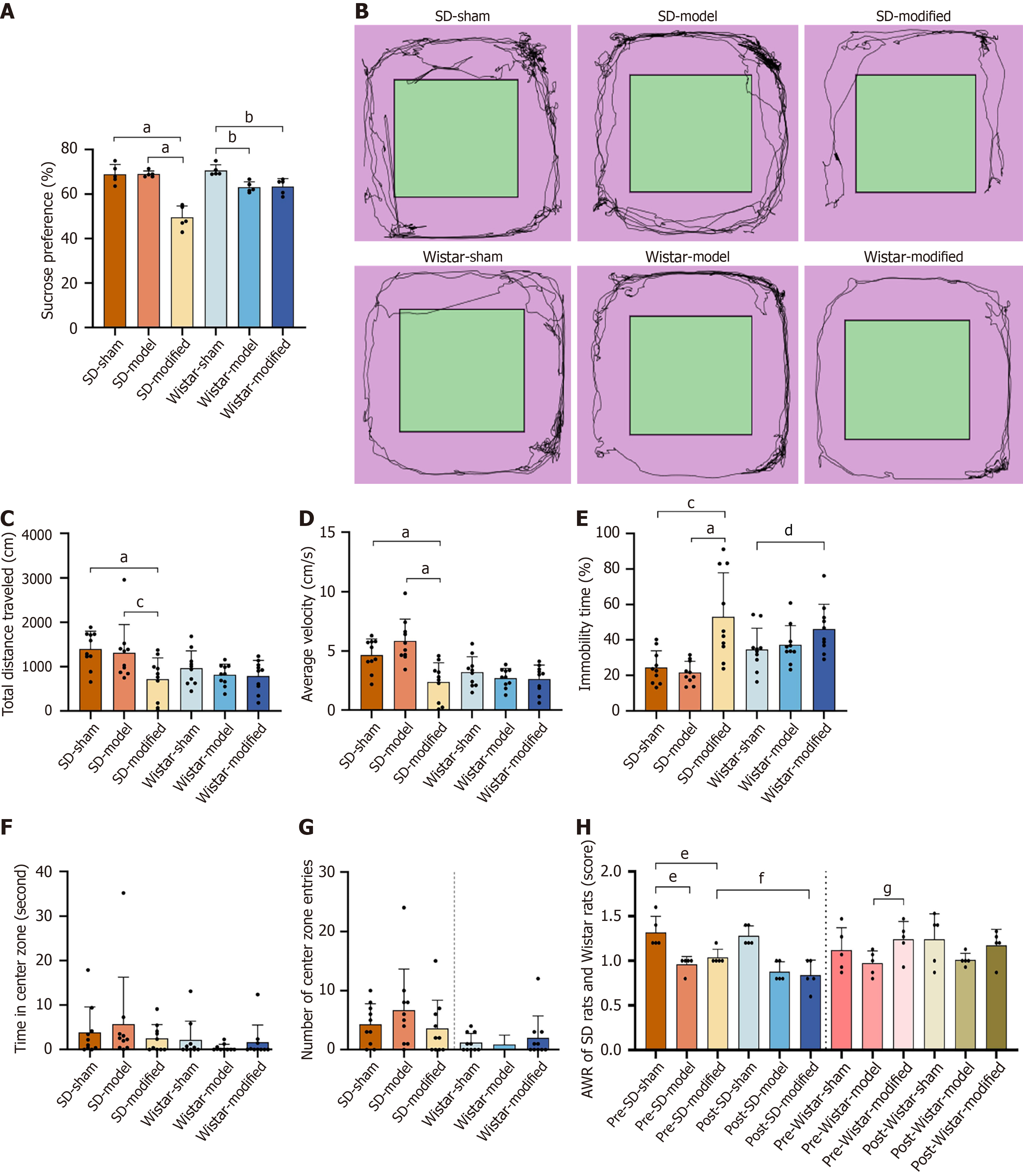
Figure 3 Behavioral assessment of rats after model establishment.
A: Sucrose preference test; B: Animal movement trajectories; C: Total distance traveled; D: Average velocity; E: Immobility time (%); F: Time in center zone; G: Number of center zone entries; H: Abdominal withdrawal reflex score. aP < 0.01 vs Sprague-Dawley (SD)-modified, bP < 0.01 vs Wistar-sham, cP < 0.05 vs SD-modified, dP < 0.05 vs Wistar-sham, eP < 0.01 vs pre-SD-sham, fP < 0.05 vs pre-SD-modified, gP < 0.05 vs pre-Wistar-model. SD: Sprague-Dawley; AWR: Abdominal withdrawal reflex.
- Citation: Lv M, Liu X, Huang KY, Wang YX, Wang Z, Han LL, Che H, Lv L, Wang FY. Tail clamping induces anxiety-like behaviors and visceral hypersensitivity in rat models of non-erosive reflux disease. World J Psychiatry 2026; 16(1): 112432
- URL: https://www.wjgnet.com/2220-3206/full/v16/i1/112432.htm
- DOI: https://dx.doi.org/10.5498/wjp.v16.i1.112432