
















©The Author(s) 2026.
World J Psychiatry. Jan 19, 2026; 16(1): 111812
Published online Jan 19, 2026. doi: 10.5498/wjp.v16.i1.111812
Published online Jan 19, 2026. doi: 10.5498/wjp.v16.i1.111812
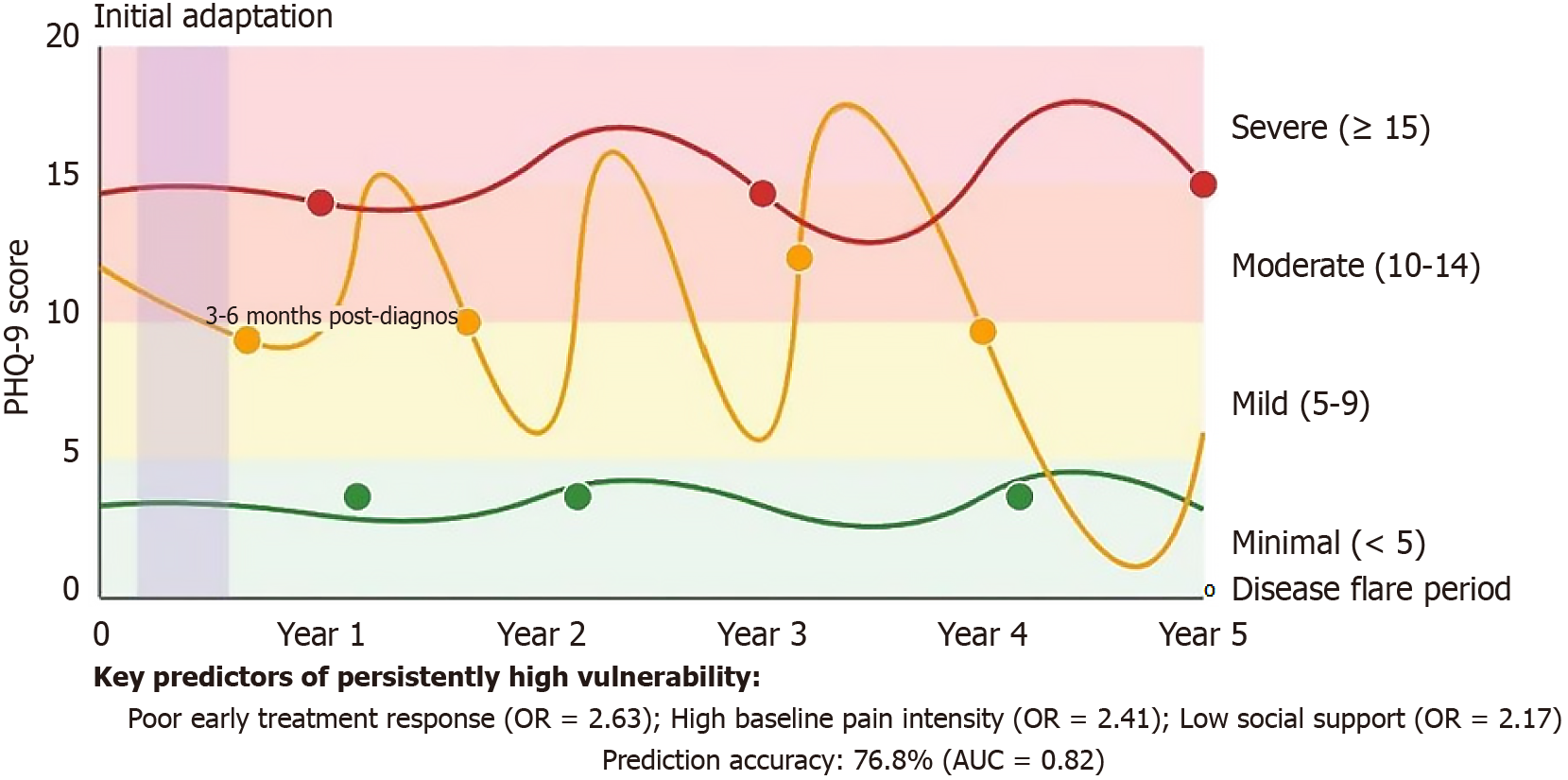
Figure 1 Psychological vulnerability trajectories in rheumatoid arthritis patients: A 5-year longitudinal study.
This graph illustrates three distinct psychological vulnerability patterns in rheumatoid arthritis patients over five years post-diagnosis, showing persistently high vulnerability (25%), fluctuating improvement (30%), and persistently low vulnerability (45%) trajectories as measured by Patient Health Questionnaire 9 scores. The visualization identifies the initial 3-6 months as a critical adaptation period and highlights three key predictors of poor psychological outcomes: Poor early treatment response, high baseline pain intensity, and low social support, with a prediction accuracy of 76.8%. PHQ-9: Patient Health Questionnaire 9; OR: Odds ratio; AUC: Area under the curve.
- Citation: Chen XM, Cheng X, Wu W. Dynamic psychological vulnerability and adaptation in rheumatoid arthritis: Trajectories, predictors, and interventions. World J Psychiatry 2026; 16(1): 111812
- URL: https://www.wjgnet.com/2220-3206/full/v16/i1/111812.htm
- DOI: https://dx.doi.org/10.5498/wjp.v16.i1.111812