
















©The Author(s) 2026.
World J Psychiatry. Jan 19, 2026; 16(1): 110146
Published online Jan 19, 2026. doi: 10.5498/wjp.v16.i1.110146
Published online Jan 19, 2026. doi: 10.5498/wjp.v16.i1.110146
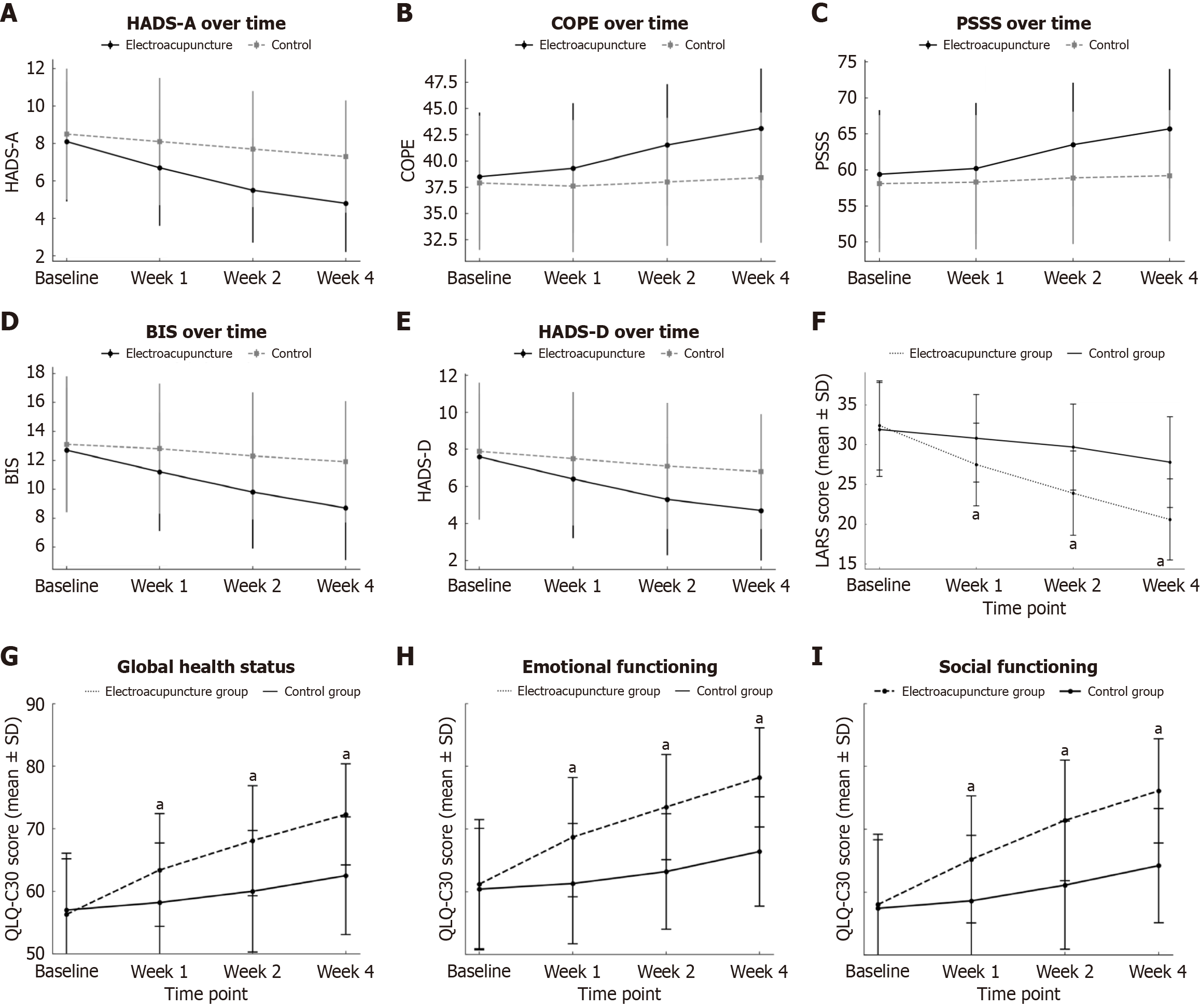
Figure 2 Temporal profiles of psychological, functional, and low anterior resection syndrome outcomes following electroacupuncture intervention.
A–E: Changes in psychological outcomes over the 4-week intervention period. Line graphs illustrate the temporal trends of anxiety (Hospital Anxiety and Depression Scale–Anxiety subscale), coping strategy (Brief Coping Orientation to Problems Experienced), perceived social support (Perceived Social Support Scale), body image disturbance (Body Image Scale), and depression (Hospital Anxiety and Depression Scale–Depression subscale) in the electroacupuncture and control groups. Error bars indicate standard deviations. F: Change in low anterior resection syndrome scores over time in the electroacupuncture and control groups. Data are presented as mean ± SD. G–I: Changes in global health status, emotional functioning, and social functioning over time, derived from the European Organization for Research and Treatment of Cancer Quality of Life Questionnaire Core 30. Higher scores indicate better functioning. Superscript “a” indicates statistically significant differences (P < 0.05) observed from week 1 onward in the electroacupuncture group compared with baseline and the control group. HADS-A: Hospital Anxiety and Depression Scale-Anxiety subscale; COPE: Coping Orientation to Problems Experienced; PSSS: Perceived Social Support Scale; BIS: Body Image Scale; HADS-D: Hospital Anxiety and Depression Scale-Depression subscale; LARS: Low anterior resection syndrome; QLQ-C30: Quality of Life Questionnaire Core 30 questionnaire.
- Citation: Wang N, Yang Y, Li SS, Wang XF. Electroacupuncture improves psychosocial outcomes in rectal cancer patients with bowel dysfunction. World J Psychiatry 2026; 16(1): 110146
- URL: https://www.wjgnet.com/2220-3206/full/v16/i1/110146.htm
- DOI: https://dx.doi.org/10.5498/wjp.v16.i1.110146