
















©The Author(s) 2025.
World J Psychiatry. Dec 19, 2025; 15(12): 111754
Published online Dec 19, 2025. doi: 10.5498/wjp.v15.i12.111754
Published online Dec 19, 2025. doi: 10.5498/wjp.v15.i12.111754
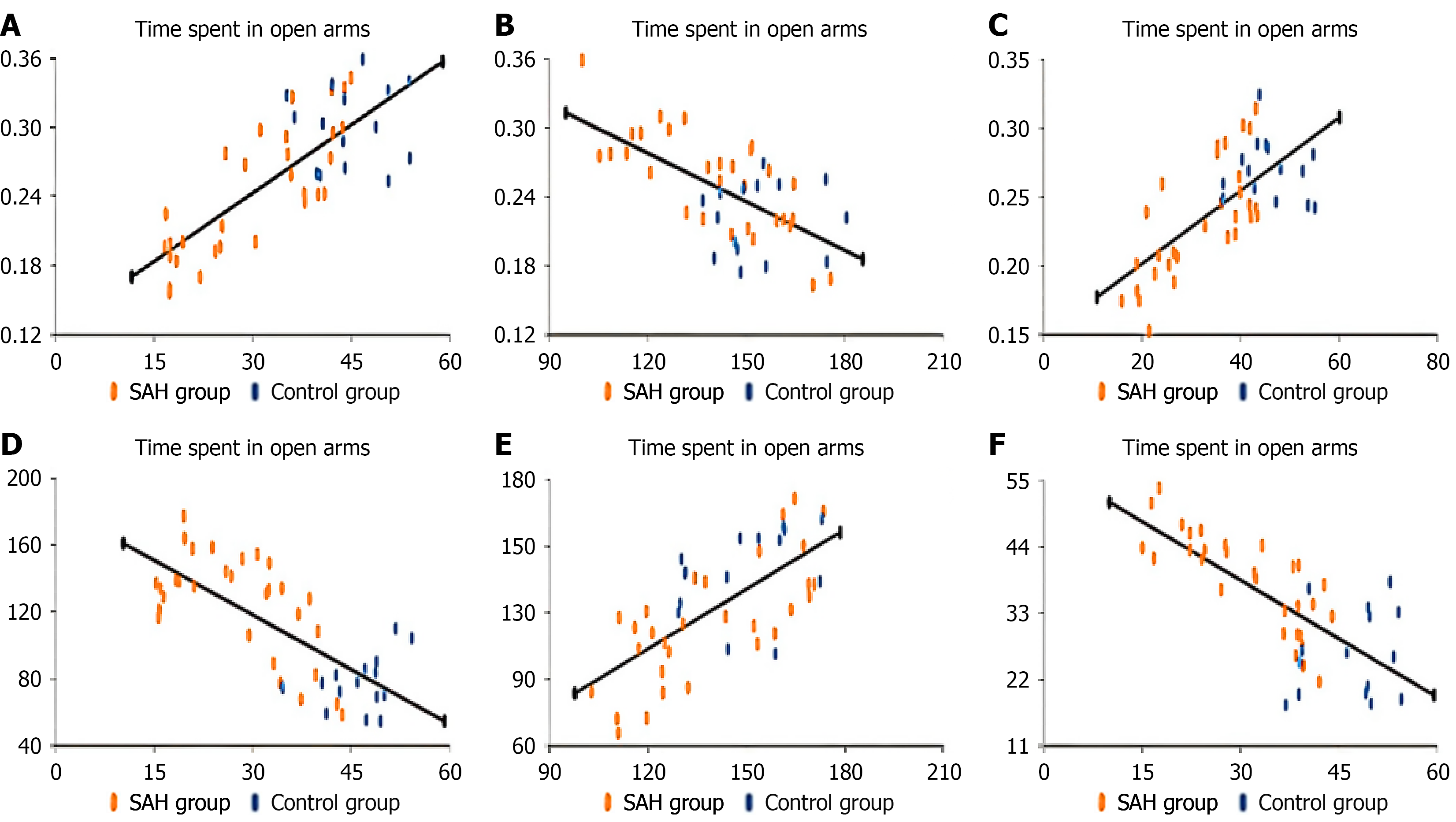
Figure 5 Correlation analysis between behavioral indicators, diffusion tensor imaging parameters, and inflammatory factors after subarachnoid hemorrhage.
A-C: Correlation between diffusion tensor imaging parameters and anxiety-depression behaviors, including positive correlation between time spent in open arms and hippocampal-prefrontal fractional anisotropy (FA) values (A), negative correlation between immobility time in forced swimming and hippocampal-prefrontal FA values (B), and positive correlation between time spent in open arms and amygdala-prefrontal FA values (C); D-F: Correlation between inflammatory factor levels and anxiety-depression behaviors, including negative correlation between time spent in open arms and serum interleukin-6 (IL-6) (D), positive correlation between immobility time in forced swimming and serum IL-6 (E), and stronger negative correlation between time spent in open arms and cerebrospinal fluid IL-1β (F). Orange dots represent the subarachnoid hemorrhage group, blue dots represent the control group, and black lines represent correlation regression lines. These results suggest that reduced white matter integrity and elevated inflammation levels jointly contribute to the development of emotional disorders after subarachnoid hemorrhage. SAH: Subarachnoid hemorrhage.
- Citation: Qin L, Wang K, Jiang LP, Xiao Z, Luo S. Correlation between anxiety-depression disorders and brain structural connectivity abnormalities after subarachnoid hemorrhage. World J Psychiatry 2025; 15(12): 111754
- URL: https://www.wjgnet.com/2220-3206/full/v15/i12/111754.htm
- DOI: https://dx.doi.org/10.5498/wjp.v15.i12.111754