
















©The Author(s) 2025.
World J Psychiatry. Dec 19, 2025; 15(12): 109437
Published online Dec 19, 2025. doi: 10.5498/wjp.v15.i12.109437
Published online Dec 19, 2025. doi: 10.5498/wjp.v15.i12.109437
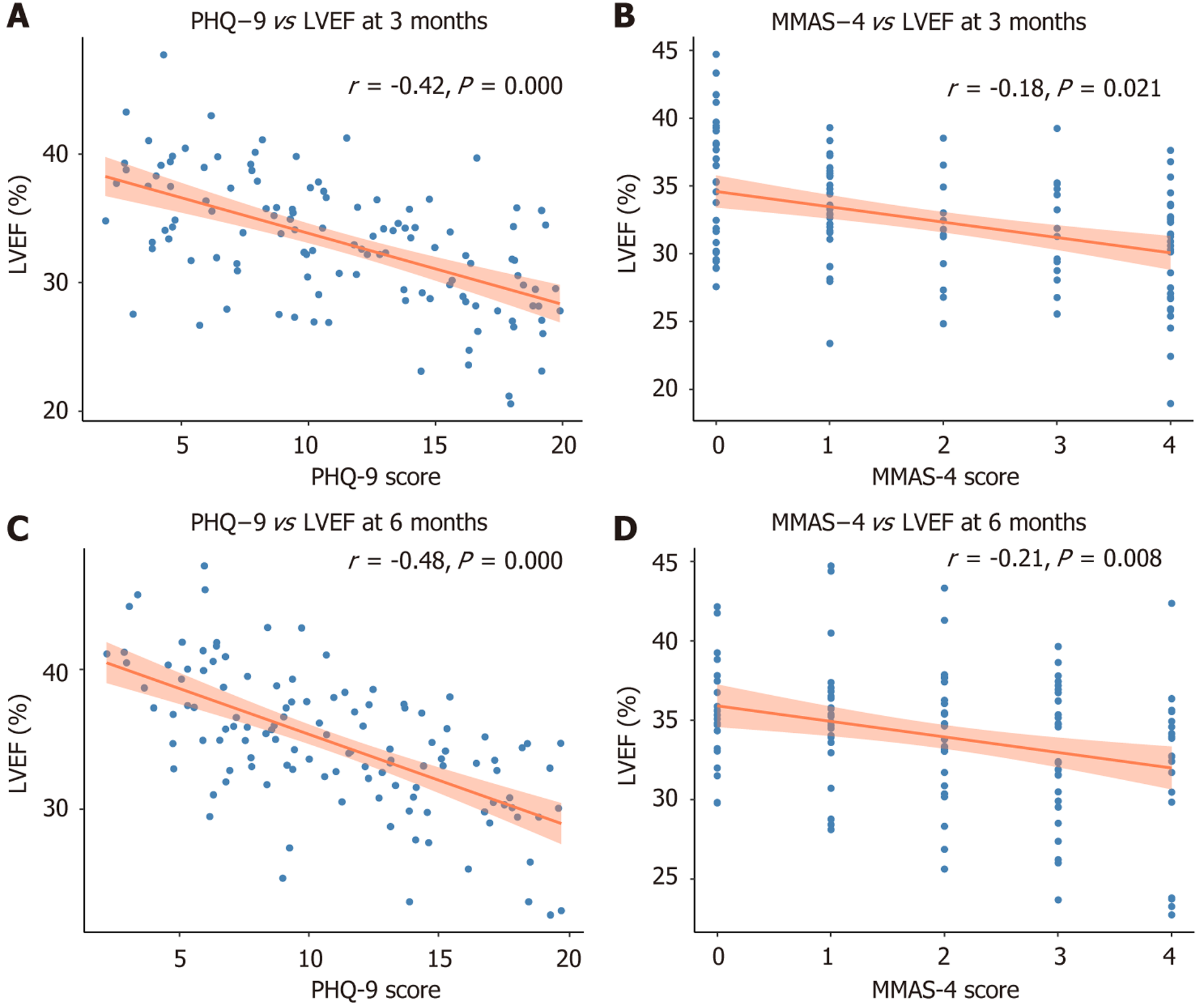
Figure 1 Association between depression severity, medication adherence, and cardiac function at 3-month and 6-month follow-up.
A: Scatter plot showing the correlation between Patient Health Questionnaire-9 score and left ventricular ejection fraction (LVEF) at 3 months post-discharge. Higher depression severity was modestly associated with lower LVEF (Pearson r = -0.26, P = 0.008); B: Scatter plot showing the correlation between Morisky Medication Adherence Scale score (medication adherence) and LVEF at 3 months. Poorer adherence was associated with lower LVEF (Pearson r = -0.23, P = 0.012); C: Correlation between Patient Health Questionnaire-9 score and LVEF at 6 months. The inverse association persisted over time (Pearson r = -0.24, P = 0.009); D: Correlation between Morisky Medication Adherence Scale score and LVEF at 6 months. Self-reported nonadherence remained linked to reduced cardiac function (Pearson r = -0.22, P = 0.014). PHQ-9: Patient Health Questionnaire-9; LVEF: Left ventricular ejection fraction; MMA-S: Morisky Medication Adherence Scale.
- Citation: Mao FG, Tang YL, Wang XY, Jin X, Fan JY. Psychocardiological impact of depression on medication adherence, ventricular function, and readmission in heart failure: A retrospective cohort study. World J Psychiatry 2025; 15(12): 109437
- URL: https://www.wjgnet.com/2220-3206/full/v15/i12/109437.htm
- DOI: https://dx.doi.org/10.5498/wjp.v15.i12.109437