
















©The Author(s) 2025.
World J Psychiatry. Oct 19, 2025; 15(10): 111039
Published online Oct 19, 2025. doi: 10.5498/wjp.v15.i10.111039
Published online Oct 19, 2025. doi: 10.5498/wjp.v15.i10.111039
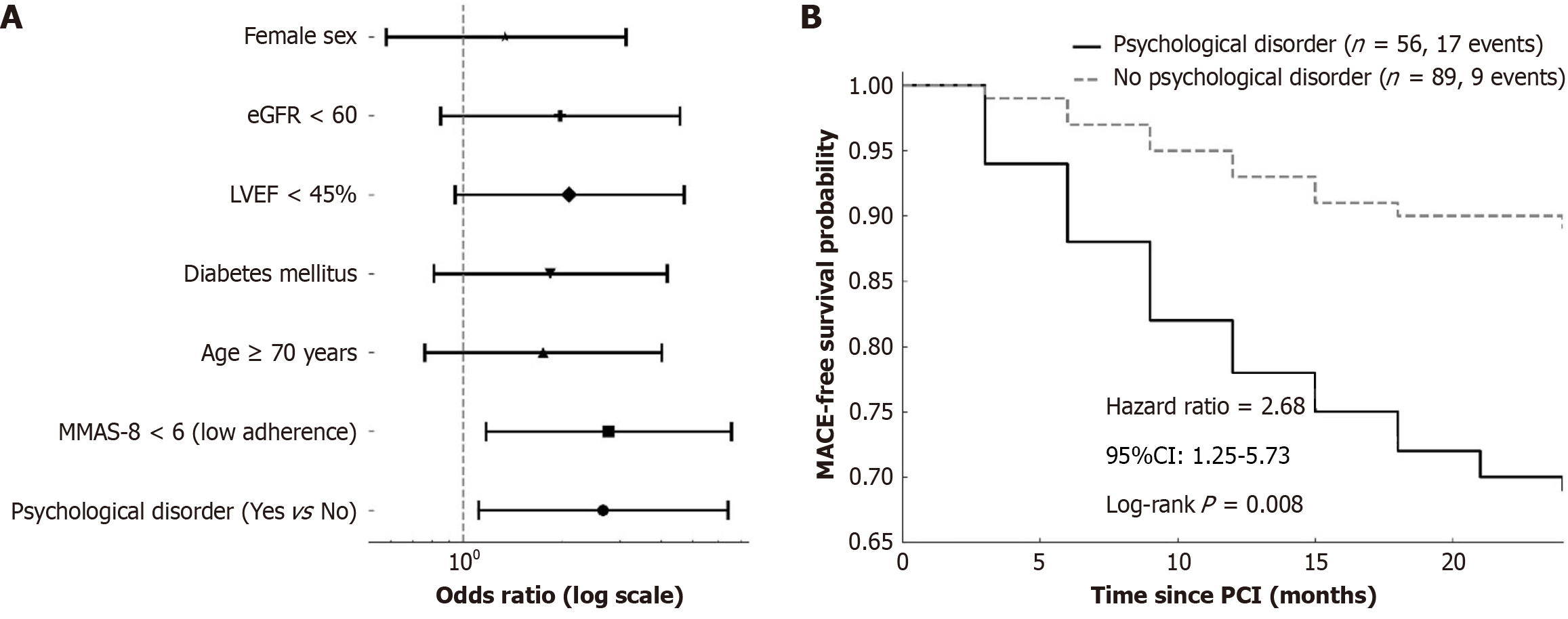
Figure 4 Impact of post-procedural psychological disorders on long-term cardiovascular outcomes.
A: Forest plot showing multivariate logistic regression analysis identifying independent predictors of major adverse cardiovascular events (MACE) within two years following percutaneous coronary intervention (n = 145). Post-procedural psychological disorders were associated with a more than twofold increase in MACE risk (OR = 2.66, 95%CI: 1.11-6.41, P = 0.028), independent of age, diabetes, renal function, cardiac function, and medication adherence. Poor adherence (8-item Morisky Medication Adherence Scale < 6) also independently predicted MACE (OR = 2.77, 95%CI: 1.17-6.56, P = 0.021); B: Kaplan-Meier curves for MACE-free survival, comparing patients with psychological disorders (n = 56, 17 events) vs those without (n = 89, 9 events). Psychological morbidity was associated with significantly reduced MACE-free survival over the 2-year follow-up period (HR = 2.68, 95%CI: 1.25-5.73; Log-rank P = 0.008). Vertical dashed line in A represents the null effect (OR = 1). MMAS-8: 8-item Morisky Medication Adherence Scale; PCI: Percutaneous coronary intervention; MACE: Major adverse cardiovascular event; LVEF: Left ventricular ejection fraction; eGFR: Estimated glomerular filtration rate.
- Citation: Du CS, Hao BC, Mao S, Yin Z, Chen SS, Zhao B, Xia HH. Post-percutaneous coronary intervention psychological disorders predict poor adherence and cardiovascular events in elderly heart failure patients. World J Psychiatry 2025; 15(10): 111039
- URL: https://www.wjgnet.com/2220-3206/full/v15/i10/111039.htm
- DOI: https://dx.doi.org/10.5498/wjp.v15.i10.111039