
















©The Author(s) 2025.
World J Psychiatry. Oct 19, 2025; 15(10): 111039
Published online Oct 19, 2025. doi: 10.5498/wjp.v15.i10.111039
Published online Oct 19, 2025. doi: 10.5498/wjp.v15.i10.111039
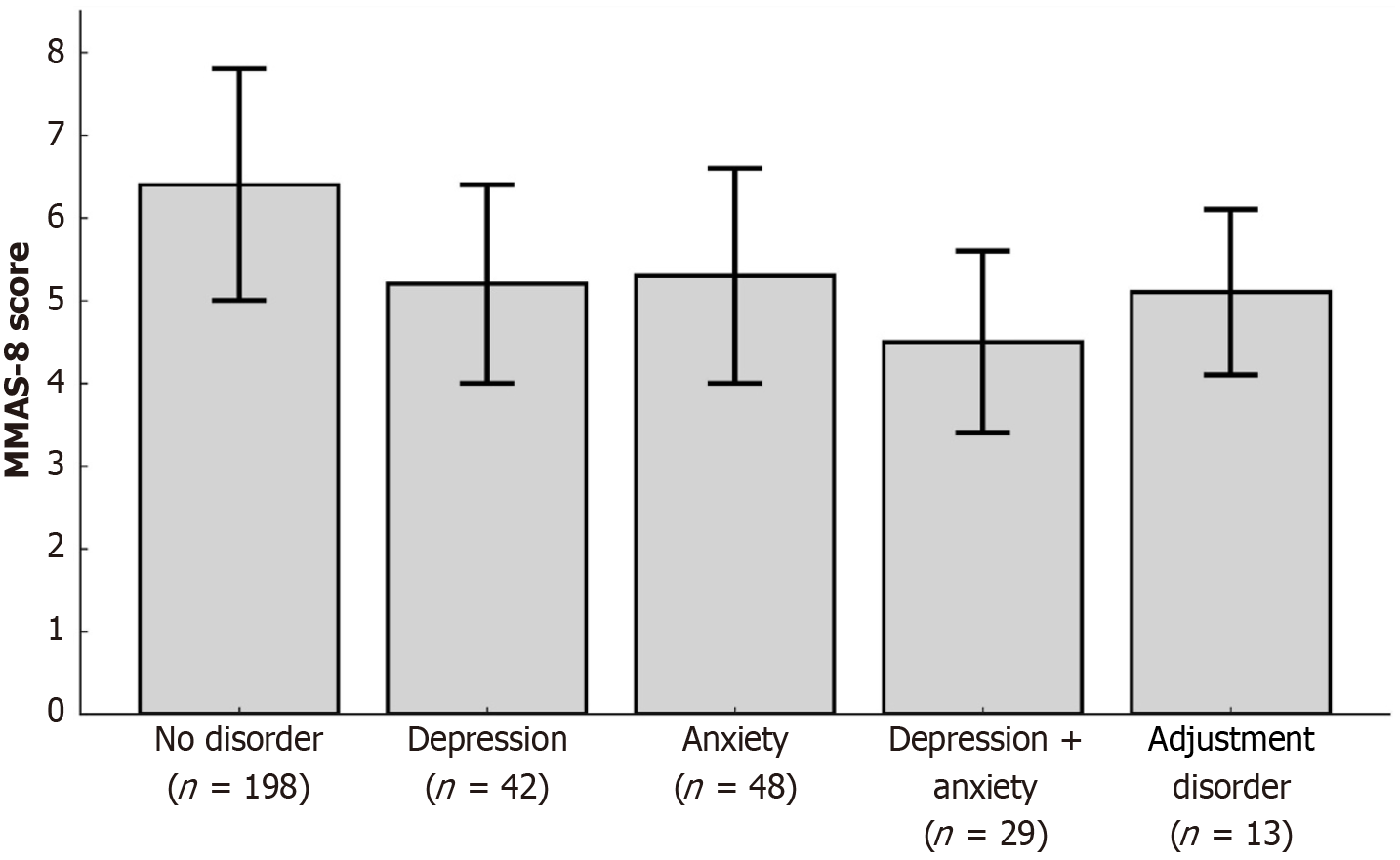
Figure 2 Medication adherence (8-item Morisky Medication Adherence Scale) by psychological disorder subtype.
Bar chart comparing mean 8-item Morisky Medication Adherence Scale scores across patient groups stratified by psychological disorder subtype (n = 330). Patients without psychological disorders demonstrated the highest medication adherence scores (mean 6.4 ± 1.4), while those with comorbid depression and anxiety showed the lowest (mean 4.5 ± 1.1). Other subgroups, including depression only, anxiety only, and adjustment disorder, exhibited intermediate adherence levels. Values represent mean ± SD. Psychological disorders were classified based on standardized assessments within 6 months after percutaneous coronary intervention. MMAS-8: 8-item Morisky Medication Adherence Scale.
- Citation: Du CS, Hao BC, Mao S, Yin Z, Chen SS, Zhao B, Xia HH. Post-percutaneous coronary intervention psychological disorders predict poor adherence and cardiovascular events in elderly heart failure patients. World J Psychiatry 2025; 15(10): 111039
- URL: https://www.wjgnet.com/2220-3206/full/v15/i10/111039.htm
- DOI: https://dx.doi.org/10.5498/wjp.v15.i10.111039