
















©The Author(s) 2025.
World J Psychiatry. Oct 19, 2025; 15(10): 111039
Published online Oct 19, 2025. doi: 10.5498/wjp.v15.i10.111039
Published online Oct 19, 2025. doi: 10.5498/wjp.v15.i10.111039
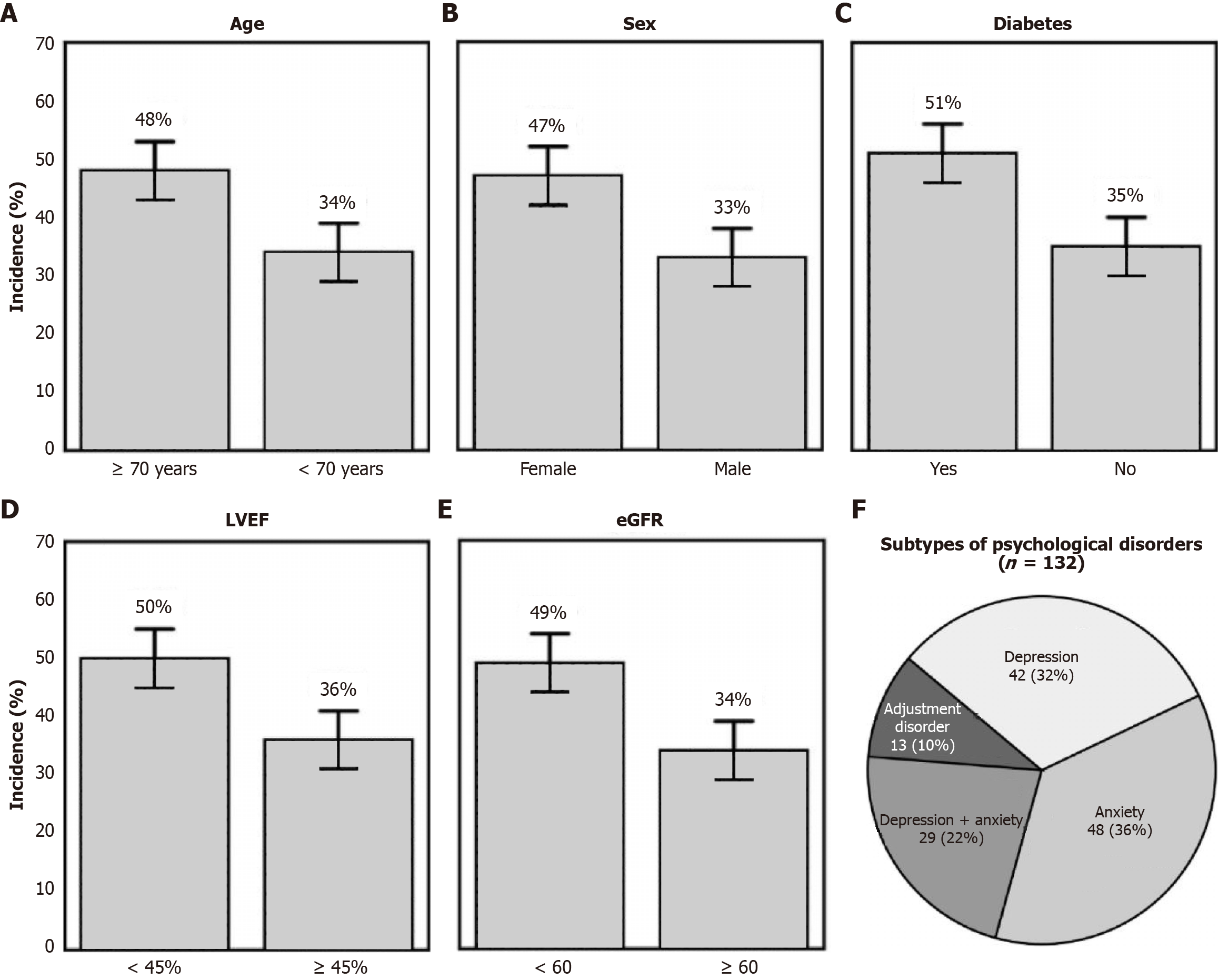
Figure 1 Incidence and subtype distribution of post-percutaneous coronary intervention psychological disorders by clinical subgroups.
Incidence of psychological disorders within 6 months after percutaneous coronary intervention (PCI) across predefined clinical subgroups. A: Age group (≥ 70 years vs < 70 years); B: Sex (female vs male); C: Presence of diabetes mellitus; D: Baseline left ventricular ejection fraction (< 45% vs ≥ 45%); E: Renal function (estimated glomerular filtration rate < 60 mL/min/1.73 m2vs ≥ 60 mL/min/1.73 m2); F: Distribution of psychological disorder subtypes among patients with post-PCI psychological disorders (n = 132). Bars represent the proportion of patients in each subgroup who developed clinically confirmed psychological disorders within 6 months post-procedure. Error bars denote approximate 95% confidence intervals. LVEF: Left ventricular ejection fraction; eGFR: Estimated glomerular filtration rate.
- Citation: Du CS, Hao BC, Mao S, Yin Z, Chen SS, Zhao B, Xia HH. Post-percutaneous coronary intervention psychological disorders predict poor adherence and cardiovascular events in elderly heart failure patients. World J Psychiatry 2025; 15(10): 111039
- URL: https://www.wjgnet.com/2220-3206/full/v15/i10/111039.htm
- DOI: https://dx.doi.org/10.5498/wjp.v15.i10.111039