
















©The Author(s) 2025.
World J Exp Med. Dec 20, 2025; 15(4): 114554
Published online Dec 20, 2025. doi: 10.5493/wjem.v15.i4.114554
Published online Dec 20, 2025. doi: 10.5493/wjem.v15.i4.114554
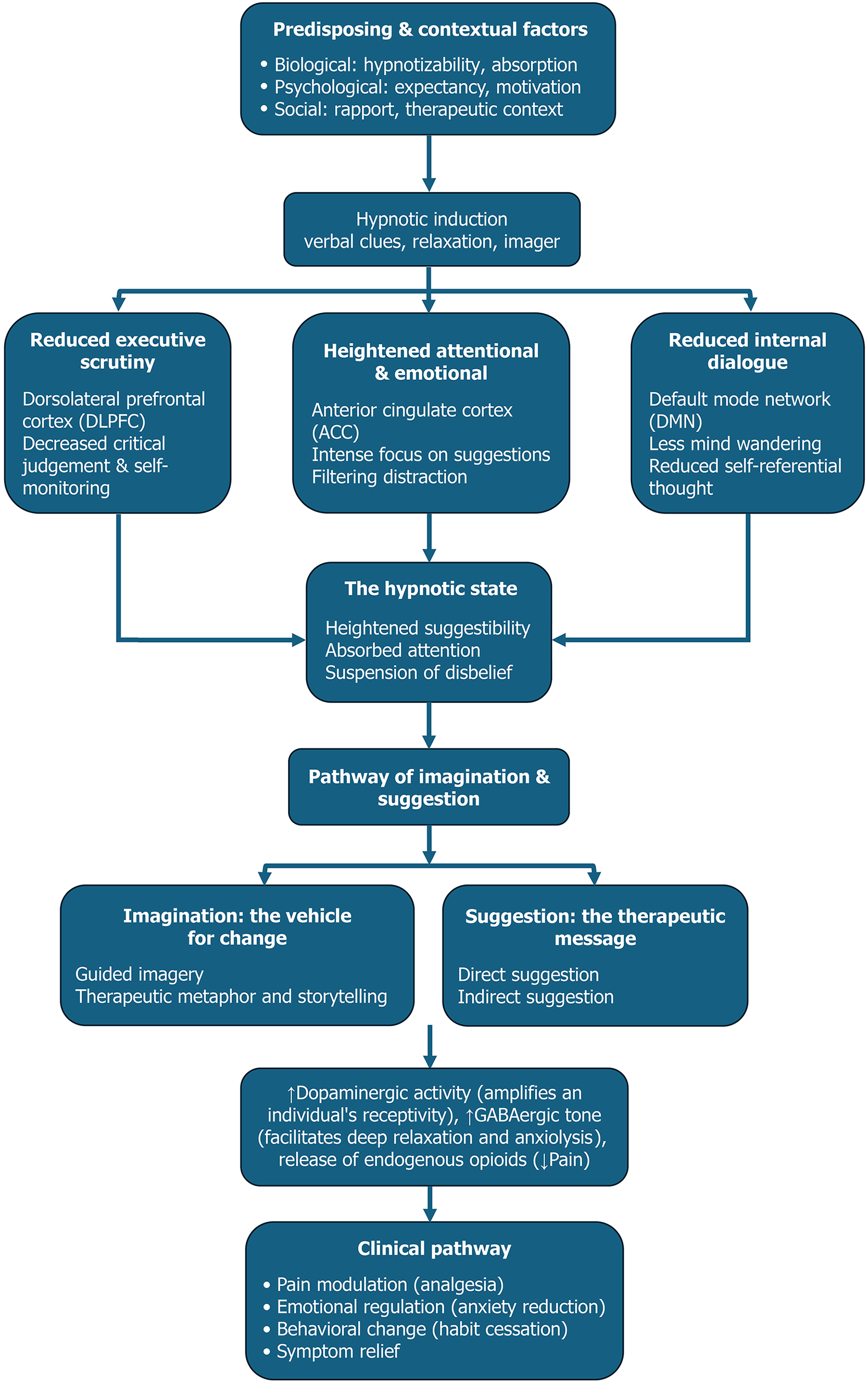
Figure 3 The neuro-cognitive pathway of hypnosis: From influencing factors to clinical outcomes.
This figure illustrates the layered process of clinical hypnosis, beginning with predisposing and contextual factors-biological, psychological, and social-that affect an individual's hypnotic responsiveness. Using verbal cues and imagery, hypnotic induction prompts changes in brain state, including decreased executive scrutiny, heightened attentional control, and reduced internal dialogue. These neurocognitive shifts create the hypnotic state, characterized by increased suggestibility and focused attention. Therapeutic techniques-such as guided imagery, metaphor, and both direct and indirect suggestion-are then applied, resulting in measurable clinical benefits like pain relief, emotional regulation, behavioral changes, and symptom improvement.
- Citation: Al-Beltagi M. Clinical hypnosis in pediatric care: An adjunctive tool or therapeutic illusion. World J Exp Med 2025; 15(4): 114554
- URL: https://www.wjgnet.com/2220-315x/full/v15/i4/114554.htm
- DOI: https://dx.doi.org/10.5493/wjem.v15.i4.114554