
















Copyright: ©Author(s) 2026.
World J Clin Oncol. Aug 24, 2026; 17(8): 123351
Published online Aug 24, 2026. doi: 10.5306/wjco.123351
Published online Aug 24, 2026. doi: 10.5306/wjco.123351
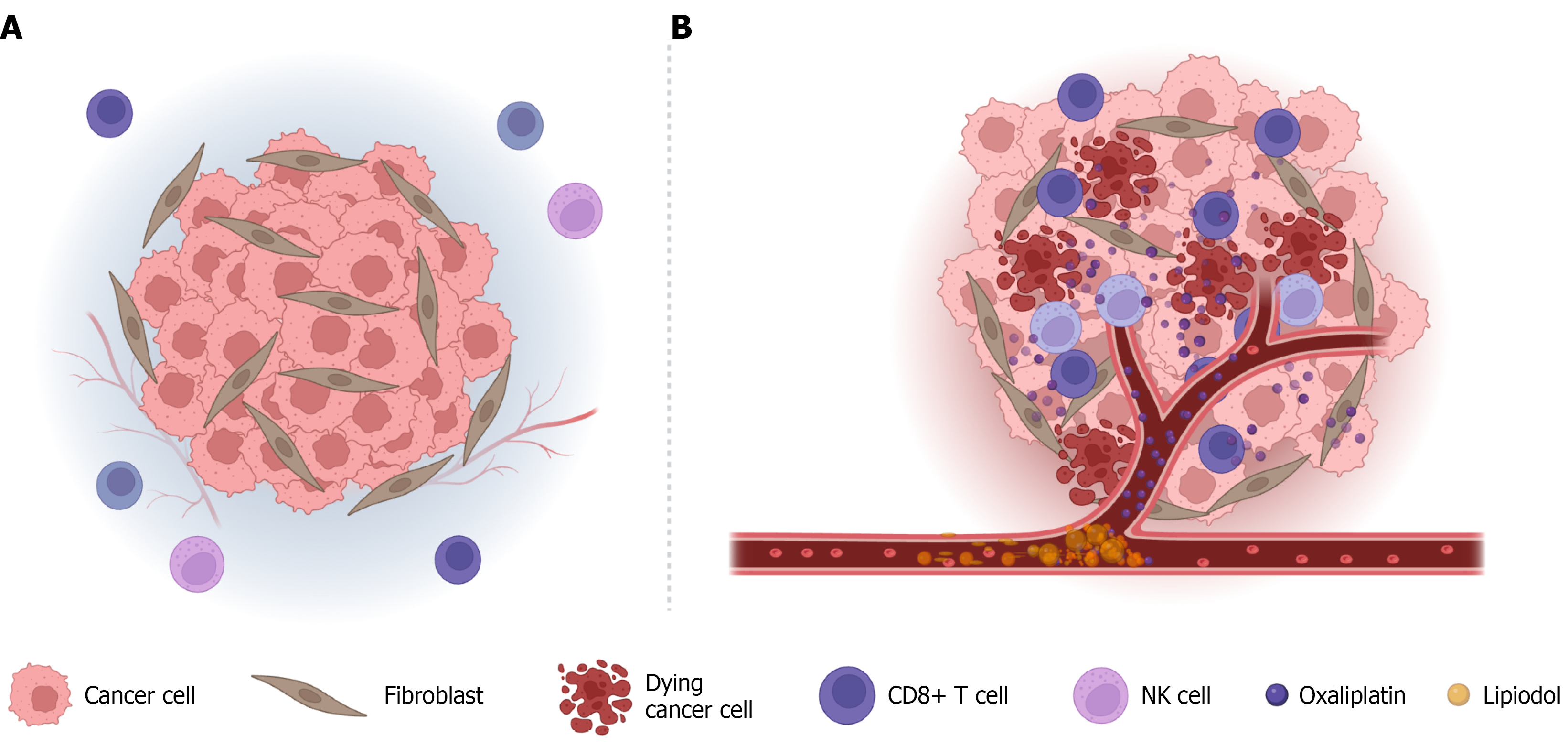
Figure 5 Schematic illustration of the tumor microenvironment remodeling induced by neoadjuvant intra-arterial chemoembolization in Borrmann type IV gastric cancer.
A: Pre-treatment immunosuppressive “cold” microenvironment. The tumor is characterized by an abundance of fibroblasts and a dense desmoplastic stroma, which acts as a formidable physical barrier preventing the infiltration of cytotoxic immune cells, such as CD8+ T cells and natural killer cells, restricting them to the tumor periphery; B: Post-treatment inflamed “hot” microenvironment. The localized, high-concentration delivery of oxaliplatin combined with lipiodol-induced embolic ischemia effectively disrupts the stromal barrier. This dual mechanism triggers massive immunogenic cell death and necrosis of the cancer cells, subsequently facilitating the robust, deep infiltration of CD8+ T cells and natural killer cells into the tumor core. NK: Natural killer.
- Citation: Wu XX, Yang HD, Min J, Yuan C, Li LS, Zhang W, Tong Y. Neoadjuvant intra-arterial chemoembolization improves tumor pathological regression and survival in Borrmann type IV gastric cancer. World J Clin Oncol 2026; 17(8): 123351
- URL: https://www.wjgnet.com/2218-4333/full/v17/i8/123351.htm
- DOI: https://dx.doi.org/10.5306/wjco.123351