
















Copyright: ©Author(s) 2026.
World J Clin Oncol. Jul 24, 2026; 17(7): 121645
Published online Jul 24, 2026. doi: 10.5306/wjco.121645
Published online Jul 24, 2026. doi: 10.5306/wjco.121645
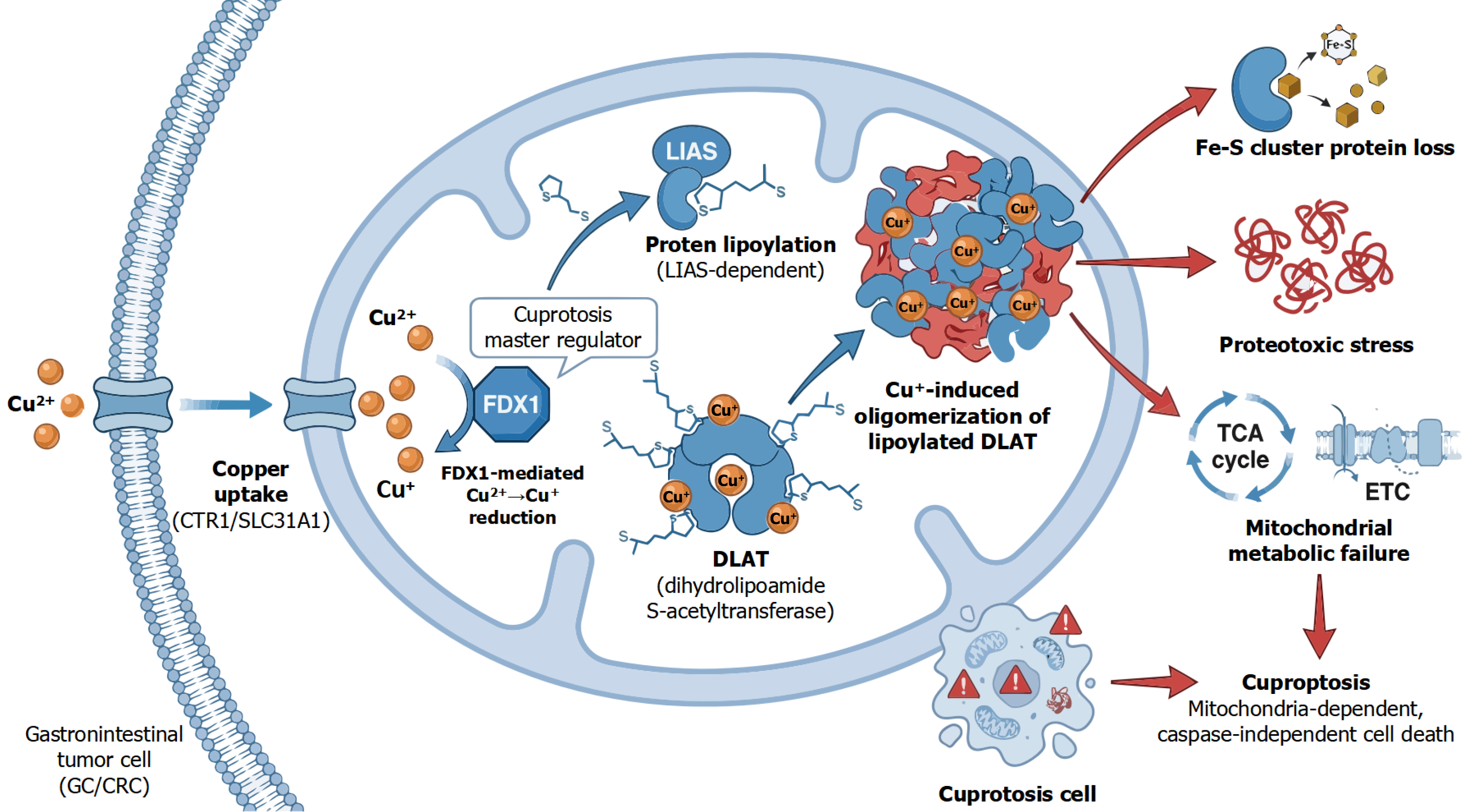
Figure 1 Central molecular mechanism of cuproptosis and mitochondrial protein lipoylation.
Cuproptosis in gastrointestinal tumor cells is driven by mitochondrial copper accumulation and protein lipoylation. Cu2+ enters cells through copper transporters such as copper transporters/solute carrier family 31 member 1 and is reduced to Cu+ by ferredoxin 1 within mitochondria. Cu+ subsequently binds to lipoylated dihydrolipoamide S-acetyltransferase, inducing its oligomerization, Fe-S cluster protein loss, proteotoxic stress, and mitochondrial metabolic collapse, ultimately triggering caspase-independent cuproptotic cell death. CTR1: Copper transporters; SLC31A1: Solute carrier family 31 member 1; GC: Gastric cancer; CRC: Colorectal cancer; LIAS: Lipoic acid synthase; FDX1: Ferredoxin 1; DLAT: Dihydrolipoamide S-acetyltransferase; TCA: Tricarboxylic acid cycle; ETC: Electron transport chain.
- Citation: Sun ZJ, Wang K, Li JQ, Song LJ, Liang KN, Cao TL, Jiang HZ. Copper homeostasis imbalance and cuproptosis: Emerging targets and strategies for gastrointestinal tumor therapy. World J Clin Oncol 2026; 17(7): 121645
- URL: https://www.wjgnet.com/2218-4333/full/v17/i7/121645.htm
- DOI: https://dx.doi.org/10.5306/wjco.121645