
















Copyright: ©Author(s) 2026.
World J Clin Oncol. Jun 24, 2026; 17(6): 121085
Published online Jun 24, 2026. doi: 10.5306/wjco.121085
Published online Jun 24, 2026. doi: 10.5306/wjco.121085
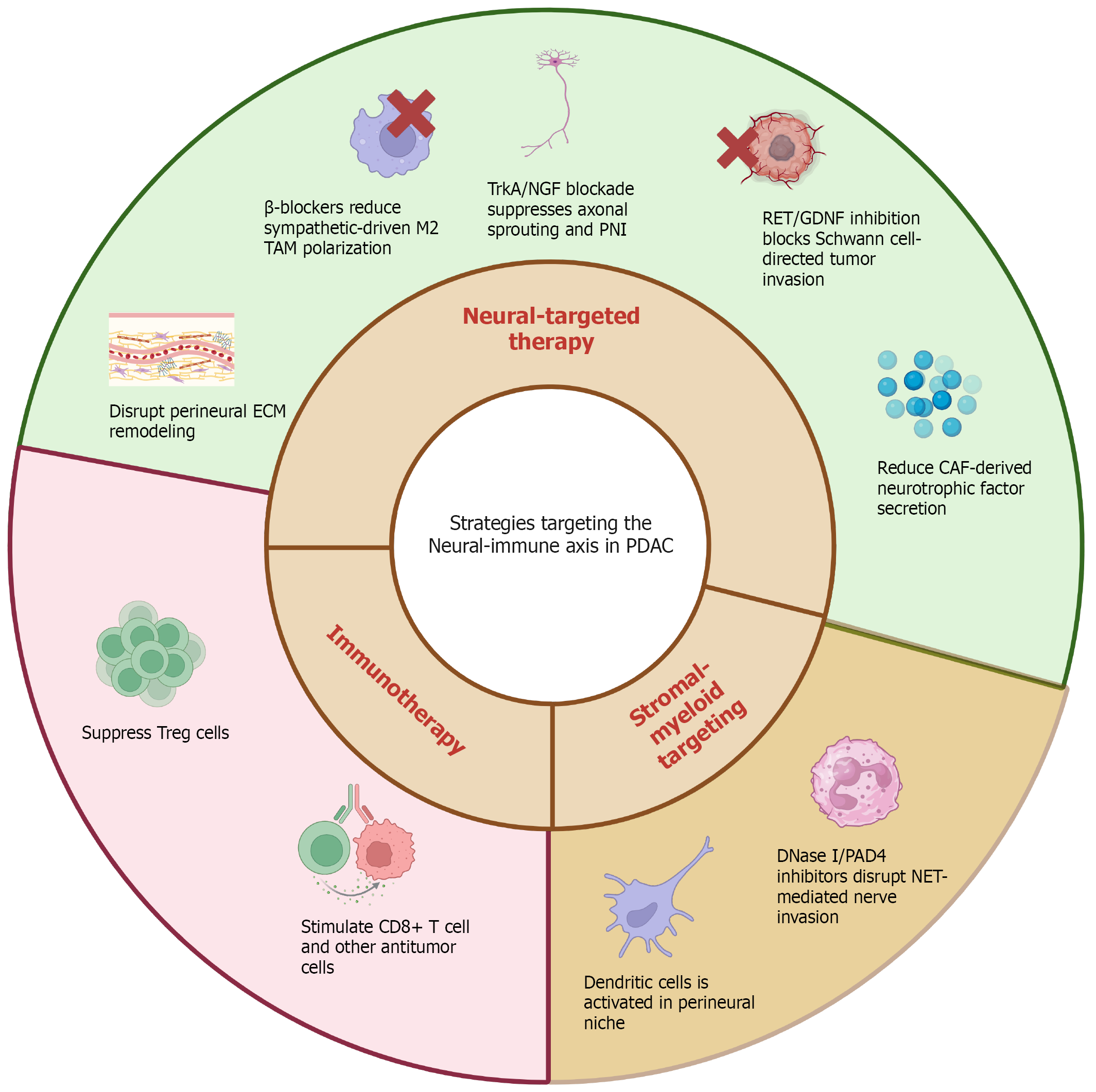
Figure 3 Schematic illustration of targeting the neural-immune axis in perineural invasion-positive pancreatic ductal adenocarcinoma.
Neural-targeted therapies including β-adrenergic blockade, tropomyosin receptor kinase A/nerve growth factor inhibition, and RET/glial cell line-derived neurotrophic factor inhibition suppress sympathetic-driven immunosuppression, axonal sprouting, and Schwann cell-directed tumor invasion. Combined stromal-myeloid targeting and immunotherapy disrupts the immunosuppressive perineural niche by depleting myeloid-derived suppressor cells and tumor-associated neutrophils, activating dendritic cell, and stimulating CD8+ T cells at the invasive neural front. TrkA: Tropomyosin receptor kinase A; NGF: Nerve growth factor; PNI: Perineural invasion; TAM: Tumor-associated macrophage; ECM: Extracellular matrix; GDNF: Glial cell line-derived neurotrophic factor; CAF: Cancer-associated fibroblast; PDAC: Pancreatic ductal adenocarcinoma.
- Citation: Sun S, Zhou RJ, Xiang SL, Zhang TT, Du JJ, Zhao HF, Xu YZ, Pan X, He XY, Zuo ZB. Prominent crosstalks between perineural invasion and immunosuppressive tumor microenvironment in pancreatic ductal adenocarcinoma. World J Clin Oncol 2026; 17(6): 121085
- URL: https://www.wjgnet.com/2218-4333/full/v17/i6/121085.htm
- DOI: https://dx.doi.org/10.5306/wjco.121085