
















Copyright: ©Author(s) 2026.
World J Clin Oncol. May 24, 2026; 17(5): 116662
Published online May 24, 2026. doi: 10.5306/wjco.v17.i5.116662
Published online May 24, 2026. doi: 10.5306/wjco.v17.i5.116662
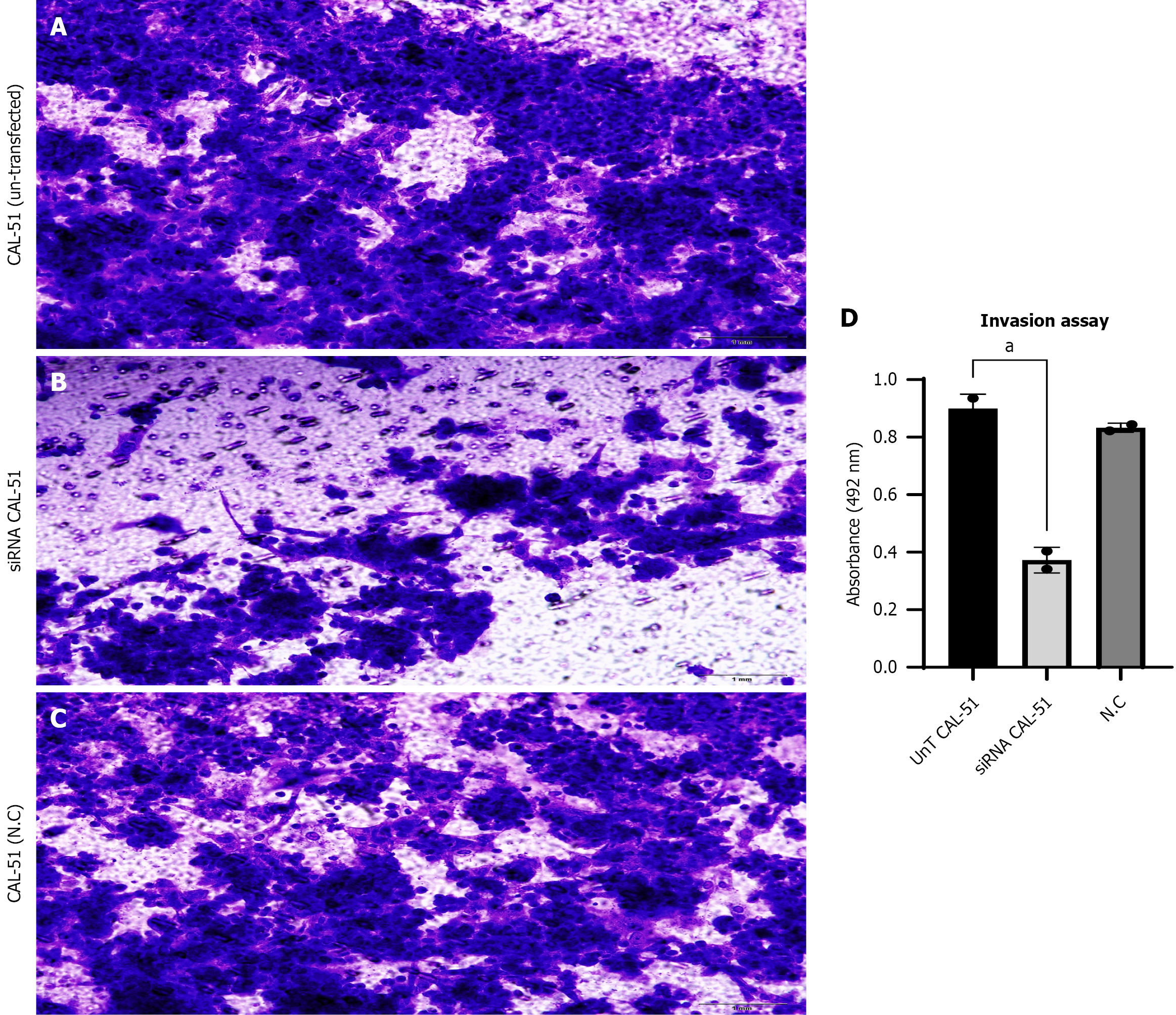
Figure 4 Functional consequences of CALD1 silencing on invasion in CAL-51 breast cancer cells.
CALD1 silencing significantly reduced collagen invasiveness in the metastatic CAL-51 cell line, as assessed by an invasion assay. A: Representative images showing high invasive capacity of untransfected CAL-51 cells, characterized by a large number of invading cells; B: Marked reduction in invasive cells following CALD1 silencing in CAL-51 cells (small interfering RNA-CALD1); C: Cells transfected with negative control small interfering RNA exhibited invasive characteristics similar to untransfected CAL-51 cells (× 100 magnification); D: Quantitative analysis of invasion measured by absorbance at 492 nm. aP < 0.0080. N.C: Negative control small interfering RNA; siRNA: Small interfering RNA.
- Citation: AlNuaimi A, Nair VA, Al-Khayyal N, Suliman A, Bou Malhab LJ, Hamoudi R, Hamad M, Talaat IM, Abdel-Rahman WM. Overexpression of low-molecular-weight caldesmon is associated with aggressive phenotypes and epithelial-mesenchymal transition in breast cancer cells. World J Clin Oncol 2026; 17(5): 116662
- URL: https://www.wjgnet.com/2218-4333/full/v17/i5/116662.htm
- DOI: https://dx.doi.org/10.5306/wjco.v17.i5.116662