
















Copyright: ©Author(s) 2026.
World J Clin Oncol. May 24, 2026; 17(5): 116662
Published online May 24, 2026. doi: 10.5306/wjco.v17.i5.116662
Published online May 24, 2026. doi: 10.5306/wjco.v17.i5.116662
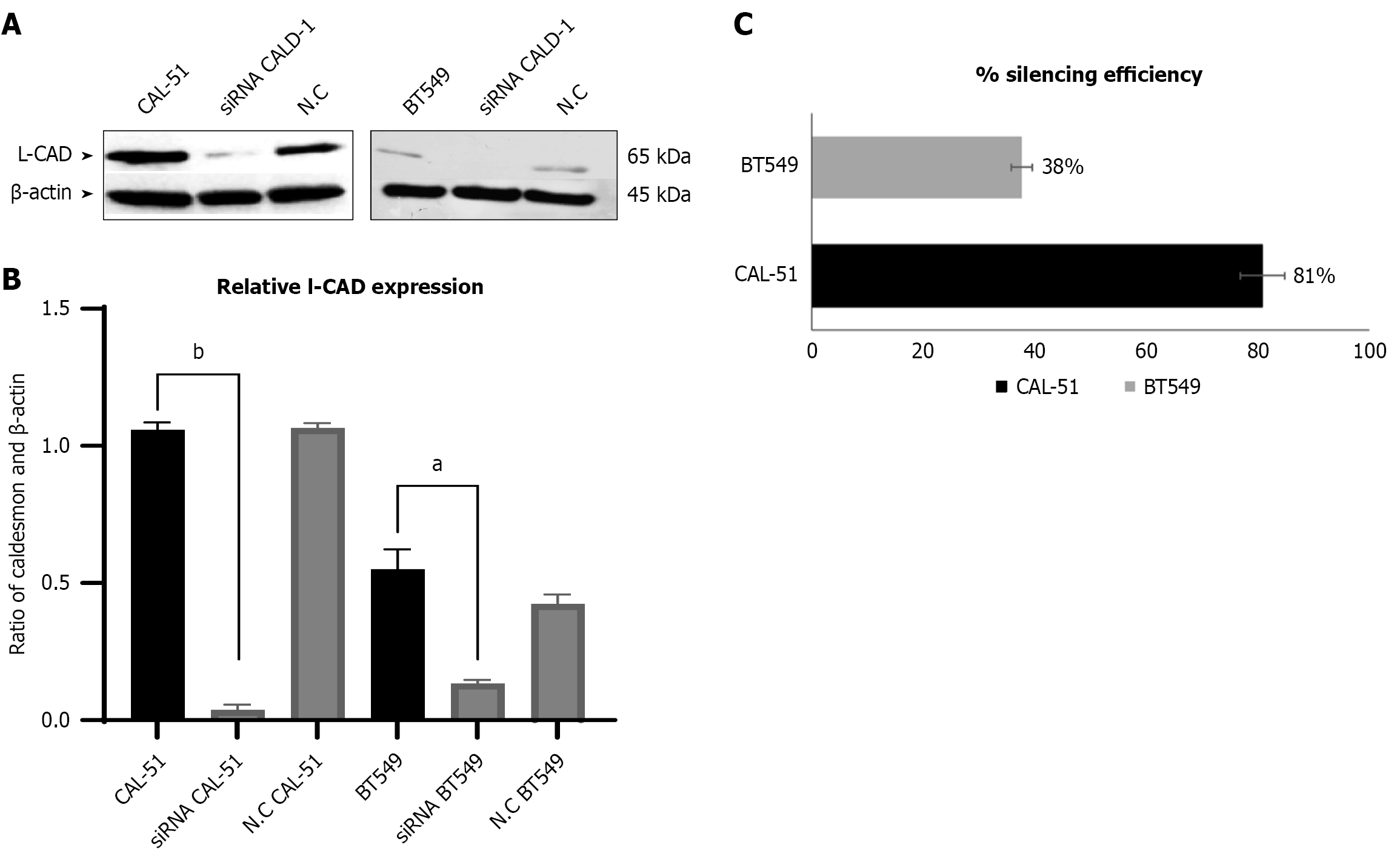
Figure 2 Silencing of CALD1 in CAL-51 and BT-549 breast cancer cell lines.
Small interfering RNA (siRNA)-mediated silencing of CALD1 resulted in a more pronounced reduction (81%) of low-molecular-weight isoform of caldesmon (l-CAD) expression in CAL-51 cells compared with BT-549 cells. A: Representative western blots showing l-CAD expression following transfection with CALD1-specific siRNA in CAL-51 and BT-549 cells. Cells transfected with negative control siRNA and Lipofectamine® served as controls; B: Relative l-CAD protein expression quantified as the ratio of l-CAD to β-actin; C: Percentage silencing efficiency of l-CAD in CAL-51 and BT-549 cells. aP < 0.0151; bP < 0.0005. l-CAD: Low-molecular-weight isoform of caldesmon; siRNA: Small interfering RNA; N.C: Negative control small interfering RNA and Lipofectamine® served as controls.
- Citation: AlNuaimi A, Nair VA, Al-Khayyal N, Suliman A, Bou Malhab LJ, Hamoudi R, Hamad M, Talaat IM, Abdel-Rahman WM. Overexpression of low-molecular-weight caldesmon is associated with aggressive phenotypes and epithelial-mesenchymal transition in breast cancer cells. World J Clin Oncol 2026; 17(5): 116662
- URL: https://www.wjgnet.com/2218-4333/full/v17/i5/116662.htm
- DOI: https://dx.doi.org/10.5306/wjco.v17.i5.116662