
















Copyright: ©Author(s) 2026.
World J Clin Oncol. May 24, 2026; 17(5): 113527
Published online May 24, 2026. doi: 10.5306/wjco.v17.i5.113527
Published online May 24, 2026. doi: 10.5306/wjco.v17.i5.113527
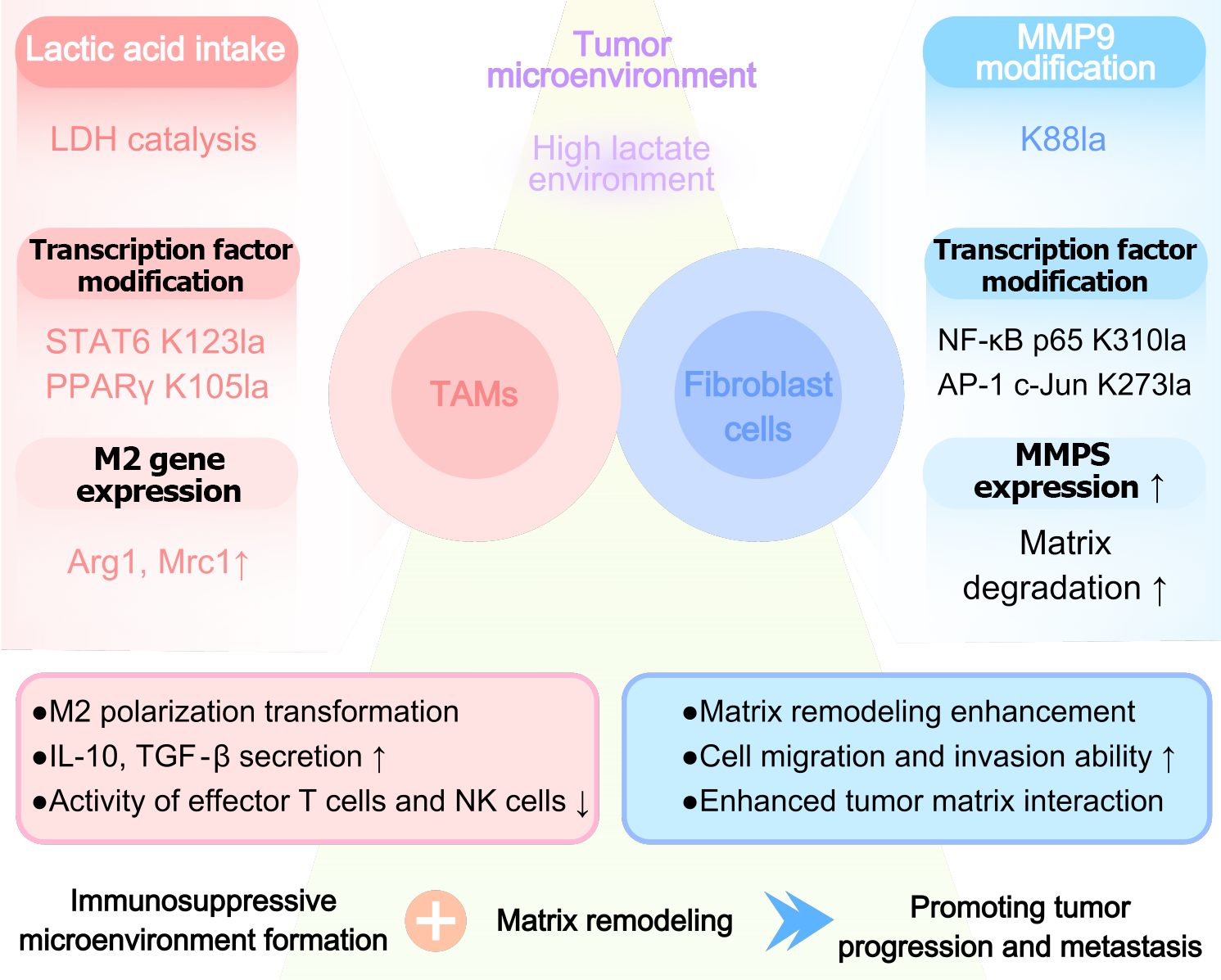
Figure 2 Lactylation, as a post-translational modification, affects multiple cellular processes by modifying lysine residues on target proteins.
This modification enhances cell signaling pathways, such as the nuclear factor kappa-light-chain-enhancer of activated B cells and phosphatidylinositol 3-kinase/protein kinase B/mammalian target of rapamycin pathways, promoting cell proliferation and inhibiting apoptosis. It also regulates the cell cycle by modifying key proteins involved in cycle progression. In addition to signaling, lactylation alters chromatin structure, making it more open, and enhances gene expression by activating transcription factors and related genes. The modification also influences protein stability by extending the half-life of proteins, enhances enzyme activity, and induces conformational changes that adjust protein functions. Furthermore, lactylation plays a critical role in metabolic reprogramming and overall protein function enhancement, thereby contributing to tumor progression and immune escape. MMP9: Matrix metallopeptidase 9; LDH: Lactate dehydrogenase; STAT6: Signal transducer and activator of transcription 6; PPAR: Peroxisome proliferator-activated receptor; Arg1: Arginase 1; Mrc1: Mannose receptor C-type 1; TAM: Tumor-associated macrophage; NF-κB: Nuclear factor kappa B; AP-1: Activator protein 1; MMPS: Matrix metallopeptidases; IL: Interleukin; TGF: Transforming growth factor; NK: Natural killer.
- Citation: Chen JH, Wu JQ, Lv CM. Role of lactylation in tumorigenesis: Analysis based on the ten hallmarks of cancer. World J Clin Oncol 2026; 17(5): 113527
- URL: https://www.wjgnet.com/2218-4333/full/v17/i5/113527.htm
- DOI: https://dx.doi.org/10.5306/wjco.v17.i5.113527