











BPG is committed to discovery and dissemination of knowledge
Evidence Review
Copyright: ©Author(s) 2026.
World J Clin Oncol. May 24, 2026; 17(5): 113527
Published online May 24, 2026. doi: 10.5306/wjco.v17.i5.113527
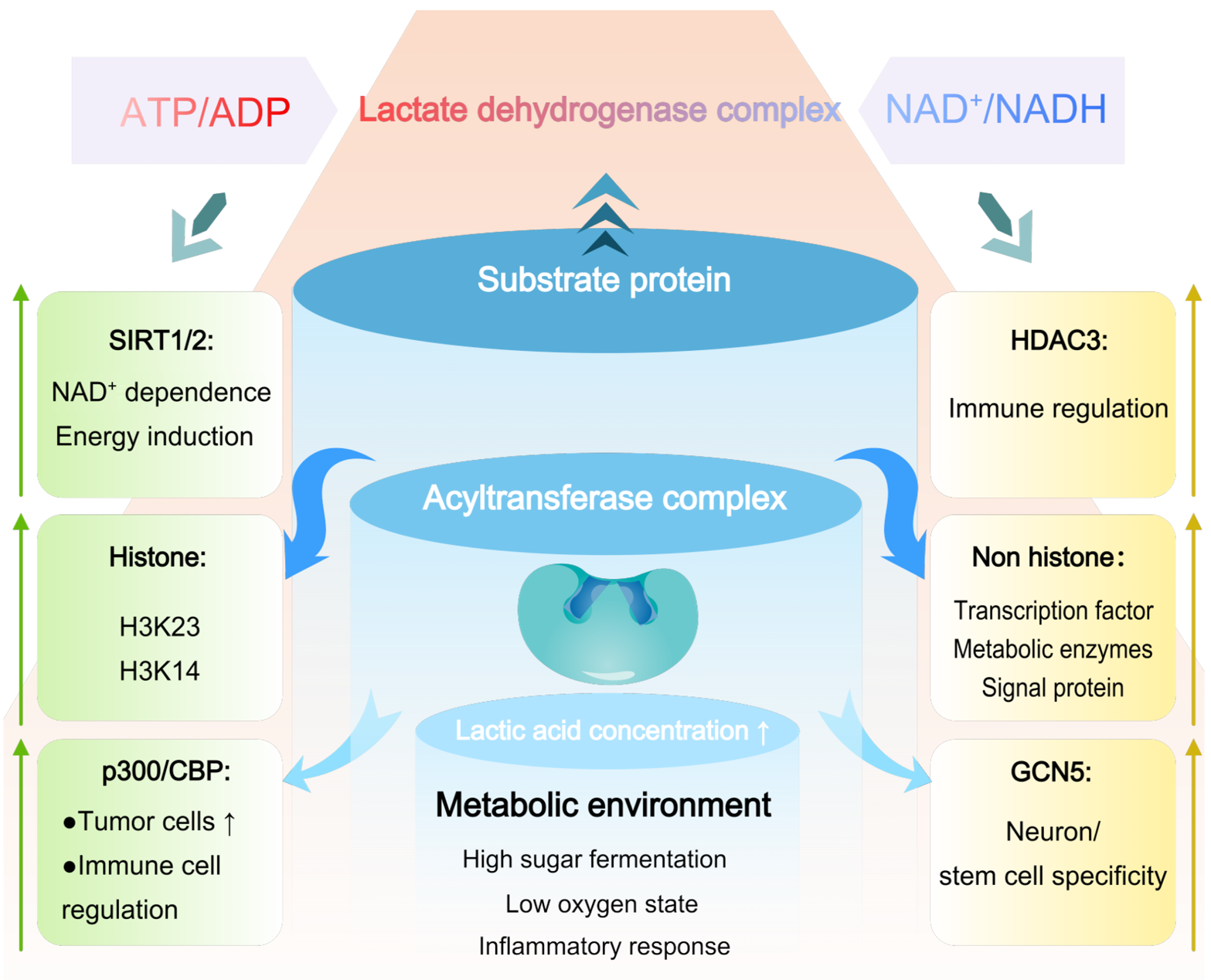
Figure 1
Figure 1 Lactylation in the tumor microenvironment is influenced by elevated lactate concentrations, resulting from high sugar fermentation, low oxygen levels, and inflammatory responses. This metabolic environment affects key enzymes such as the lactate dehydrogenase complex, adenosine triphosphate/adenosine diphosphate, and nicotinamide adenine dinucleotide (oxidized form)/nicotinamide adenine dinucleotide (reduced form), which regulate the lactylation of substrate proteins. Acyltransferase complexes, including p300/CBP, catalyze the lactylation of both histone proteins and non-histone proteins, such as transcription factors and metabolic enzymes. These modifications contribute to tumor cell survival, immune regulation, and energy induction through proteins like sirtuin 1/2, histone deacetylase 3, and general control nonderepressible 5. ATP: Adenosine triphosphate; ADP: Adenosine diphosphate; NAD+: Nicotinamide adenine dinucleotide (oxidized form); NADH: Nicotinamide adenine dinucleotide (reduced form); SIRT: Sirtuin; HDAC3: Histone deacetylase 3; GCN5: General control nonderepressible 5; H3K23: Histone H3 lysine 23; H3K14: Histone H3 lysine 14.


Write to the Help Desk