
















Copyright: ©Author(s) 2026.
World J Clin Oncol. Apr 24, 2026; 17(4): 118606
Published online Apr 24, 2026. doi: 10.5306/wjco.v17.i4.118606
Published online Apr 24, 2026. doi: 10.5306/wjco.v17.i4.118606
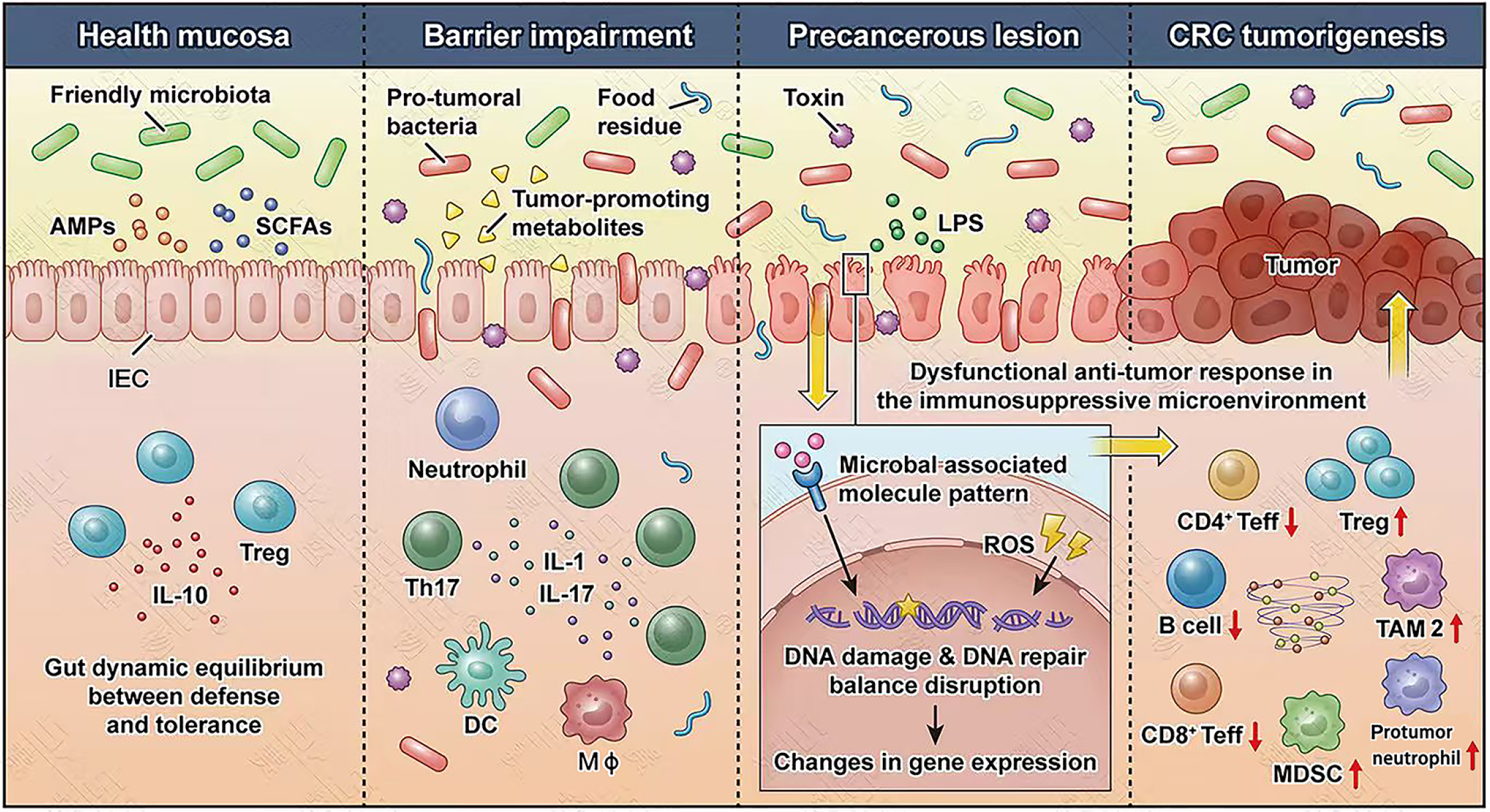
Figure 1 Schematic diagram of gut microbiome dysbiosis attribute to colorectal cancer initiation and development.
In healthy individuals, the symbiotic gut microbiome educates the host immune system to induce tolerance and re-establish immune homeostasis for survival and replication in host cells. In colorectal cancer development and progression, various oncogenic stimuli derived from gut microbiome dysbiosis increase the genotoxicity of intestinal epithelial cells and damage barrier permeability, which subsequently triggers a multistep protumoral inflammatory cascade, marked by regulatory cell recruitment (e.g., myeloid-derived suppressor cell, tumor-associated macrophage type 2) and effector cell loss (e.g., CD8+ effector T-cell, B cell), allowing tumor immune evasion. SCFAs: Short-chain fatty acids; AMPs: Antimicrobial peptides; IEC: Intestinal epithelial cell; Treg: Regulatory T cell; IL: Interleukin; Th17: T helper 17 cell; Mφ: Macrophage; DC: Dendritic cell; LPS: Lipopolysaccharide; ROS: Reactive oxygen species; CRC: Colorectal cancer; Teff: Effector T-cell; TAM2: Tumor-associated macrophage type 2; MDSC: Myeloid-derived suppressor cell.
- Citation: Ti DD, Liu P, Wu CY, Shi ZM, Guo SM, Gao ZC. Host and gut microbiota crosstalk: A new paradigm for colorectal cancer immunotherapy. World J Clin Oncol 2026; 17(4): 118606
- URL: https://www.wjgnet.com/2218-4333/full/v17/i4/118606.htm
- DOI: https://dx.doi.org/10.5306/wjco.v17.i4.118606