
















Copyright: ©Author(s) 2026.
World J Clin Oncol. Apr 24, 2026; 17(4): 117705
Published online Apr 24, 2026. doi: 10.5306/wjco.v17.i4.117705
Published online Apr 24, 2026. doi: 10.5306/wjco.v17.i4.117705
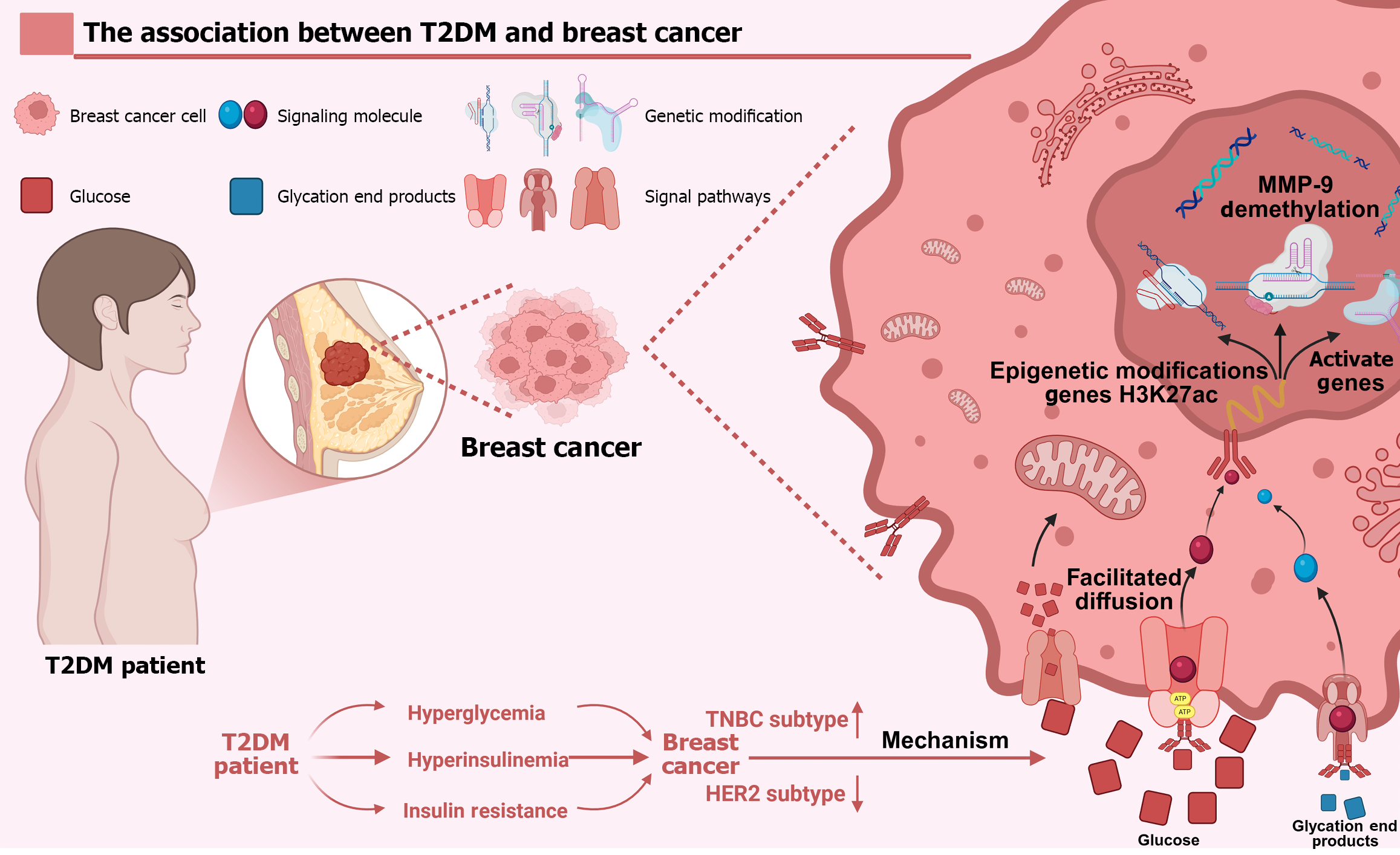
Figure 1 Type 2 diabetes exacerbates breast cancer progression through hyperglycaemia, impaired glucose tolerance and insulin resistance, driving a shift toward triple-negative subtypes while reducing human epidermal growth factor receptor 2-positive cases.
Created in BioRender. Mechanistically, elevated glucose and advanced glycation end products activate fibrinogen C domain containing 1 signalling and induce epigenetic reprogramming - including histone H3 lysine 27 acetylation and matrix metalloproteinase-9 promoter demethylation - that collectively drive metastatic progression. T2DM: Type 2 diabetes mellitus; HER2: Human epidermal growth factor receptor 2; TNBC: Triple-negative breast cancer; MMP-9: Matrix metalloproteinase-9; H3K27ac: Histone H3 lysine 27.
- Citation: Zhang SH, Yang Y, Zhang Y. Breast cancer and metabolic comorbidities: From epidemiology and molecular mechanisms to precision interventions. World J Clin Oncol 2026; 17(4): 117705
- URL: https://www.wjgnet.com/2218-4333/full/v17/i4/117705.htm
- DOI: https://dx.doi.org/10.5306/wjco.v17.i4.117705