
















Copyright: ©Author(s) 2026.
World J Clin Oncol. Apr 24, 2026; 17(4): 117197
Published online Apr 24, 2026. doi: 10.5306/wjco.v17.i4.117197
Published online Apr 24, 2026. doi: 10.5306/wjco.v17.i4.117197
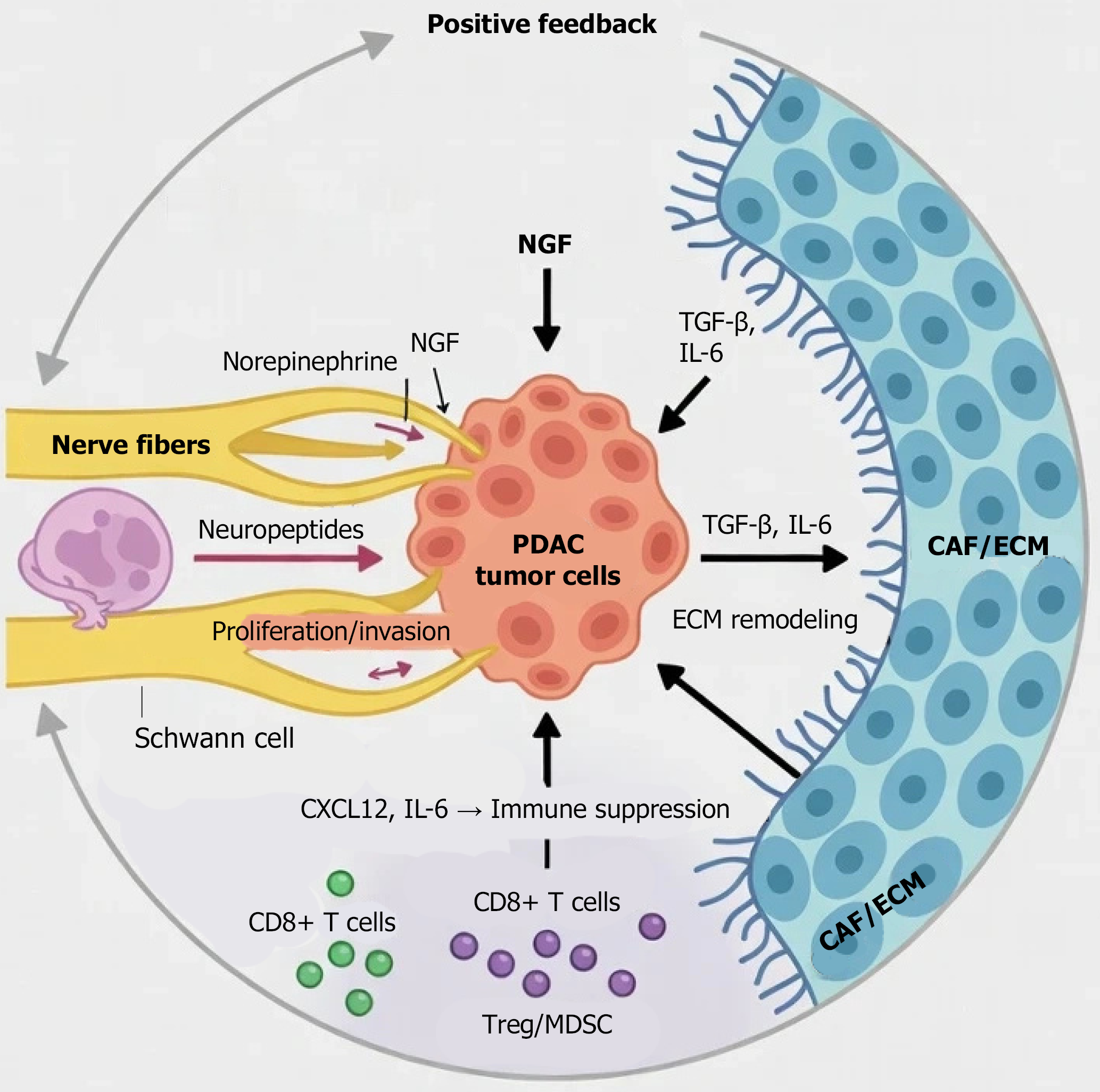
Figure 1 Core mechanism of the stroma-nerve axis in pancreatic ductal adenocarcinoma.
Schematic overview of reciprocal interactions between tumor cells, nerve fibers, cancer-associated fibroblasts (CAFs)/extracellular matrix and immune cells in pancreatic ductal adenocarcinoma. Tumor-derived factors (e.g., nerve growth factor, transforming growth factor-β, and interleukin-6) promote neurite outgrowth and CAF activation, whereas nerve-derived mediators (norepinephrine and neuropeptides) increase tumor proliferation and invasion. CAF/extracellular matrix remodeling and C-X-C motif chemokine 12/interleukin-6-driven immune suppression establish an immunosuppressive niche, forming a positive-feedback stroma-nerve axis that supports pancreatic ductal adenocarcinoma progression, immune escape and therapy resistance. NGF: Nerve growth factor; TGF: Transforming growth factor; PDAC: Pancreatic ductal adenocarcinoma; CAF: Cancer-associated fibroblasts; ECM: Extracellular matrix; CXCL12: C-X-C motif chemokine 12; IL: Interleukin; MDSC: Myeloid-derived suppressor cells.
- Citation: Yu YN, Jin SQ, Lu YT, Han LZ. Stroma-nerve axis in pancreatic ductal adenocarcinoma: Bidirectional regulatory mechanisms and clinical translation hypothesis. World J Clin Oncol 2026; 17(4): 117197
- URL: https://www.wjgnet.com/2218-4333/full/v17/i4/117197.htm
- DOI: https://dx.doi.org/10.5306/wjco.v17.i4.117197