
















Copyright: ©Author(s) 2026.
World J Clin Oncol. Nov 24, 2026; 17(11): 124935
Published online Nov 24, 2026. doi: 10.5306/wjco.124935
Published online Nov 24, 2026. doi: 10.5306/wjco.124935
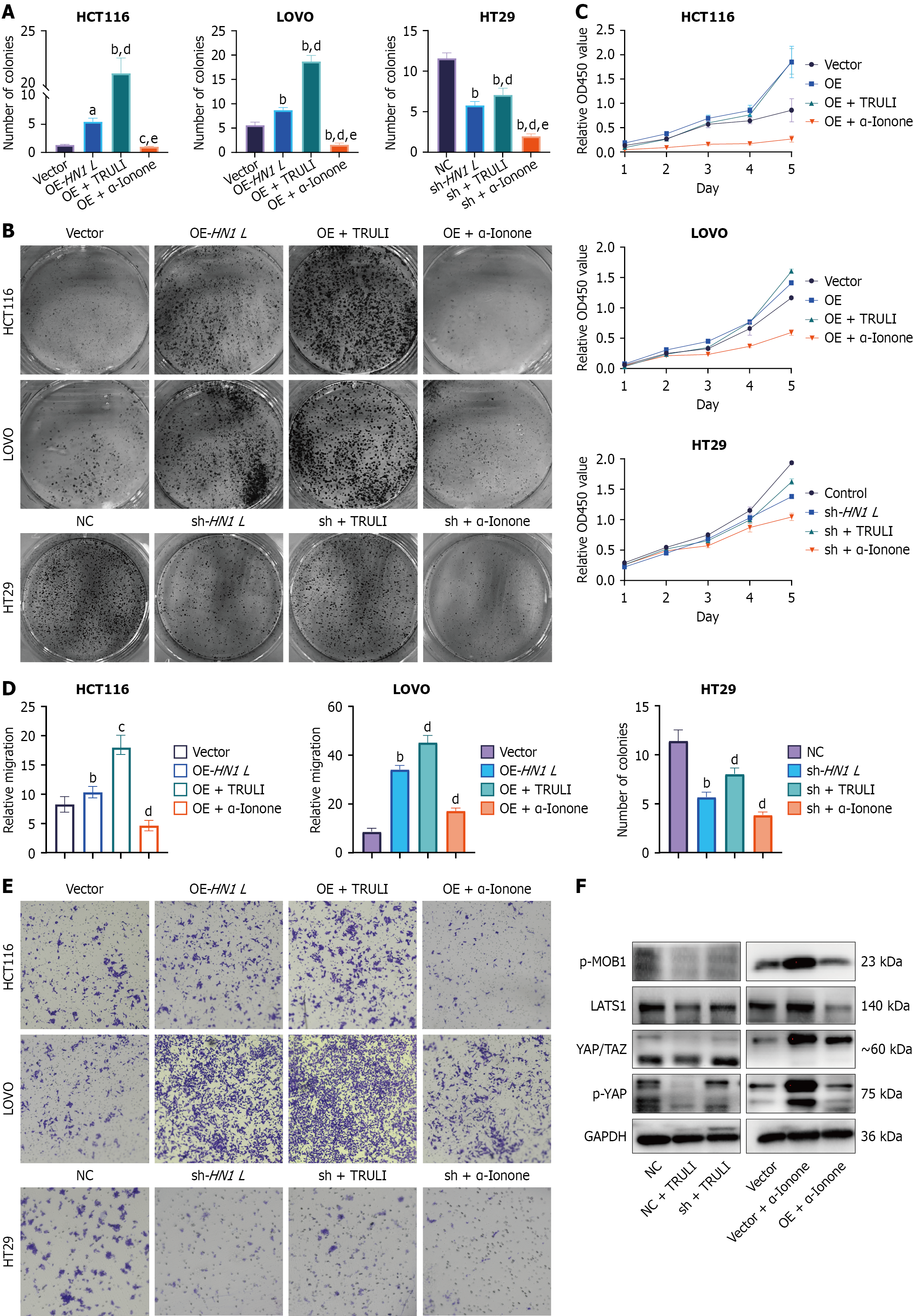
Figure 4 HN1 L is a potential target for modulating the Hippo pathway.
A and B: Quantification (A) and representative images (B) of colony formation assays in HN1 L-modified colorectal cancer (CRC) cells treated with the Hippo pathway activator α-Ionone or the LATS kinase inhibitor TRULI; C: CCK-8 proliferation curves under the indicated HN1 L-modulation and pharmacological-treatment conditions; D and E: Quantification (D) and representative images (E) of Transwell migration assays under the indicated conditions; F: Western blot analysis of p-MOB1, LATS1, YAP/TAZ, and p-YAP in HN1 L-modified CRC cells following treatment with α-Ionone or TRULI. Quantitative data are presented as mean ± SD from at least three independent experiments. ᵃP < 0.05, ᵇP < 0.01 vs the corresponding control (Vector or NC); ᶜP < 0.05, ᵈP < 0.01 vs the corresponding HN1L-modified group (OE-HN1L or sh-HN1L); eP < 0.01 vs the corresponding TRULI-treated group. OE: Overexpression; NC: Negative control.
- Citation: Kang D, Zeng LX, Zhang RX, Ma WJ, Yang R, Wang X. HN1 L promotes colorectal cancer proliferation and migration by inhibiting the Hippo pathway. World J Clin Oncol 2026; 17(11): 124935
- URL: https://www.wjgnet.com/2218-4333/full/v17/i11/124935.htm
- DOI: https://dx.doi.org/10.5306/wjco.124935