
















©The Author(s) 2026.
World J Clin Oncol. Jan 24, 2026; 17(1): 116090
Published online Jan 24, 2026. doi: 10.5306/wjco.v17.i1.116090
Published online Jan 24, 2026. doi: 10.5306/wjco.v17.i1.116090
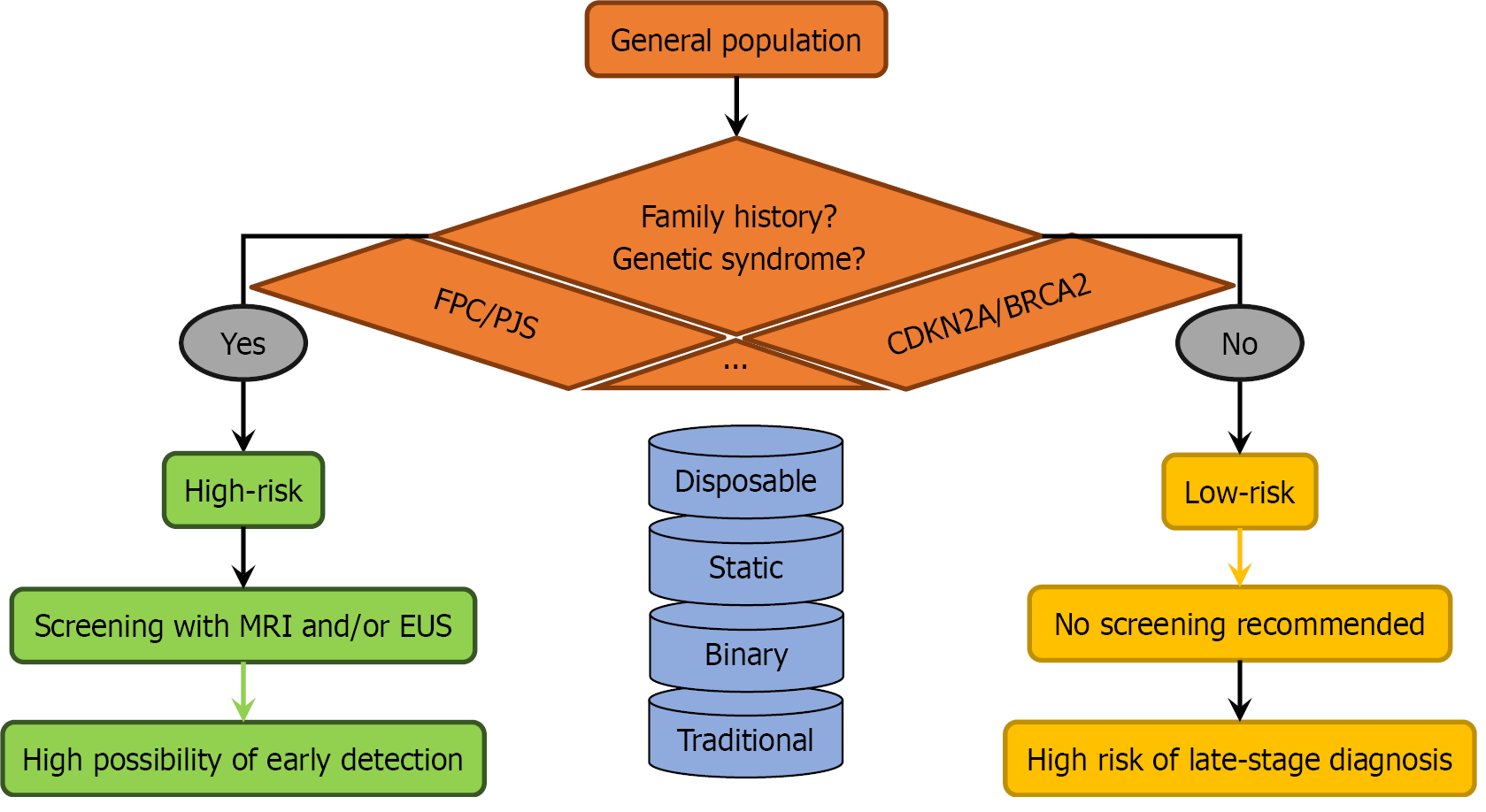
Figure 1 Traditional pancreatic cancer screening pathways and their limitations.
The core decision point in traditional screening models is a straightforward binary judgement process. A small number of individuals meeting stringent family history/genetic criteria are directed onto a high-risk screening pathway, receiving early detection (green arrow). The vast majority of individuals failing to meet these strict criteria are uniformly categorised as “low risk” and excluded from the screening system. The prominent yellow arrow clearly indicates the adverse outcome associated with this pathway, highlighting the core flaw of the traditional model: The failure to detect a substantial number of sporadic cases at an early stage. FPC: Familial pancreatic cancer; PJS: Peutz-Jeghers syndrome; CDKN2A: Cyclin-dependent kinase inhibitor 2A; BRCA2: Breast cancer susceptibility gene 2; MRI: Magnetic resonance imaging; EUS: Endoscopic ultrasound.
- Citation: Wang RG. Beyond sensitivity and specificity: Redefining the era connotation of “low-risk” in pancreatic cancer screening. World J Clin Oncol 2026; 17(1): 116090
- URL: https://www.wjgnet.com/2218-4333/full/v17/i1/116090.htm
- DOI: https://dx.doi.org/10.5306/wjco.v17.i1.116090