
















©The Author(s) 2025.
World J Clin Oncol. Dec 24, 2025; 16(12): 111086
Published online Dec 24, 2025. doi: 10.5306/wjco.v16.i12.111086
Published online Dec 24, 2025. doi: 10.5306/wjco.v16.i12.111086
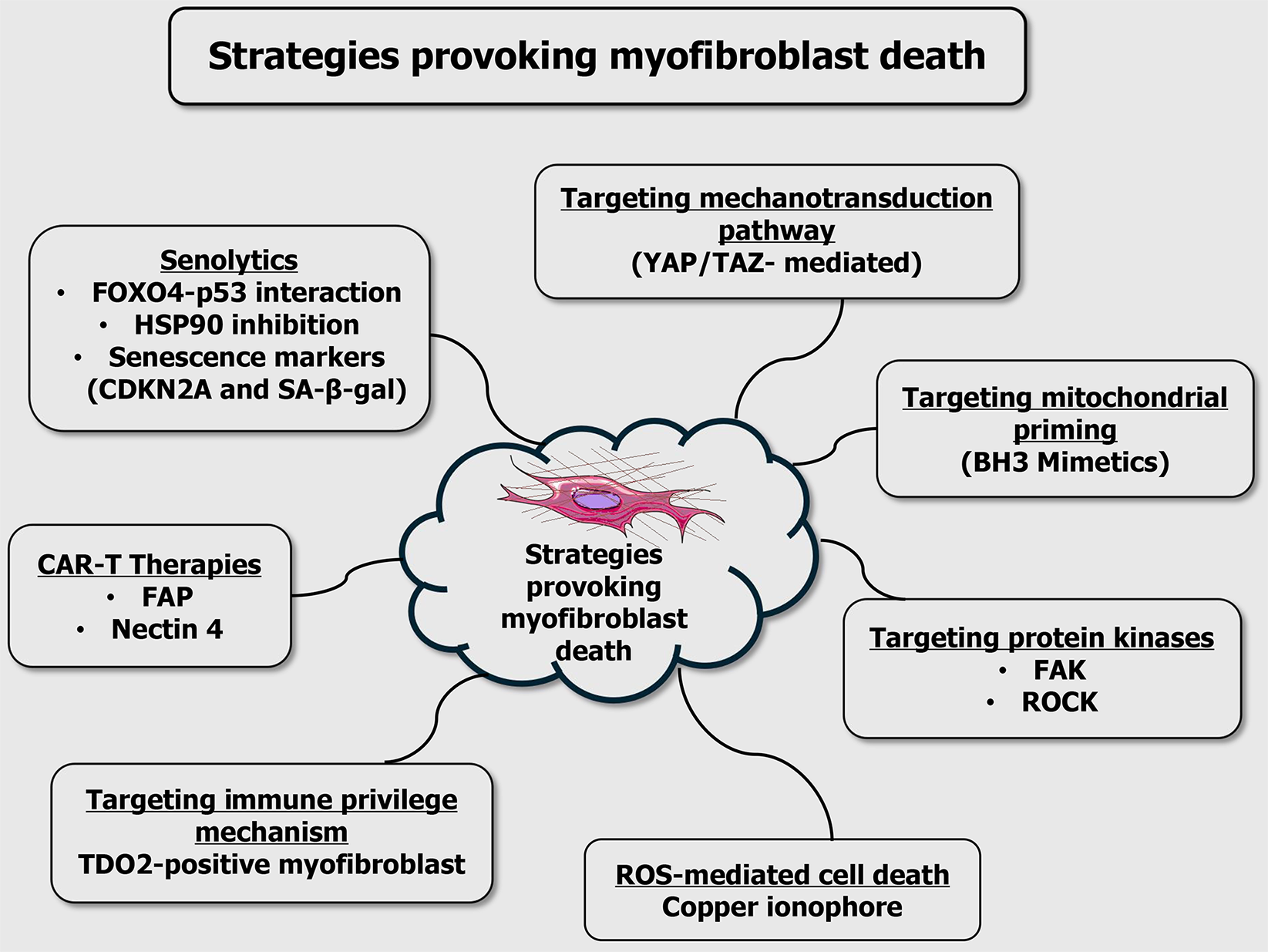
Figure 2 Strategies provoking myofibroblast death.
Key approaches include: (1) Senolytics: Elimination of senescent myofibroblasts by disrupting the forkhead box O4-p53 interaction, inhibiting heat shock protein 90, or targeting senescence markers like cyclin dependent kinase inhibitor 2A and senescence-associated β-galactosidase; (2) Chimeric antigen receptor T cell therapies: Engineered T cells targeting fibroblast-specific antigens such as fibroblast activation protein and nectin-4; (3) Immune privilege targeting: Disruption of immunosuppressive mechanisms, including tryptophan 2,3-dioxygenase-expressing myofibroblasts; (4) Mechanotransduction inhibition: Blocking Yes-associated protein and transcriptional coactivator with PDZ-binding motif signaling pathways that respond to extracellular matrix stiffness; (5) Mitochondrial priming: Sensitizing cells to apoptosis using BCL-2 homology 3 mimetics; (6) Protein kinase inhibition: Targeting focal adhesion kinase and Rho-associated coiled-coil containing protein kinase, which regulate cytoskeletal remodeling and survival signalling; and (7) Reactive oxygen species: Mediated cell death - induction of oxidative stress via agents such as copper ionophores. Collectively, these strategies offer promising avenues for the selective elimination of pathogenic myofibroblasts in fibrotic diseases and cancer. FOXO4: Forkhead box O4; HSP90: Heat shock protein 90; CDKN2A: Cyclin dependent kinase inhibitor 2A; SA-β-gal: Senescence-associated β-galactosidase; CAR-T: Chimeric antigen receptor T; FAP: Fibroblast activation protein; TDO2: Tryptophan 2,3-dioxygenase; YAP/TAZ: Yes-associated protein and transcriptional coactivator with PDZ-binding motif; BH3: B-cell lymphoma 2 homology 3; FAK: Focal adhesion kinase; ROCK: Rho-associated coiled-coil containing protein kinase; ROS: Reactive oxygen species.
- Citation: Shalini T, Sudhandiran G. Provoking myofibroblast death: Strategies to resolve fibrosis and remodel tumor microenvironment. World J Clin Oncol 2025; 16(12): 111086
- URL: https://www.wjgnet.com/2218-4333/full/v16/i12/111086.htm
- DOI: https://dx.doi.org/10.5306/wjco.v16.i12.111086