
















©The Author(s) 2025.
World J Clin Oncol. Dec 24, 2025; 16(12): 111086
Published online Dec 24, 2025. doi: 10.5306/wjco.v16.i12.111086
Published online Dec 24, 2025. doi: 10.5306/wjco.v16.i12.111086
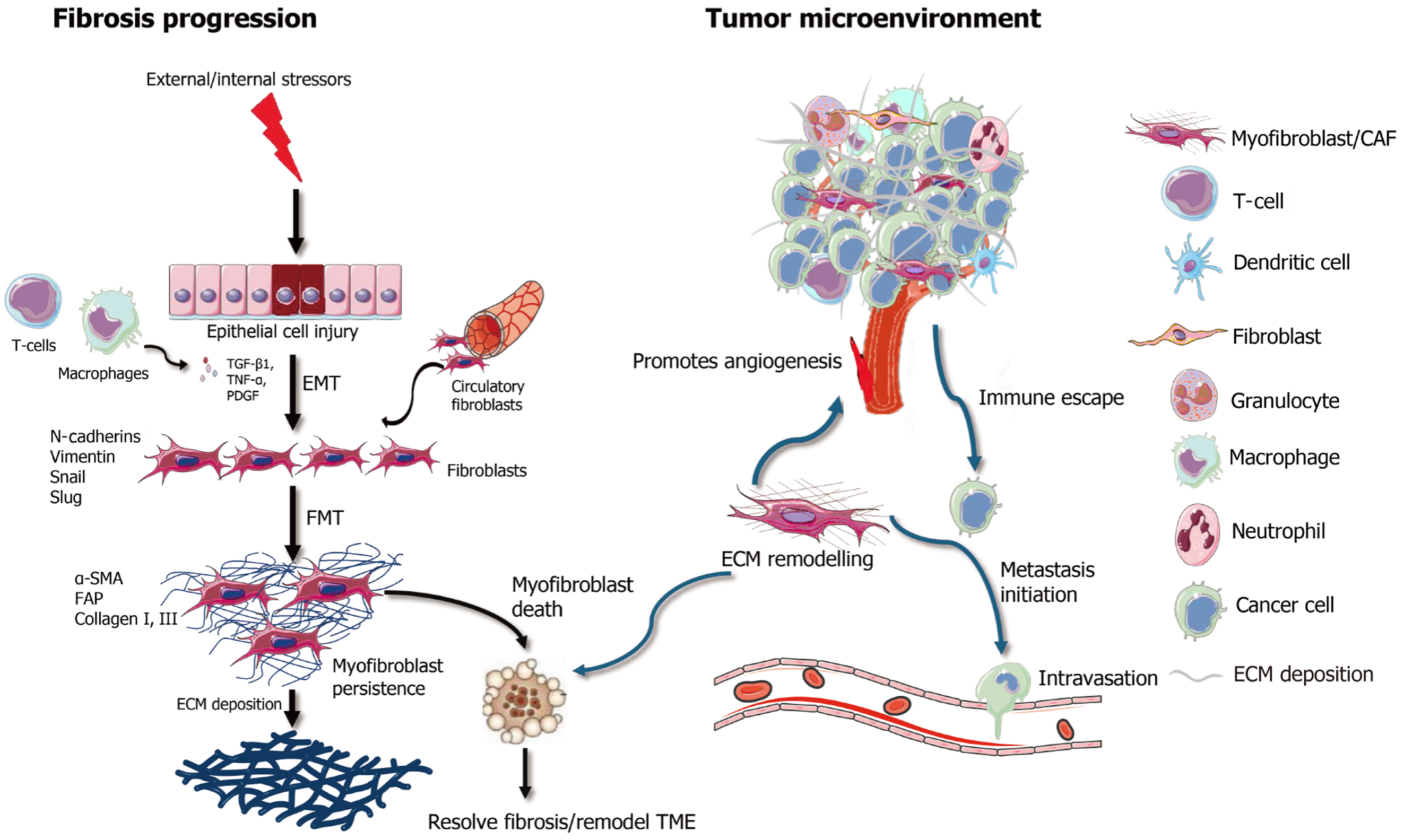
Figure 1 Myofibroblasts/cancer associated fibroblasts in fibrosis and tumor microenvironment.
Left panel: Upon external or internal stressors, epithelial cell injury triggers epithelial-to-mesenchymal transition, mediated by inflammatory cytokines (e.g., transforming growth factor, tumor necrosis factor, platelet derived growth factor) released by immune cells such as macrophages. This leads to fibroblast activation through fibroblast-to-myofibroblast transition, marked by the expression of α-smooth muscle actin, fibroblast activator protein, and collagen I/III, which contribute to excessive extracellular matrix deposition. Persistent myofibroblast activation leads to fibrosis, in contrast inducing myofibroblast death could resolve fibrosis. Right panel: Within the tumor microenvironment, cancer-associated myofibroblasts promote tumor progression by enhancing angiogenesis, supporting immune evasion, initiating metastasis, and remodeling the excessive extracellular matrix. The cellular interactions involve multiple components, including T cells, macrophages, dendritic cells, and cancer cells. Myofibroblast depletion or reprogramming may thus serve as a therapeutic strategy to mitigate fibrosis and recondition the tumor microenvironment. TGF-β1: Transforming growth factor; TNF-α: Tumor necrosis factor α; PDGF: Platelet derived growth factor; EMT: Epithelial-to-mesenchymal transition; FMT: Fibroblast-to-myofibroblast transition; α-SMA: α-smooth muscle actin; FAP: Fibroblast activator protein; TME: Tumor microenvironment; ECM: Excessive extracellular matrix; CAF: Cancer-associated myofibroblast.
- Citation: Shalini T, Sudhandiran G. Provoking myofibroblast death: Strategies to resolve fibrosis and remodel tumor microenvironment. World J Clin Oncol 2025; 16(12): 111086
- URL: https://www.wjgnet.com/2218-4333/full/v16/i12/111086.htm
- DOI: https://dx.doi.org/10.5306/wjco.v16.i12.111086