
















©The Author(s) 2025.
World J Clin Oncol. Nov 24, 2025; 16(11): 112514
Published online Nov 24, 2025. doi: 10.5306/wjco.v16.i11.112514
Published online Nov 24, 2025. doi: 10.5306/wjco.v16.i11.112514
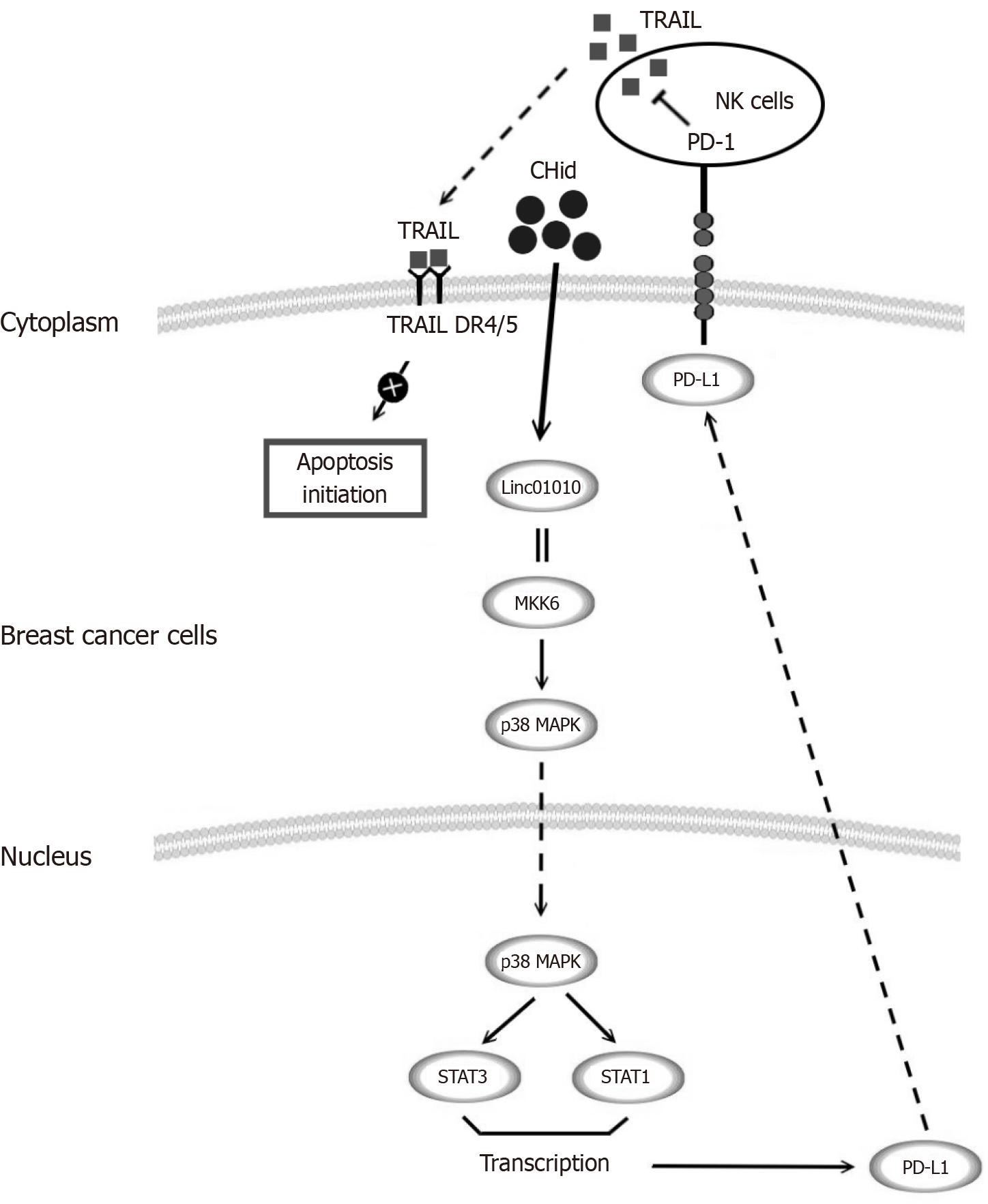
Figure 6 Schematic representation of tumor microenvironment model with function of Linc01010-mitogen-activated protein kinase kinase 6-programmed death-ligand 1 with breast cancer cells and natural killer cells.
We investigated the mechanism of long chain non-coding RNA Linc01010 when provoked by Chidamide with mitogen-activated protein kinase kinase 6 interaction, and its ability to induce the p38-mitogen-activated protein kinases pathway, resulting in an increase in downstream programmed death-ligand 1 (PD-L1). The increase of PD-L1 reduced the secretion of tumor necrosis factor-related apoptosis-inducing ligand by natural killer cells in the tumor microenvironment through programmed death-1, and ultimately moderated the pharmacological effect of Chidamide on breast cancer cells. The results obtained from this study can provide a strong basis for enhancing the effectiveness of current anti-breast cancer medications and identifying new targets for drug resistance. CHid: Chidamide; MAPK: Mitogen-activated protein kinases; MKK6: Mitogen-activated protein kinase kinase 6; NK: Natural killer; PD-L1: Programmed death-ligand 1; PD-1: Programmed death-1; TRAIL: Tumor necrosis factor-related apoptosis-inducing ligand.
- Citation: Han H, Guo XY, Wen JX, Zhao XM, Zhou WQ. Immune regulation of Chidamide-induced Linc01010 accumulation in breast cancer cell death. World J Clin Oncol 2025; 16(11): 112514
- URL: https://www.wjgnet.com/2218-4333/full/v16/i11/112514.htm
- DOI: https://dx.doi.org/10.5306/wjco.v16.i11.112514