
















©The Author(s) 2025.
World J Clin Oncol. Nov 24, 2025; 16(11): 108667
Published online Nov 24, 2025. doi: 10.5306/wjco.v16.i11.108667
Published online Nov 24, 2025. doi: 10.5306/wjco.v16.i11.108667
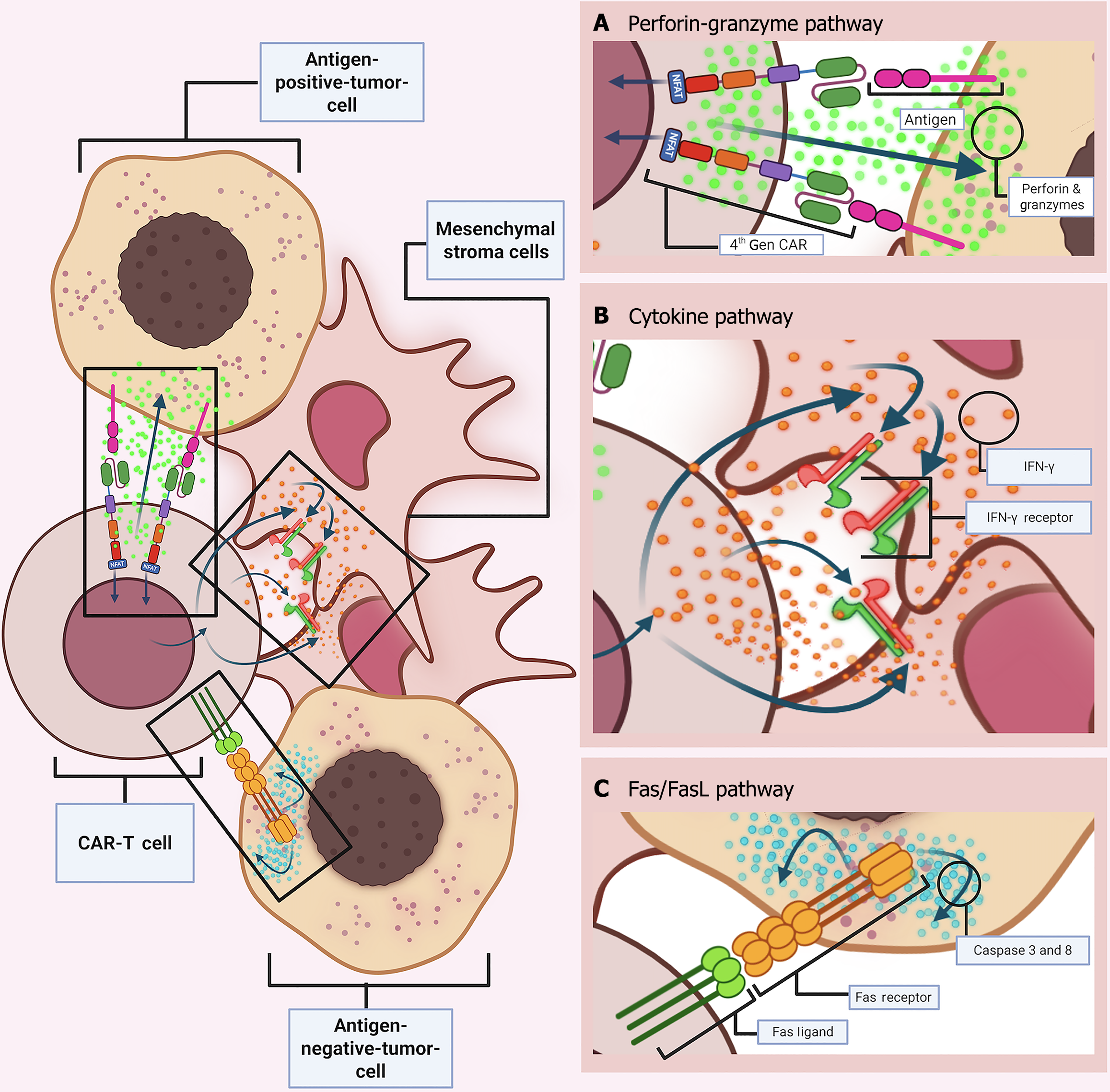
Figure 4 Chimeric antigen receptor T-mediated tumor cytotoxicity through three apoptotic pathways.
A: Perforin-granzyme degranulation pathway: Chimeric antigen receptor (CAR) T cells recognize antigen-positive tumor cells through CAR-tumor-associated antigen binding, resulting in perforin and granzyme release driven targeted cell death; B: Cytokine-Mediated Pathway: Cytokine (e.g., interferon-gamma) secretion (here, due to the secondary cytokine transgene expression after nuclear factor of activated T cells-included CAR activation) sensitizes the stromal cells in the tumor microenvironment (TME). It upregulates complementary receptor expression and proper stromal targeting through ligand-receptor engagement; C: Death receptor-ligand [Fas/Fas ligand (FasL) Pathway: Antigen loss of tumor cells inside TME can be targeted using the death receptor-ligand engagement, through the formation of the FasL-receptor complex. CAR: Chimeric antigen receptor; IFN-γ: Interferon-gamma; NFAT: Nuclear factor of activated T cells; FasL: Fas ligand.
- Citation: Arjumand S, Raj A, Prattay KMR, Omer HBM, Azam F. Chimeric antigen receptor T cell therapy: Revolutionizing cancer treatment. World J Clin Oncol 2025; 16(11): 108667
- URL: https://www.wjgnet.com/2218-4333/full/v16/i11/108667.htm
- DOI: https://dx.doi.org/10.5306/wjco.v16.i11.108667