
















Copyright: ©Author(s) 2026.
World J Biol Chem. Sep 5, 2026; 17(3): 125024
Published online Sep 5, 2026. doi: 10.4331/wjbc.125024
Published online Sep 5, 2026. doi: 10.4331/wjbc.125024
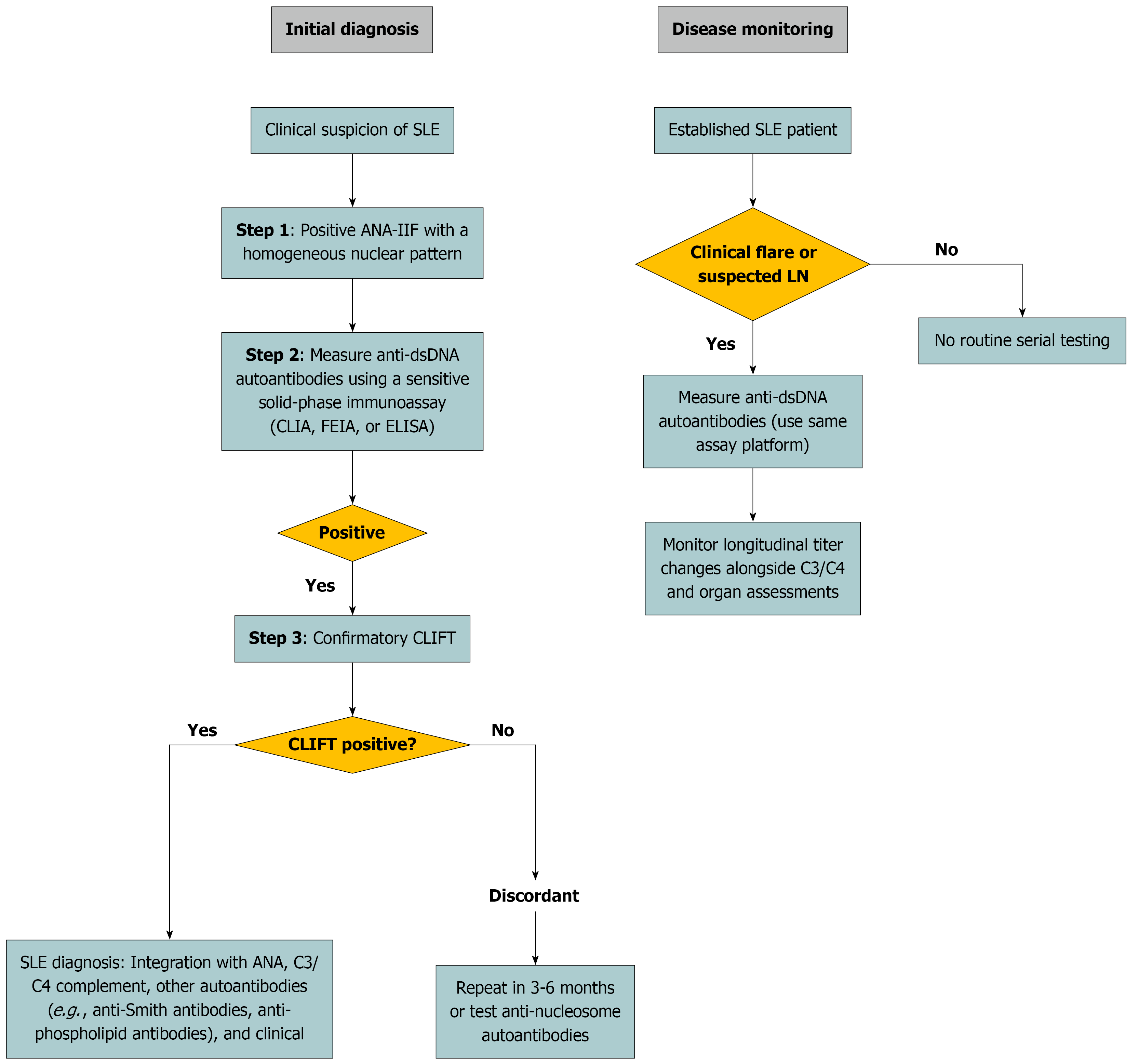
Figure 2 Proposed testing strategy for anti-double-stranded DNA autoantibodies.
For the initial diagnosis of systemic lupus erythematosus (SLE), a three-step approach is recommended, beginning with clinical suspicion of SLE and a positive antinuclear antibodies (ANA) - indirect immunofluorescence with a homogeneous nuclear pattern, followed by measurement of anti-double-stranded DNA (anti-dsDNA) autoantibodies using a solid-phase immunoassay (chemiluminescence immunoassay, fluoroenzyme immunoassay, or enzyme-linked immunosorbent assay), with confirmation of positive results using the highly specific Crithidia luciliae indirect immunofluorescence test (CLIFT). Final interpretation should always integrate the clinical manifestations, ANA profile, and C3 and C4 complement levels. In patients with persistent clinical suspicion, a positive solid-phase assay with a negative CLIFT result may warrant repeat testing after 3-6 months. In patients with established SLE, disease monitoring should preferably be performed using the same assay platform. Anti-dsDNA results should always be interpreted in conjunction with clinical disease activity, serum C3 and C4 concentrations, and organ-specific assessments, particularly in patients with suspected lupus nephritis. CLIFT: Crithidia luciliae indirect immunofluorescence test; ELISA: Enzyme-linked immunosorbent assay; CLIA: Chemiluminescence immunoassay; FEIA: Fluoroenzyme immunoassay; SLE: Systemic lupus erythematosus; anti-dsDNA: Anti-double-stranded DNA; LN: Lupus nephritis; ANA: Antinuclear antibodies; IIF: Indirect immunofluorescence.
- Citation: Bouayad A. Advances and pitfalls in anti-double-stranded DNA autoantibody detection and interpretation. World J Biol Chem 2026; 17(3): 125024
- URL: https://www.wjgnet.com/1949-8454/full/v17/i3/125024.htm
- DOI: https://dx.doi.org/10.4331/wjbc.125024