
















©The Author(s) 2025.
World J Biol Chem. Dec 5, 2025; 16(4): 112768
Published online Dec 5, 2025. doi: 10.4331/wjbc.v16.i4.112768
Published online Dec 5, 2025. doi: 10.4331/wjbc.v16.i4.112768
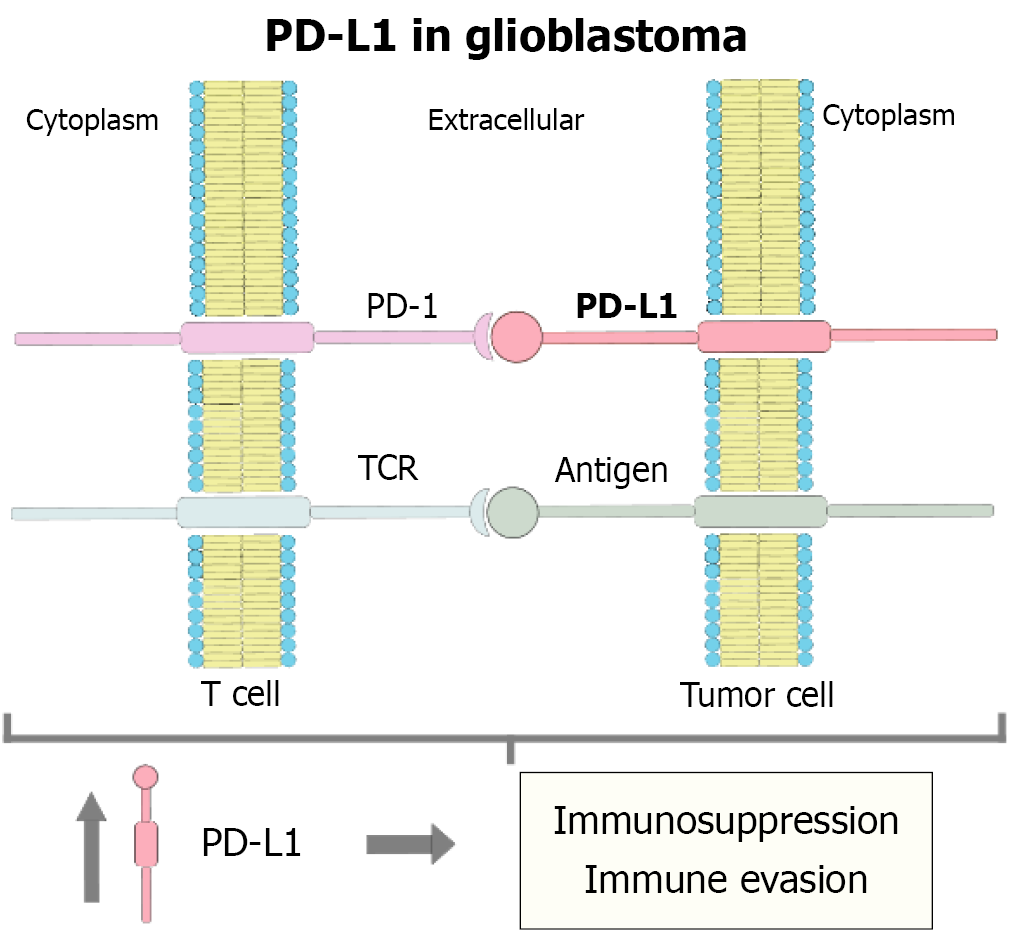
Figure 4 The molecular function of programmed death-ligand 1 and its relationship with glioblastoma.
Glioblastoma tumor cells can evade the immune response through the overexpression of programmed death-ligand 1 on their surface. This ligand binds to the programmed cell death protein 1 receptor present on T cells, inhibiting T cell receptor-mediated signaling, even in the presence of tumor antigens. As a result, T cells are not properly activated, promoting an immunosuppressive microenvironment that allows tumor progression. This regulatory axis represents a critical point in glioblastoma immune evasion. PD-L1: Programmed death-ligand 1; TCR: T cell receptor; PD-1: Programmed cell death protein 1.
- Citation: Oropeza-Martínez E, Palacios Serrato EG, Zamora-Salas SX, Lira-Rodríguez NA, López-Mignon SH, Martinez-Benitez MB, Tecalco-Cruz AC. Interferon-gamma signaling pathway: Modulation of key genes in the progression of glioblastoma. World J Biol Chem 2025; 16(4): 112768
- URL: https://www.wjgnet.com/1949-8454/full/v16/i4/112768.htm
- DOI: https://dx.doi.org/10.4331/wjbc.v16.i4.112768