
















©The Author(s) 2025.
World J Biol Chem. Dec 5, 2025; 16(4): 112768
Published online Dec 5, 2025. doi: 10.4331/wjbc.v16.i4.112768
Published online Dec 5, 2025. doi: 10.4331/wjbc.v16.i4.112768
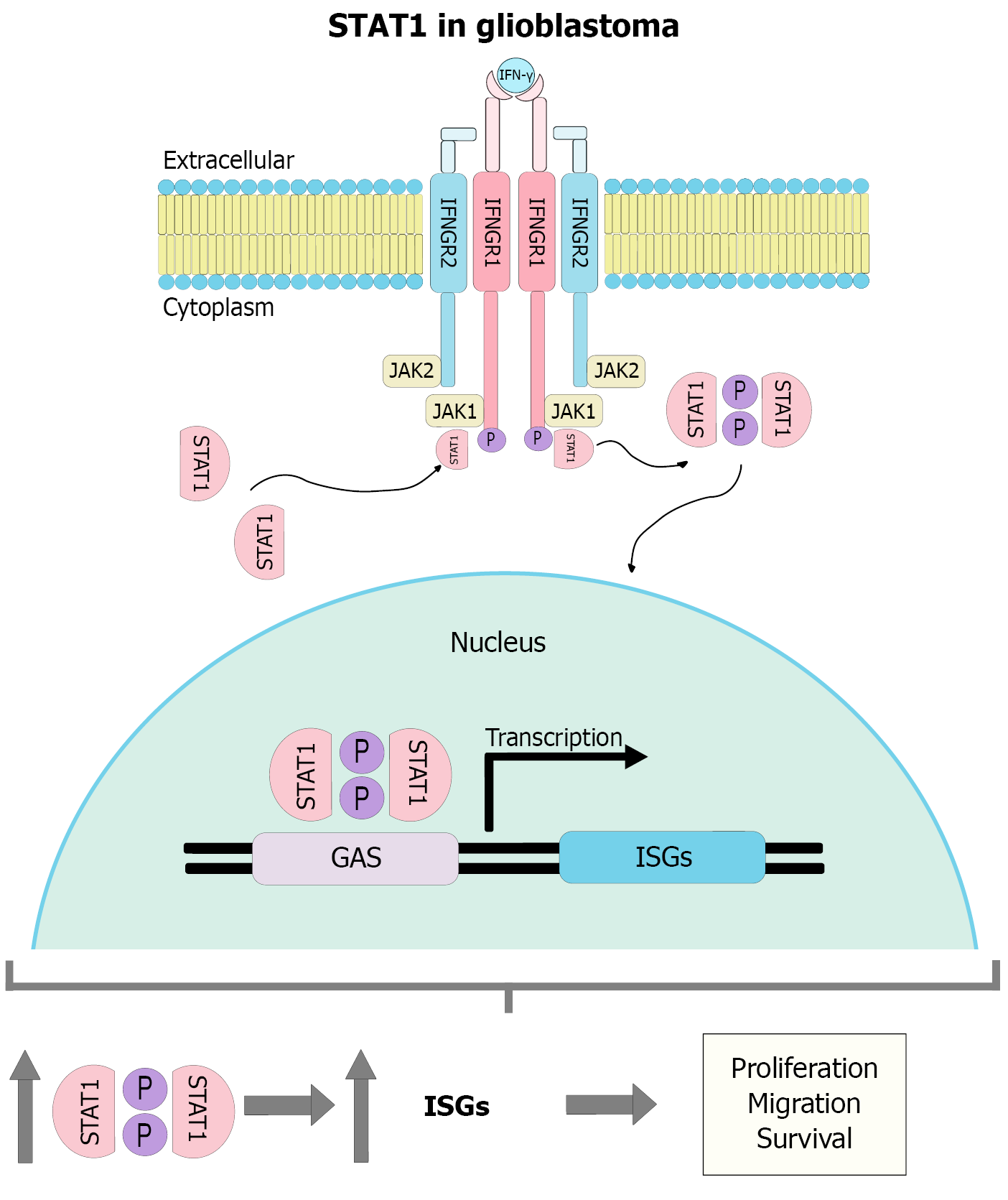
Figure 2 The molecular function of signal transducer and activator of transcription 1 and its relationship with glioblastoma.
The binding of interferon-gamma to its heterotetrameric receptor, composed of two dimers of IFNGR1 and IFNGR2, activates the Janus kinases 1 and 2, which leads to the phosphorylation and activation of the signal transducer and activator of transcription 1 (STAT1). Once phosphorylated, STAT1 forms dimers that translocate to the nucleus, where it binds to gamma-activated sequence elements in the promoters of interferon-stimulated genes, promoting their transcription. Sustained activation of this pathway induces the transcription of genes involved in cell proliferation, migration, and survival, contributing to the aggressive phenotype of glioblastoma. GAS: Gamma-activated sequences; STAT1: Signal transducer and activator of transcription 1; JAK1: Janus kinases 1; JAK2: Janus kinases 2; ISGs: Interferon-stimulated genes.
- Citation: Oropeza-Martínez E, Palacios Serrato EG, Zamora-Salas SX, Lira-Rodríguez NA, López-Mignon SH, Martinez-Benitez MB, Tecalco-Cruz AC. Interferon-gamma signaling pathway: Modulation of key genes in the progression of glioblastoma. World J Biol Chem 2025; 16(4): 112768
- URL: https://www.wjgnet.com/1949-8454/full/v16/i4/112768.htm
- DOI: https://dx.doi.org/10.4331/wjbc.v16.i4.112768