















©The Author(s) 2025.
World J Biol Chem. Dec 5, 2025; 16(4): 112768
Published online Dec 5, 2025. doi: 10.4331/wjbc.v16.i4.112768
Published online Dec 5, 2025. doi: 10.4331/wjbc.v16.i4.112768
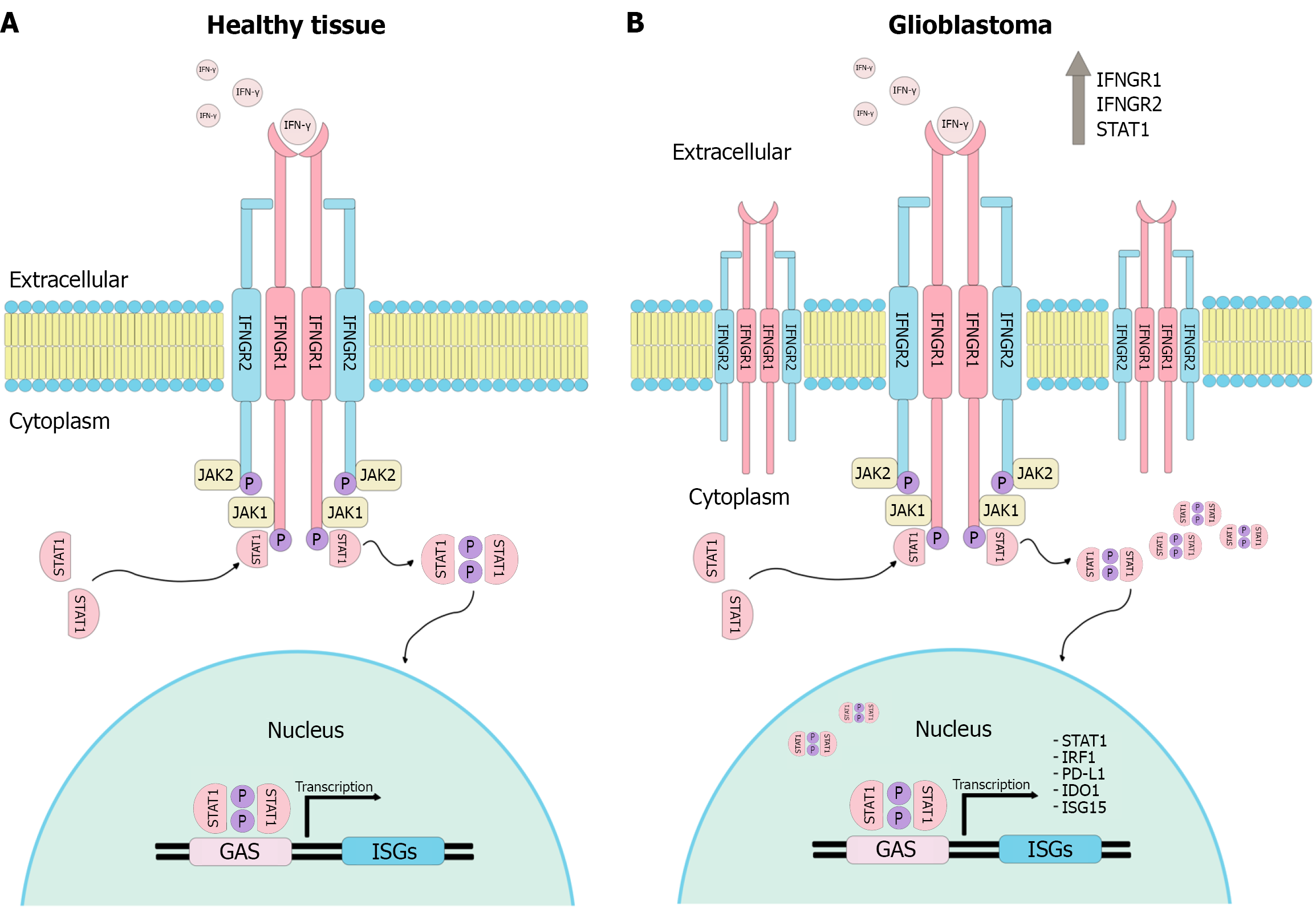
Figure 1 Interferon-gamma pathway in normal tissue and glioblastoma.
A: Under physiological conditions, interferon-gamma binds to its receptor and activates the Janus kinases 1 and 2, promoting the phosphorylation and dimerization of the signal transducer and activator of transcription 1. The signal transducer and activator of transcription 1 (STAT1) dimer translocates to the nucleus, where it binds to gamma-activated sequence elements in the promoters of interferon-stimulated genes; B: In glioblastoma cells, the pathway is amplified. This is evidenced by increased interferon gamma receptor density on the plasma membrane and higher levels of STAT1, resulting in enhanced transcription of genes implicated in glioblastoma progression, including STAT1, interferon regulatory factor 1, programmed death-ligand 1, indoleamine 2,3-dioxygenase 1, and interferon-stimulated gene 15. JAK1: Janus kinases 1; JAK2: Janus kinases 2; STAT1: Signal transducer and activator of transcription 1; ISGs: Interferon-stimulated genes; PD-L1: Programmed death-ligand 1; IDO1: Indoleamine 2,3-dioxygenase 1; ISG15: Interferon-stimulated gene 15; GAS: Gamma-activated sequences; IRF1: Interferon regulatory factor 1.
- Citation: Oropeza-Martínez E, Palacios Serrato EG, Zamora-Salas SX, Lira-Rodríguez NA, López-Mignon SH, Martinez-Benitez MB, Tecalco-Cruz AC. Interferon-gamma signaling pathway: Modulation of key genes in the progression of glioblastoma. World J Biol Chem 2025; 16(4): 112768
- URL: https://www.wjgnet.com/1949-8454/full/v16/i4/112768.htm
- DOI: https://dx.doi.org/10.4331/wjbc.v16.i4.112768