
















©The Author(s) 2025.
World J Biol Chem. Dec 5, 2025; 16(4): 111831
Published online Dec 5, 2025. doi: 10.4331/wjbc.v16.i4.111831
Published online Dec 5, 2025. doi: 10.4331/wjbc.v16.i4.111831
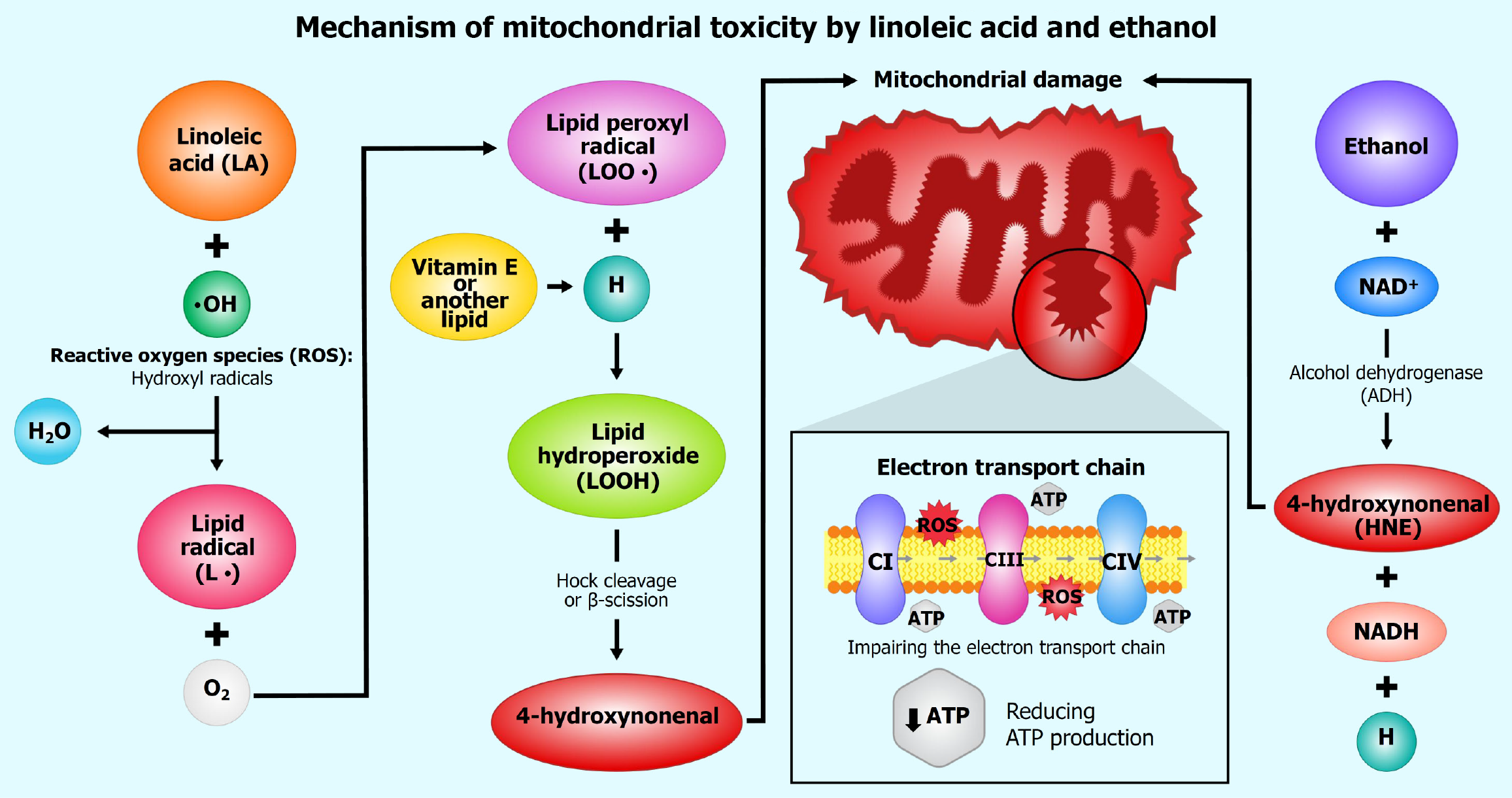
Figure 2 Mechanism of mitochondrial toxicity induced by linoleic acid and ethanol.
This schematic illustrates the synergistic mechanisms by which LA and ethanol induce mitochondrial toxicity, leading to cellular dysfunction. LA undergoes peroxidation to generate reactive oxygen species, such as hydroxyl radicals (OH), and lipid radicals (L). These reactive intermediates, in the presence of molecular oxygen (O2), further propagate the formation of lipid peroxyl radicals (LOO). Subsequently, lipid peroxides (LOOH) are produced, which can be exacerbated by hydrogen ions (H+). In this context, lipid peroxides may undergo Hock cleavage or β-scission, yielding secondary products like 4-hydroxynonenal, a highly reactive aldehyde known to impair mitochondrial membrane integrity. These stressors inhibit the electron transport chain, notably Complex III, reducing adenosine triphosphate synthesis. Vitamin E’s role in neutralizing lipid peroxyl radicals is also shown.
- Citation: Mercola J. Fatty liver reexamined choline and mitochondrial toxin amelioration. World J Biol Chem 2025; 16(4): 111831
- URL: https://www.wjgnet.com/1949-8454/full/v16/i4/111831.htm
- DOI: https://dx.doi.org/10.4331/wjbc.v16.i4.111831