
















Copyright: ©Author(s) 2026.
World J Gastrointest Surg. Sep 27, 2026; 18(9): 120399
Published online Sep 27, 2026. doi: 10.4240/wjgs.120399
Published online Sep 27, 2026. doi: 10.4240/wjgs.120399
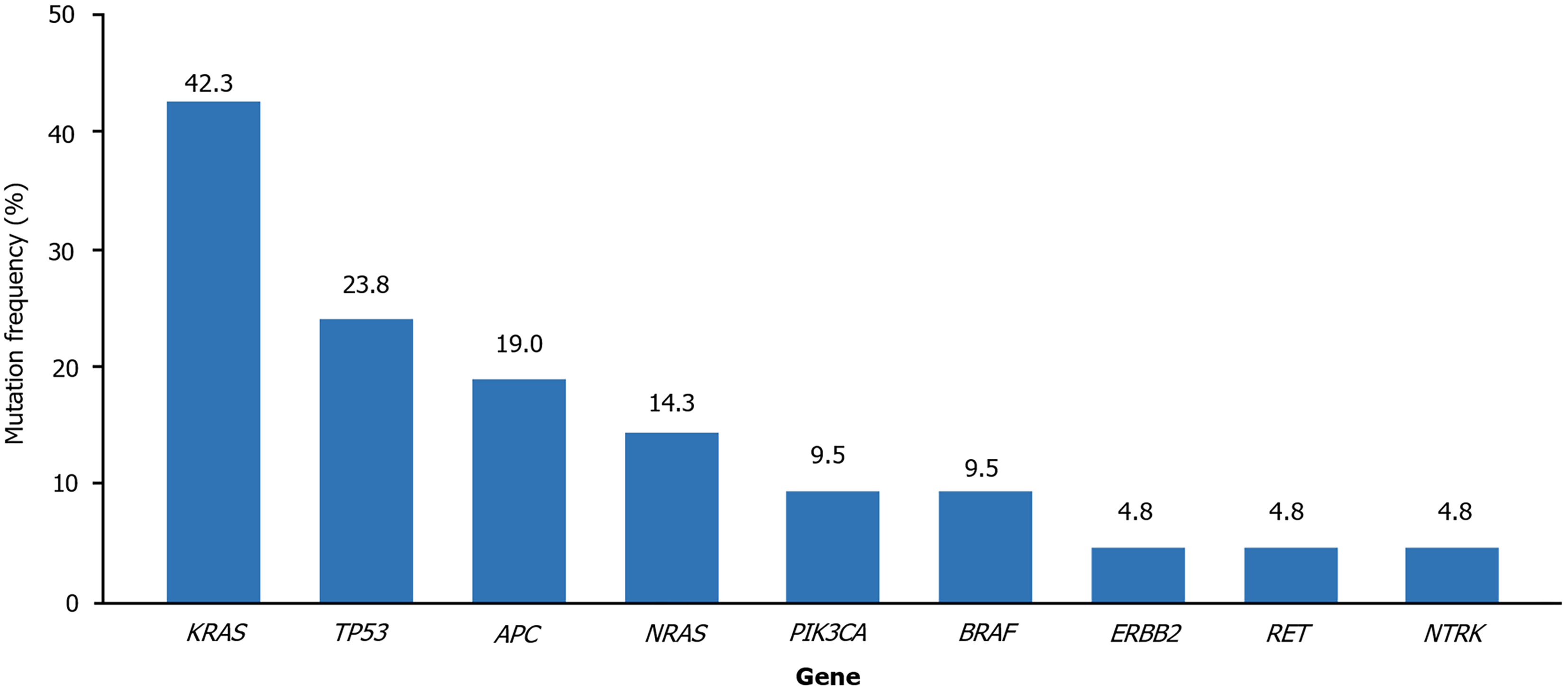
Figure 1 Circulating tumor DNA mutation spectrum in high-risk stage III colorectal cancer patients (all 50 enrolled patients).
The bar chart illustrates the mutation frequencies of key oncogenes and tumor suppressor genes detected in circulating tumor DNA among 50 enrolled high-risk stage III colorectal cancer patients. KRAS exhibited the highest mutation frequency (42.3%), followed by TP53 (23.8%), APC (19.0%), and NRAS (14.3%). PIK3CA and BRAF showed intermediate frequencies (9.5% and 9.3%, respectively), while ERBB2, RET, and NTRK were the least frequently mutated genes (4.0% each). These findings indicate that KRAS and TP53 mutations are the predominant somatic alterations identified in the circulating tumor DNA of this patient cohort.
- Citation: Guo XX, Deng JZ, Cheng LQ, Lin YB, Cao T, Feng JL, Gao YN, Yang XS, Liang SS. Postoperative circulating tumor DNA detection predicts recurrence and guides adjuvant chemotherapy duration in high-risk stage III colorectal cancer. World J Gastrointest Surg 2026; 18(9): 120399
- URL: https://www.wjgnet.com/1948-9366/full/v18/i9/120399.htm
- DOI: https://dx.doi.org/10.4240/wjgs.120399