
















Copyright: ©Author(s) 2026.
World J Gastrointest Surg. Aug 27, 2026; 18(8): 119341
Published online Aug 27, 2026. doi: 10.4240/wjgs.119341
Published online Aug 27, 2026. doi: 10.4240/wjgs.119341
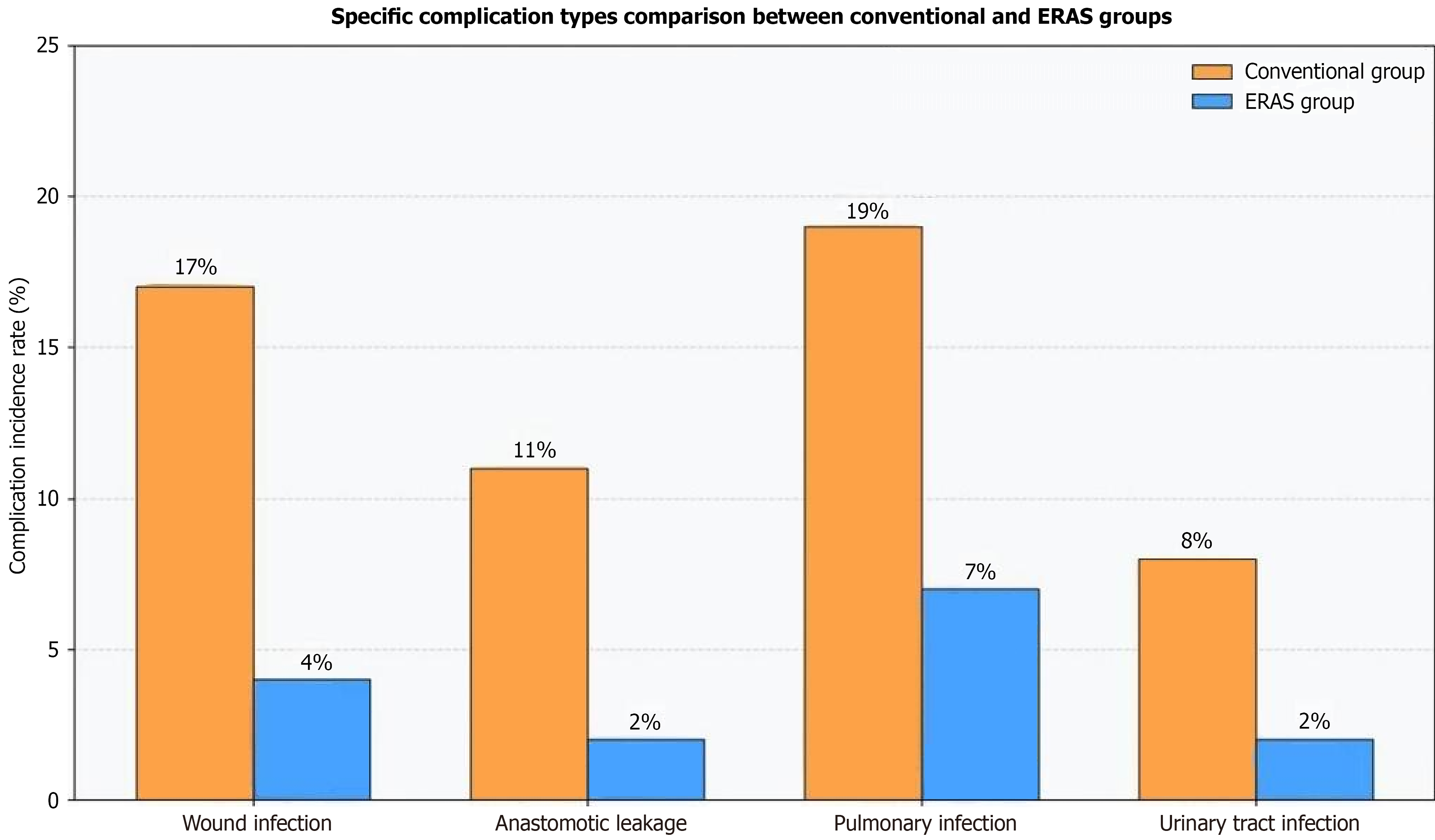
Figure 2 Comparison of specific postoperative complication types between conventional and enhanced recovery after surgery groups.
The bar chart displays the incidence rates of four major postoperative complications. The nutritional risk (NR)-guided intervention group (blue bars, n = 40) showed significantly lower complication rates than the conventional group (orange bars, n = 40) across all complication types: Wound infection (4.5% vs 16.7%, P < 0.05), anastomotic leakage (2.3% vs 11.1%, P < 0.05), pulmonary infection (6.8% vs 19.4%, P < 0.05), and urinary tract infection (2.3% vs 8.3%, P > 0.05). Pulmonary infection was the most common complication in the conventional group, while the NR-guided intervention group showed consistently low incidence rates across all complication types. ERAS: Enhanced recovery after surgery.
- Citation: Zhang XL, Hong QQ, Lin LZ. Clinical effects of nutritional risk screening 2002-guided individualized nutritional intervention in postoperative colorectal cancer patients: A time-period comparison study. World J Gastrointest Surg 2026; 18(8): 119341
- URL: https://www.wjgnet.com/1948-9366/full/v18/i8/119341.htm
- DOI: https://dx.doi.org/10.4240/wjgs.119341