
















Copyright: ©Author(s) 2026.
World J Gastrointest Surg. Aug 27, 2026; 18(8): 114182
Published online Aug 27, 2026. doi: 10.4240/wjgs.114182
Published online Aug 27, 2026. doi: 10.4240/wjgs.114182
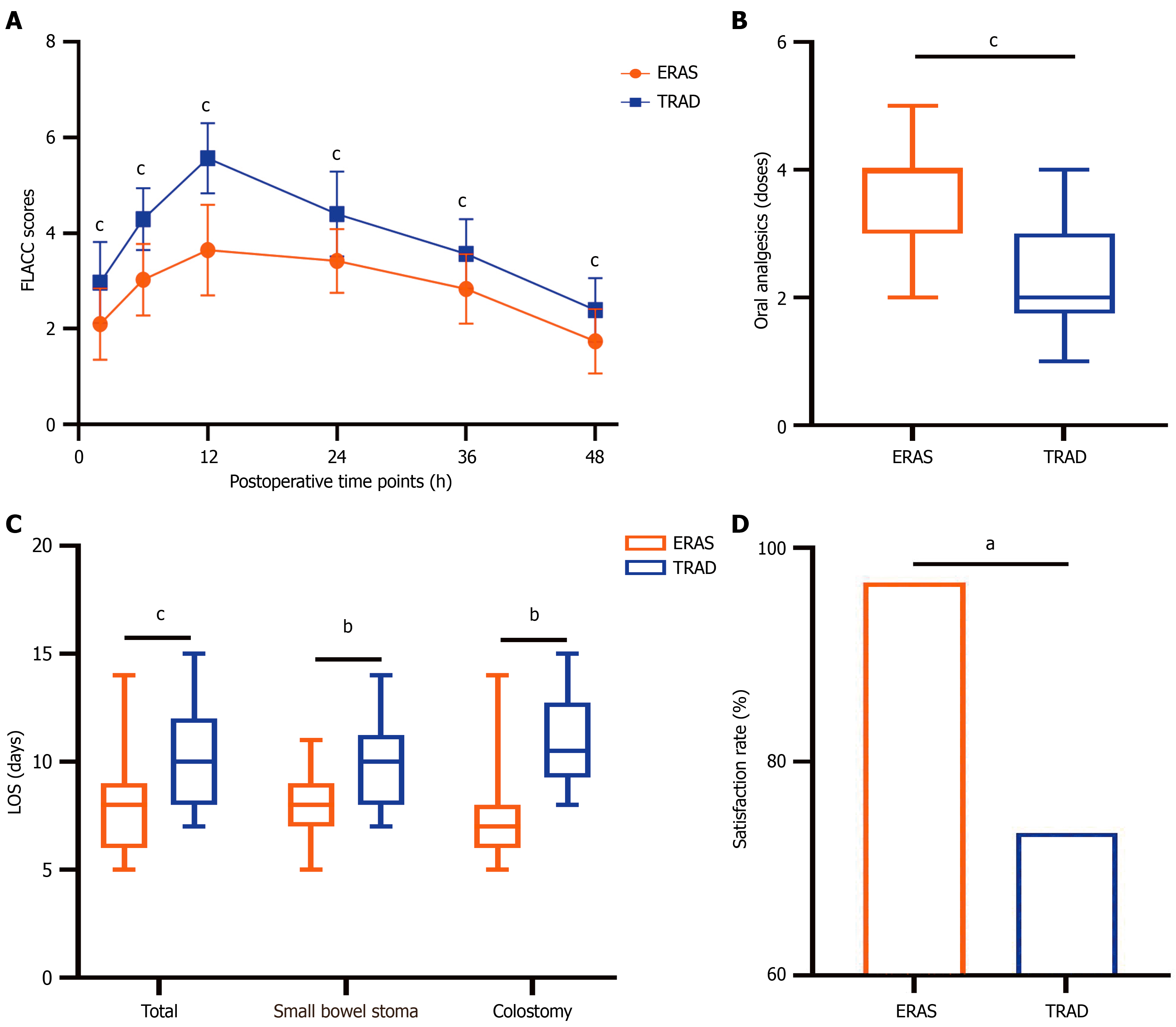
Figure 2 Comparative analysis of postoperative pain management, length of stay, and caregiver satisfaction between the enhanced recovery after surgery and traditional care groups.
A: Postoperative pain assessment via the Face, Legs, Activity, Cry, Consolability pain assessment scale (FLACC) scale. The enhanced recovery after surgery (ERAS) group (n = 31) exhibited significantly lower FLACC scores than the traditional care (TRAD) group (n = 30) at all predefined timepoints within 48 hours postoperatively; B: Frequency of oral analgesic administration. The ERAS cohort required significantly more oral analgesic doses than the TRAD cohort (median: 4.00 doses vs 2.00 doses), consistent with the protocol’s multimodal analgesia strategy; C: Postoperative length of stay (LOS). Median LOS was significantly shortened in the ERAS group compared to the TRAD group (8.00 days vs 10.00 days). Subgroup analysis revealed a more pronounced LOS reduction in colostomy patients (ERAS: n = 11; TRAD: n = 12; 3.50-day reduction) than in small bowel stoma patients (2.00-day reduction); D: Caregiver satisfaction rate. The ERAS group had a significantly higher caregiver satisfaction rate than the TRAD group (96.77% vs 73.33%). aP < 0.05, bP < 0.01, cP < 0.001. Statistical analyses were performed using Mann-Whitney U tests (continuous variables) or χ2 tests (categorical variables). FLACC: Face, Legs, Activity, Cry, Consolability pain assessment scale; ERAS: Enhanced recovery after surgery; TRAD: Traditional care; LOS: Length of stay.
- Citation: Zhu K, Zhang F, Ou WW, Ke Y, Zhu ZY, Tan XM, Wang H, Sun CC, Gao HF, Su YL. Application of enhanced recovery after surgery in the perioperative period of pediatric enterostomy closure. World J Gastrointest Surg 2026; 18(8): 114182
- URL: https://www.wjgnet.com/1948-9366/full/v18/i8/114182.htm
- DOI: https://dx.doi.org/10.4240/wjgs.114182