
















Copyright: ©Author(s) 2026.
World J Gastrointest Surg. Jul 27, 2026; 18(7): 121387
Published online Jul 27, 2026. doi: 10.4240/wjgs.v18.i7.121387
Published online Jul 27, 2026. doi: 10.4240/wjgs.v18.i7.121387
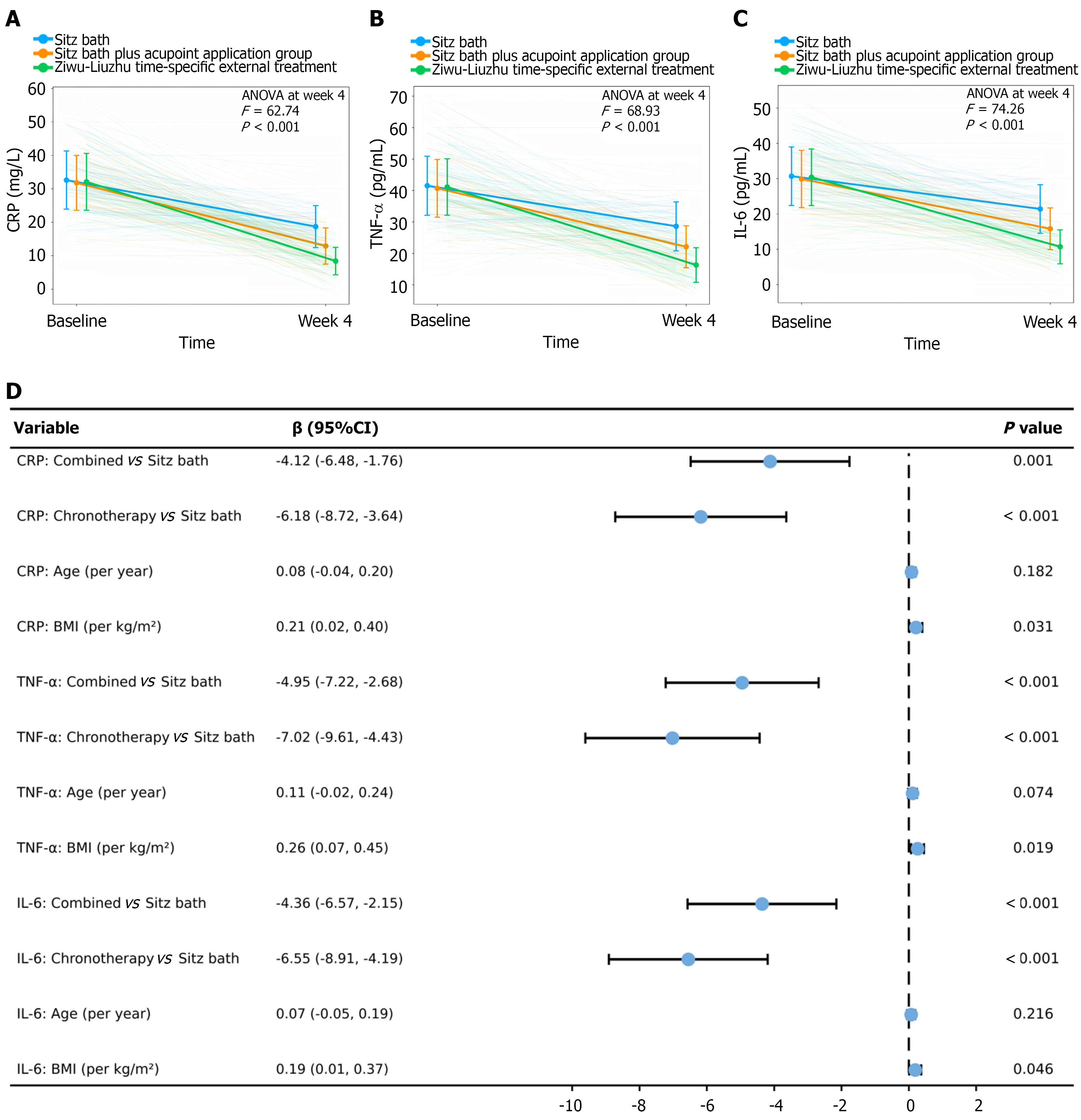
Figure 3 Changes in inflammatory markers and multivariable regression results among the three treatment groups.
A: Trends in C-reactive protein (CRP) levels before and after treatment. CRP levels decreased significantly after treatment in all three groups, with the greatest reduction observed in the Ziwu-Liuzhu group; B: Trends in tumor necrosis factor-α (TNF-α) levels. The Ziwu-Liuzhu time-specific external treatment group had the lowest post-treatment TNF-α level; C: Trends in interleukin-6 (IL-6) levels. The Ziwu-Liuzhu time-specific external treatment group showed the most pronounced decline in IL-6; D: Forest plot of multivariable linear regression analysis showing the associations of treatment strategy and related variables with changes in inflammatory markers. After adjustment for potential confounders, including age, sex, body mass index, and disease severity, the Ziwu-Liuzhu time-specific external treatment group strategy remained significantly associated with lower inflammatory levels. ANOVA: Analysis of variance; CRP: C-reactive protein; TNF: Tumor necrosis factor; IL: Interleukin; CI: Confidence interval; BMI: Body mass index.
- Citation: Zhao SY, Ma SJ, Ouyang CX, Zhu SL, Xiao XB. Ziwu-Liuzhu-guided combined external therapy promotes wound healing in postoperative perianal fistulizing Crohn’s disease. World J Gastrointest Surg 2026; 18(7): 121387
- URL: https://www.wjgnet.com/1948-9366/full/v18/i7/121387.htm
- DOI: https://dx.doi.org/10.4240/wjgs.v18.i7.121387