
















Copyright: ©Author(s) 2026.
World J Gastrointest Surg. Jul 27, 2026; 18(7): 119733
Published online Jul 27, 2026. doi: 10.4240/wjgs.v18.i7.119733
Published online Jul 27, 2026. doi: 10.4240/wjgs.v18.i7.119733
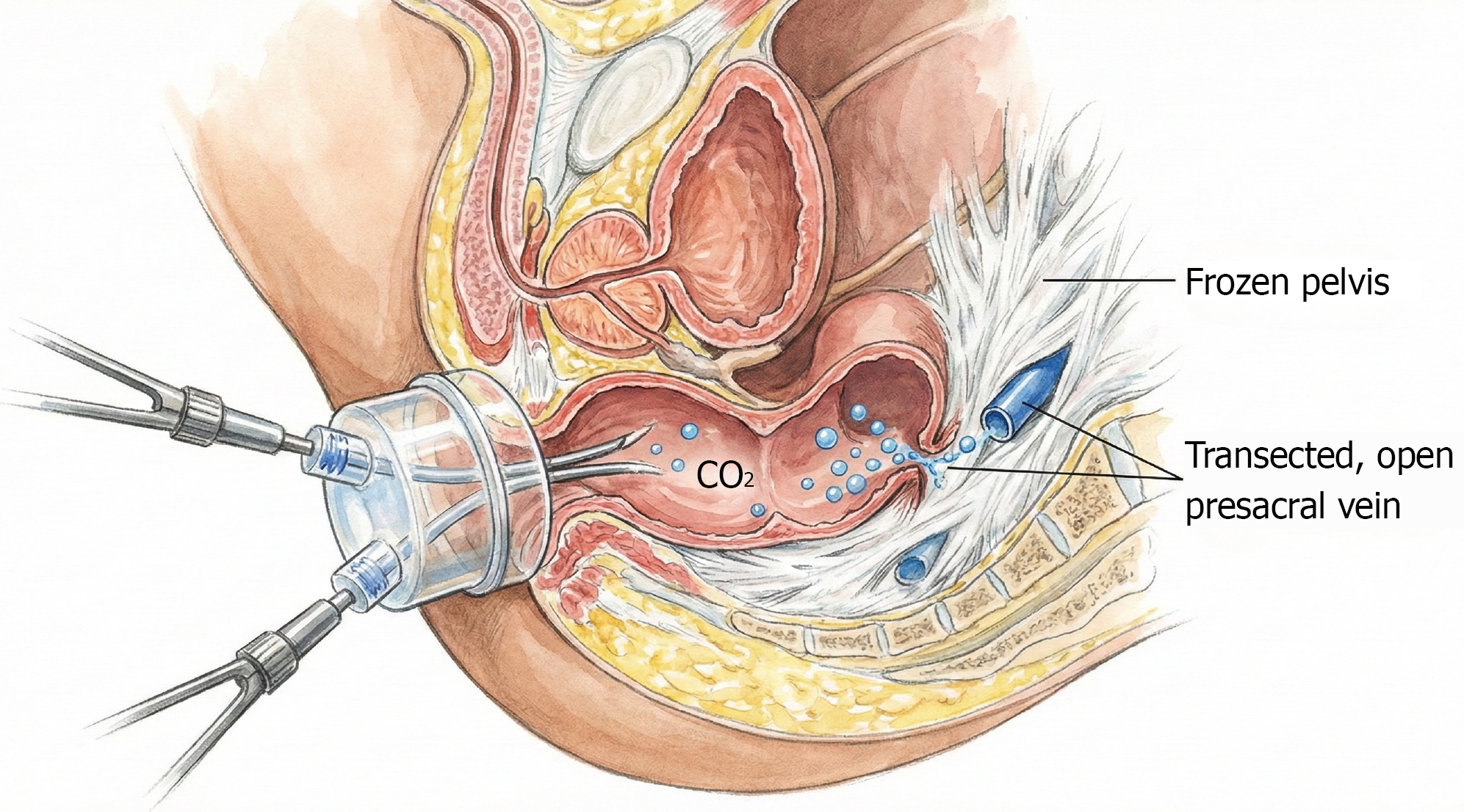
Figure 2 Schematic illustration of the mechanism of carbon dioxide embolism in the “frozen pelvis”.
The sagittal cross-section of the male pelvis during salvage transanal total mesorectal excision demonstrates the transanal access platform (gel cap) tightly sealing the anal verge. The laparoscopic instruments were depicted to enter through this single port into the mesorectal plane. The presacral space was encased in dense, white scar tissue (labeled “Frozen Pelvis”) due to prior therapy. The transected presacral vein was held wide open (“Transected, Open Presacral Vein”) by the stiff fibrosis (tethering effect). Blue carbon dioxide bubbles flowed directly from the insufflated rectal cavity into the open venous lumen, driven by the pneumatic pressure gradient.
- Citation: Li CP, Lv YM. Carbon dioxide embolism during salvage transanal total mesorectal excision in “frozen pelvis”: Two case reports. World J Gastrointest Surg 2026; 18(7): 119733
- URL: https://www.wjgnet.com/1948-9366/full/v18/i7/119733.htm
- DOI: https://dx.doi.org/10.4240/wjgs.v18.i7.119733