
















©Author(s) (or their employer(s)) 2026.
World J Gastrointest Surg. Feb 27, 2026; 18(2): 114951
Published online Feb 27, 2026. doi: 10.4240/wjgs.v18.i2.114951
Published online Feb 27, 2026. doi: 10.4240/wjgs.v18.i2.114951
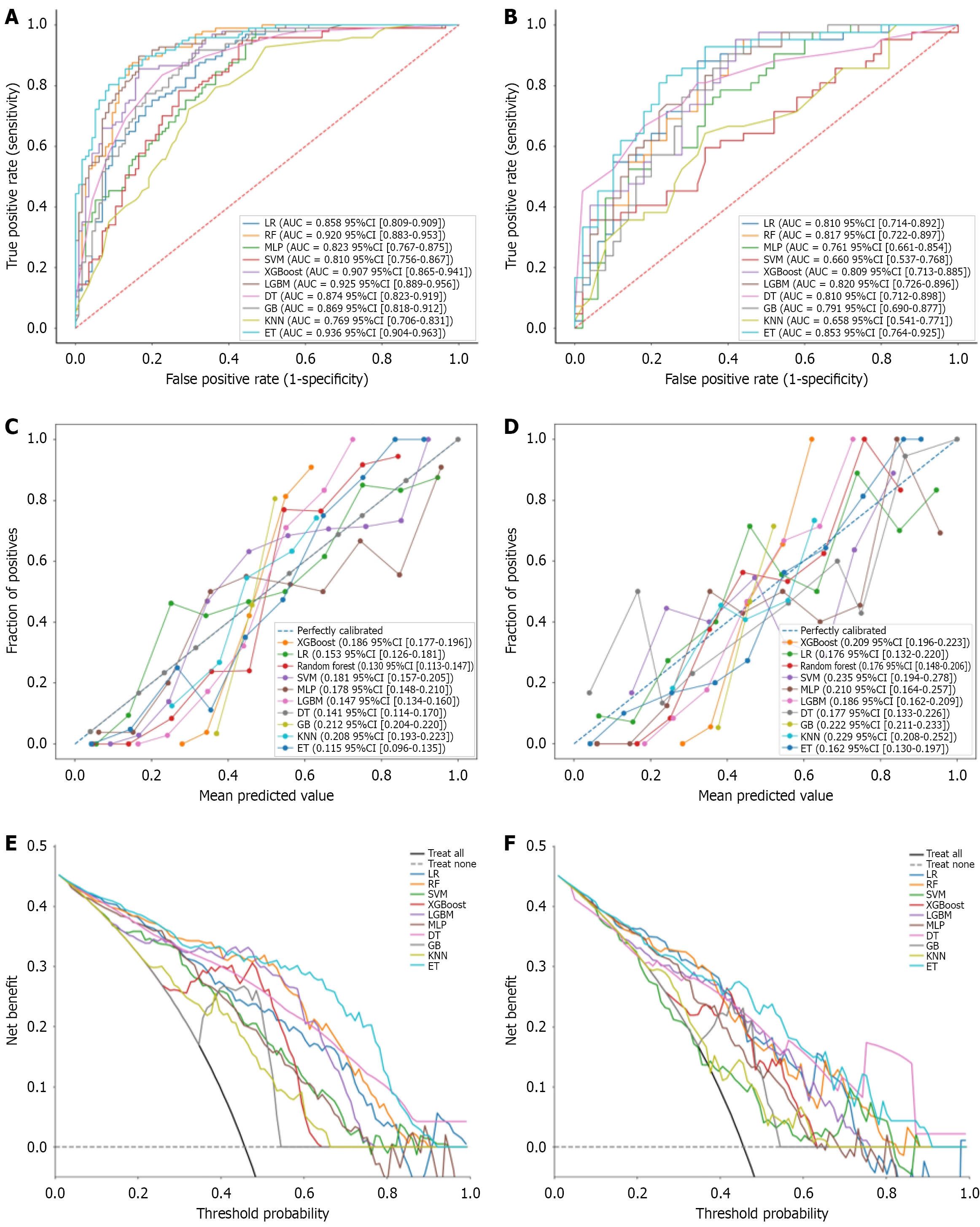
Figure 3 Comparative analysis of the performance of the ten machine learning models.
A: Receiver operating characteristic curves for the training set; B: Receiver operating characteristic curves for the validation set; C: Calibration curves for the training set; D: Calibration curves for the validation set; E: Decision curve analysis for the training set; F: Decision curve analysis for the validation set. LR: Logistic regression; AUC: Area under the curve; CI: Confidence interval; RF: Random forest; MLP: Multi-layer perceptron; SVM: Support vector machine; XGBoost: Extreme gradient boosting; LGBM: Light gradient boosting machine; DT: Decision tree; GB: Gradient boosting; KNN: K-nearest neighbors; ET: Extremely randomized trees.
- Citation: Lü YN, Liu D, Tao S, Wu J, Yu SJ, Yuan HL. Development of a machine learning-based model for predicting postoperative survival in gastric cancer. World J Gastrointest Surg 2026; 18(2): 114951
- URL: https://www.wjgnet.com/1948-9366/full/v18/i2/114951.htm
- DOI: https://dx.doi.org/10.4240/wjgs.v18.i2.114951