
















©Author(s) (or their employer(s)) 2026.
World J Gastrointest Surg. Feb 27, 2026; 18(2): 113021
Published online Feb 27, 2026. doi: 10.4240/wjgs.v18.i2.113021
Published online Feb 27, 2026. doi: 10.4240/wjgs.v18.i2.113021
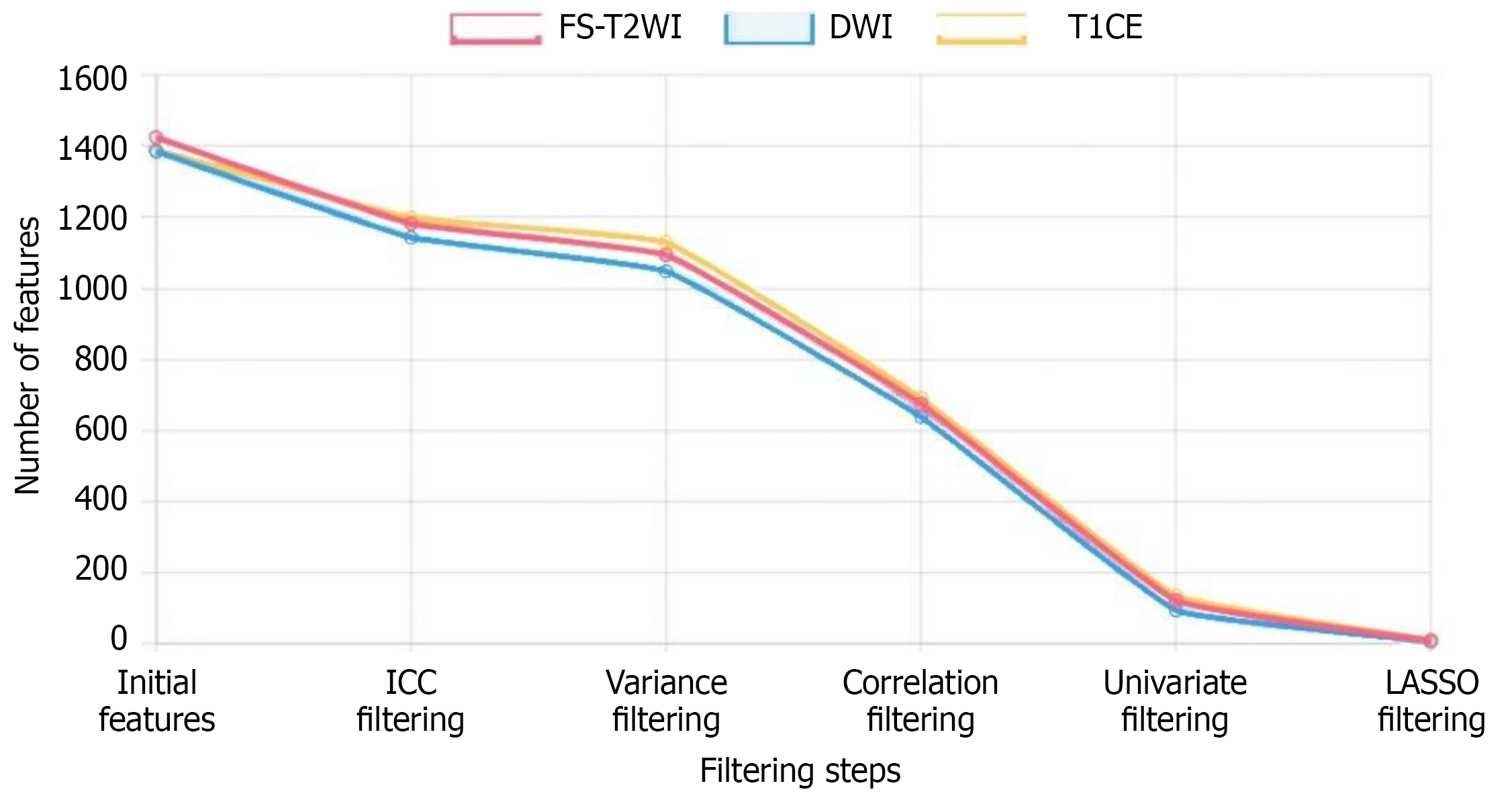
Figure 3 Radiomics feature selection process.
Feature-reduction pipeline across three magnetic resonance imaging sequences (fat-suppressed T2-weighted imaging, diffusion-weighted imaging, T1-weighted contrast-enhanced imaging). Bars show the number of radiomic features remaining after each filtering step: Initial extraction, intraclass correlation coefficient thresholding, variance filtering, correlation filtering, univariate selection, and least absolute shrinkage and selection operator regression. FS-T2WI: Fat-suppressed T2-weighted imaging; DWI: Diffusion-weighted imaging; T1CE: T1-weighted contrast-enhanced imaging; ICC: Intraclass correlation coefficient; LASSO: Least absolute shrinkage and selection operator.
- Citation: Zhu ZH, Liang Y, Shi M. Prediction of lymphovascular invasion in rectal cancer based on multimodal magnetic resonance imaging radiomics model. World J Gastrointest Surg 2026; 18(2): 113021
- URL: https://www.wjgnet.com/1948-9366/full/v18/i2/113021.htm
- DOI: https://dx.doi.org/10.4240/wjgs.v18.i2.113021