
















Copyright: ©Author(s) 2026.
World J Gastrointest Surg. Nov 27, 2026; 18(11): 125637
Published online Nov 27, 2026. doi: 10.4240/wjgs.125637
Published online Nov 27, 2026. doi: 10.4240/wjgs.125637
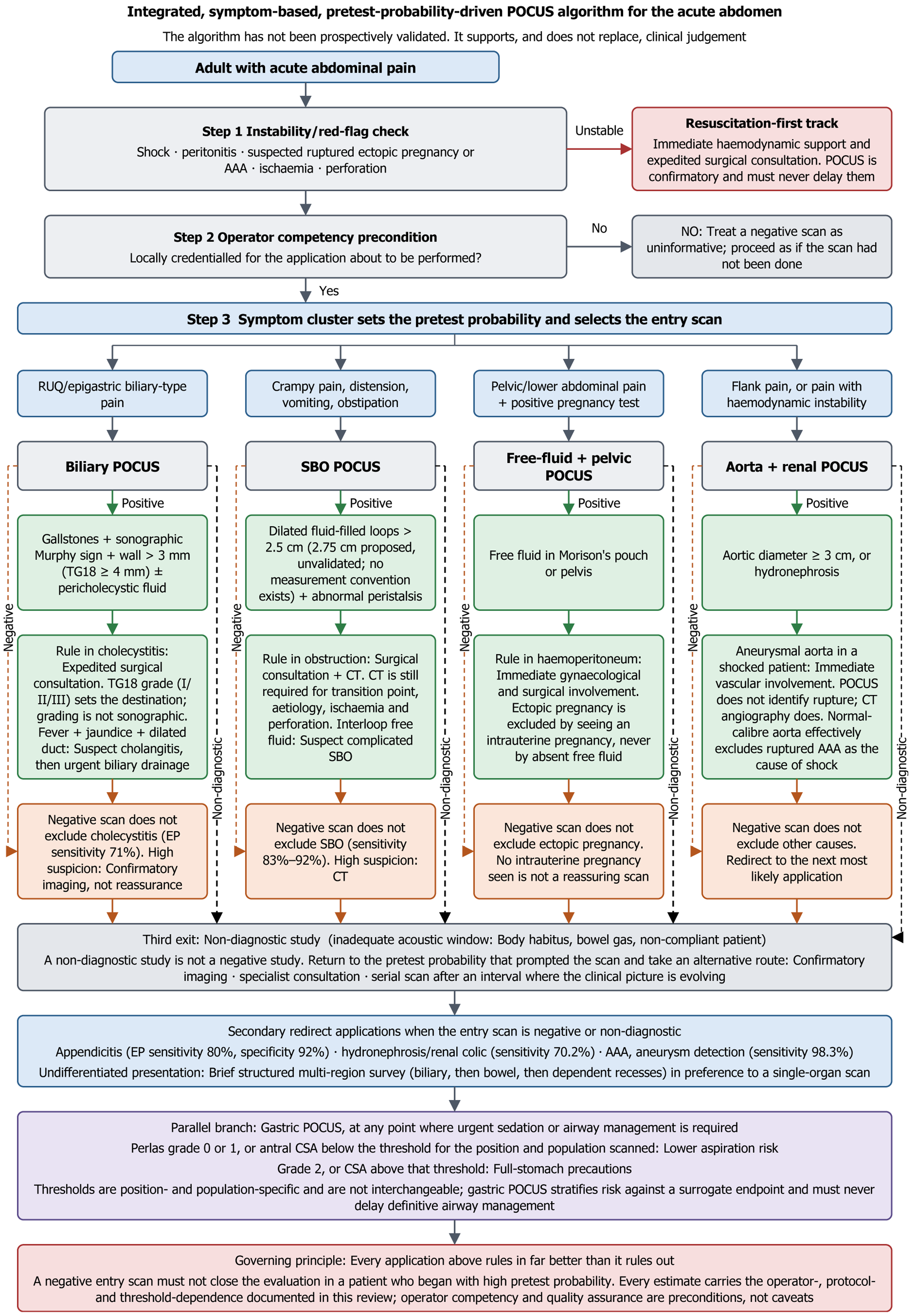
Figure 1 Integrated, symptom-based, pretest-probability-driven point-of-care ultrasound scanning algorithm for the acute abdomen.
The pathway opens with two entry conditions: A mandatory instability and red-flag check (red) – shock, peritonitis, suspected ruptured ectopic pregnancy, ruptured abdominal aortic aneurysm, bowel ischaemia or perforation divert the patient to a resuscitation-first track with expedited surgical consultation, and bedside scanning never delays it – and an operator-competency precondition, below which a negative scan is treated as uninformative. For the stable patient, each presenting symptom cluster sets the pretest probability and selects an entry scan. Every scan node has three exits: Adequate and positive (green, rule-in actions), adequate and negative (orange, rule-out caution and redirect), and non-diagnostic (grey), which returns the clinician to the pretest probability and mandates confirmatory imaging, consultation or a serial scan. A rule-in biliary scan routes to surgical consultation with Tokyo Guidelines 2018 severity grading, which determines the destination, and the cholangitis pathway is shown separately. The aortic branch distinguishes detection of an aneurysmal aorta from detection of rupture. A parallel gastric branch (purple) stratifies aspiration risk at any point. The algorithm has not been prospectively validated. POCUS: Point-of-care ultrasound; AAA: Abdominal aortic aneurysm; RUQ: Right upper quadrant; TG18: Tokyo Guidelines 2018; CT: Computed tomography; CSA: Cross-sectional area.
- Citation: Danış F, Kudu E. Point-of-care ultrasound in the acute abdomen and gastrointestinal emergencies: An evidence-based guide and the case for standardisation. World J Gastrointest Surg 2026; 18(11): 125637
- URL: https://www.wjgnet.com/1948-9366/full/v18/i11/125637.htm
- DOI: https://dx.doi.org/10.4240/wjgs.125637