
















Copyright: ©Author(s) 2026.
World J Gastrointest Surg. Nov 27, 2026; 18(11): 123786
Published online Nov 27, 2026. doi: 10.4240/wjgs.123786
Published online Nov 27, 2026. doi: 10.4240/wjgs.123786
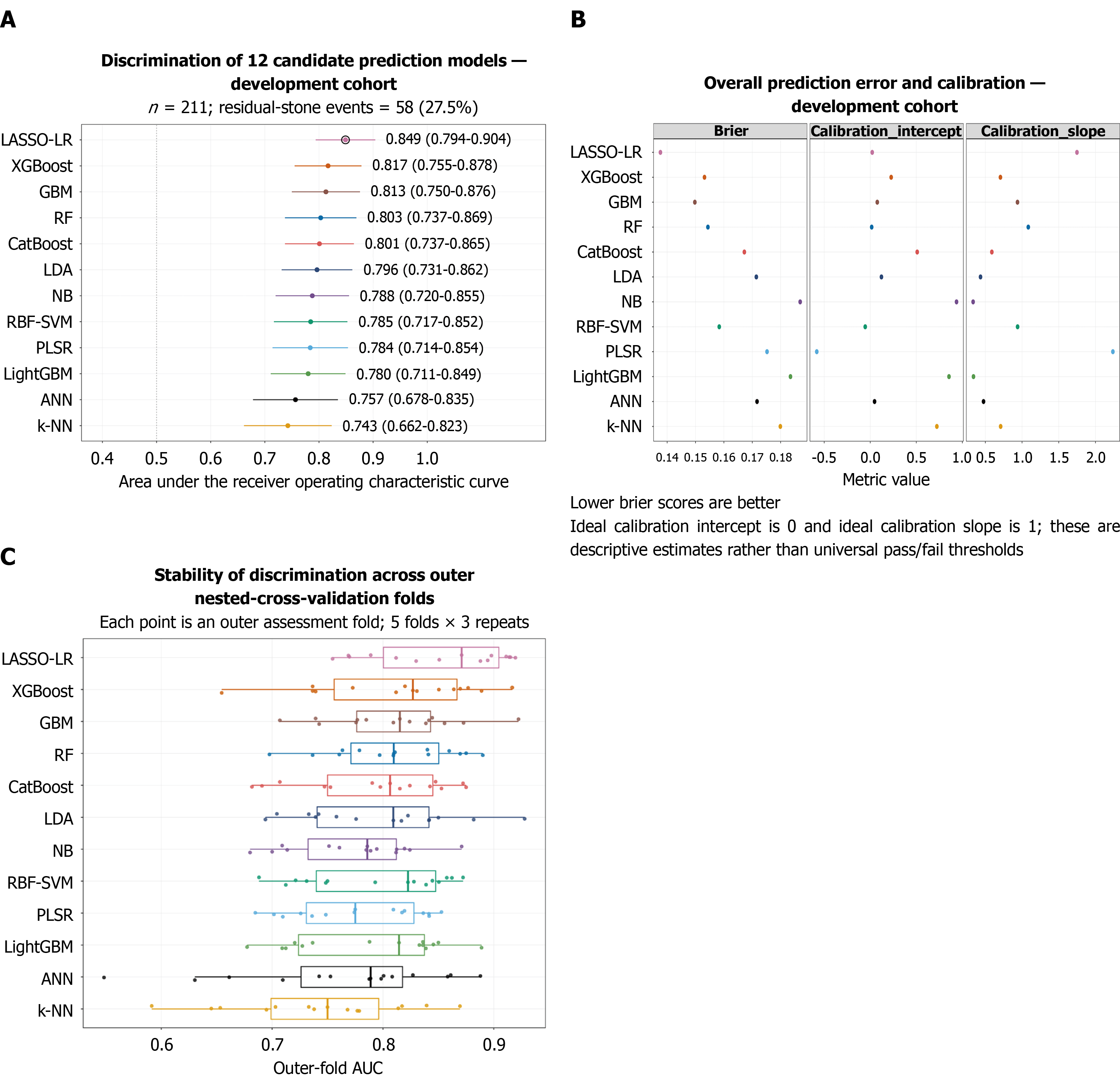
Figure 2 Candidate-model selection within the development cohort.
A: Out-of-fold area under the receiver operating characteristic curve (AUC) distributions for 12 candidate algorithms within the development cohort; B: Prediction error (Brier score and log loss) and calibration metrics across candidate pipelines; C: Outer-fold AUC rank variability during nested cross-validation. The held-out validation cohort remained strictly isolated during model evaluation and pipeline locking. LASSO-LR: Least absolute shrinkage and selection operator-logistic regression; XGBoost: EXtreme Gradient Boosting; GBM: Gradient boosting machine; RF: Random forest; CatBoost: Categorical boosting; LDA: Linear discriminant analysis; NB: Naive Bayes; RBF-SVM: Support vector machine with radial basis function kernel; PLSR: Partial least squares regression; LightGBM: Light gradient boosting machine; ANN: Artificial neural network; k-NN: K-nearest neighbors; AUC: Area under the receiver operating characteristic curve.
- Citation: Shao HR, Zeng D, Chen X, Zhu Y, Liu LX, Zhao SL, Zou H. Development and validation of a postoperative prediction model for residual stones after hepatectomy in patients with hepatolithiasis. World J Gastrointest Surg 2026; 18(11): 123786
- URL: https://www.wjgnet.com/1948-9366/full/v18/i11/123786.htm
- DOI: https://dx.doi.org/10.4240/wjgs.123786