
















©The Author(s) 2026.
World J Gastrointest Surg. Jan 27, 2026; 18(1): 112988
Published online Jan 27, 2026. doi: 10.4240/wjgs.v18.i1.112988
Published online Jan 27, 2026. doi: 10.4240/wjgs.v18.i1.112988
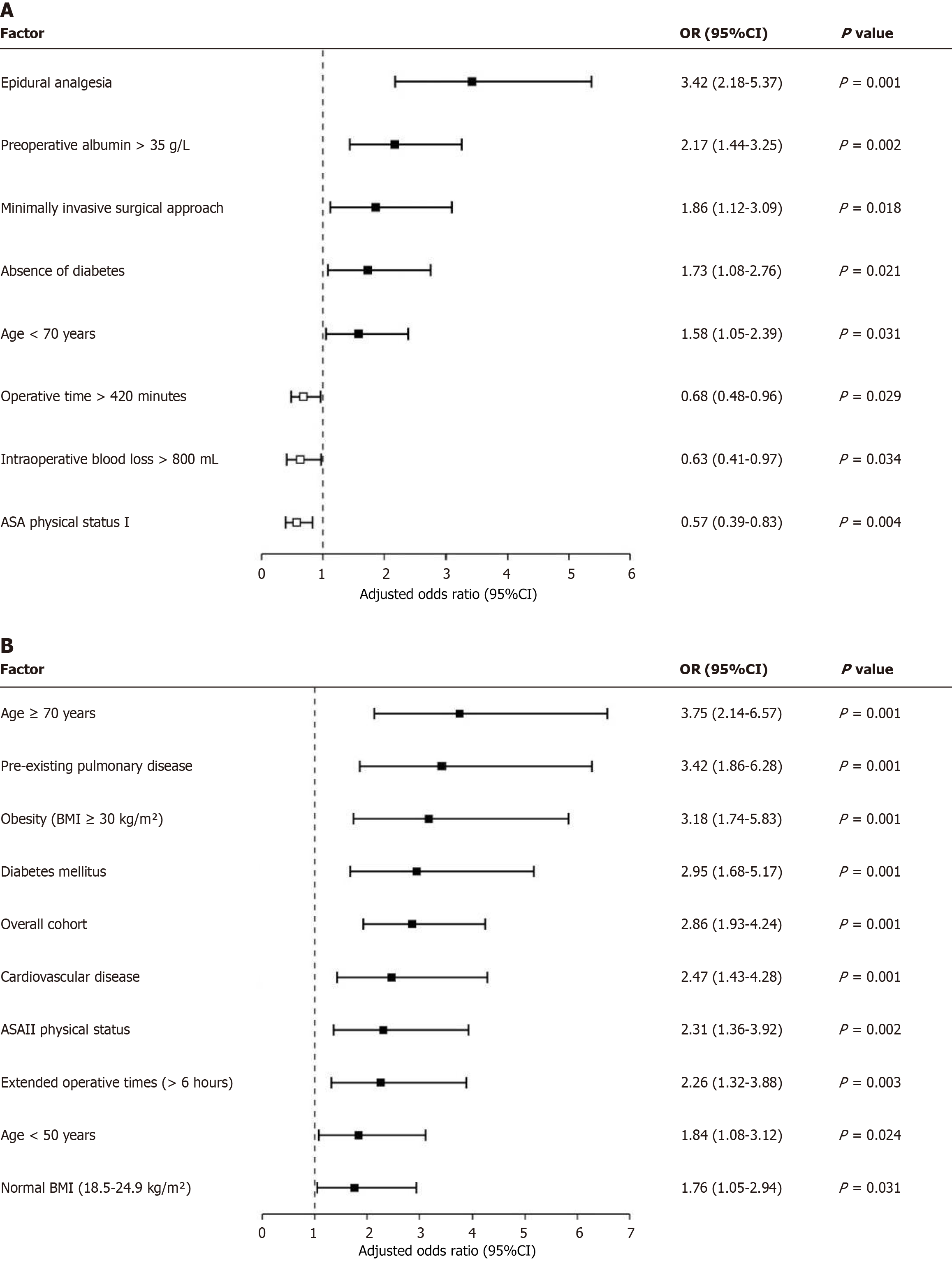
Figure 3 Forest plot.
A: Forest plot of predictors for favorable postoperative recovery. This forest plot illustrates independent predictors of favorable postoperative recovery, with epidural analgesia being the strongest positive predictor [adjusted odds ratios (OR) = 3.42] and American Society of Anesthesiologists physical status III being the most significant negative predictor (adjusted OR = 0.57). The visualization clearly distinguishes between factors promoting recovery (OR > 1) and those hindering recovery (OR < 1) through point estimates and 95% confidence intervals, effectively demonstrating the strength and statistical significance of each factor’s influence; B: Forest plot of epidural analgesia benefits by subgroup. The forest plot displays adjusted odds ratios with 95% confidence intervals for epidural analgesia benefits across different patient subgroups, revealing that elderly patients (age ≥ 70) derive the greatest benefit (odds ratios = 3.75) while younger patients and those with normal body mass index show more modest yet still significant improvements. This visualization effectively demonstrates that epidural analgesia provides statistically significant advantages for optimal recovery across all analyzed subgroups, with particularly pronounced benefits in high-risk populations, including those with pre-existing pulmonary disease, obesity, and diabetes mellitus. OR: Odds ratios; CI: Confidence interval.
- Citation: Li PP, Qu Q, Shao CH. Comparison of epidural anesthesia and intravenous self-control analgesia on postoperative recovery quality in duodenectomy. World J Gastrointest Surg 2026; 18(1): 112988
- URL: https://www.wjgnet.com/1948-9366/full/v18/i1/112988.htm
- DOI: https://dx.doi.org/10.4240/wjgs.v18.i1.112988