
















©The Author(s) 2025.
World J Gastrointest Surg. Sep 27, 2025; 17(9): 107977
Published online Sep 27, 2025. doi: 10.4240/wjgs.v17.i9.107977
Published online Sep 27, 2025. doi: 10.4240/wjgs.v17.i9.107977
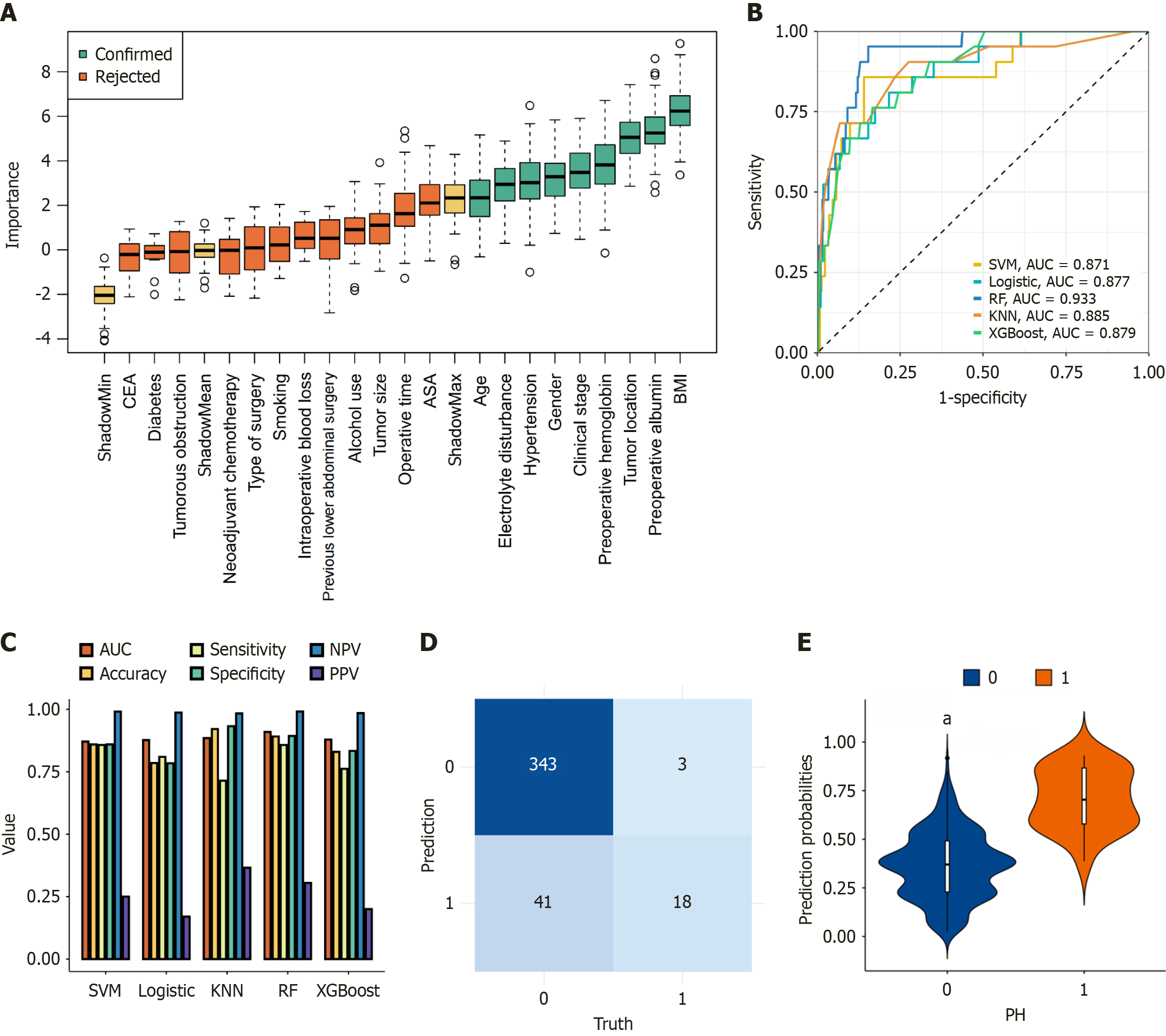
Figure 1 Features selection and model performance in the training cohort.
A: Relevant features identified by the Boruta algorithm; B: Receiver operating characteristic curves and area under the curve values for the five models; C: Comparison of performance metrics across all five models; D: Confusion matrix of the random forest (RF) model; E: Comparison of predicted probabilities from the RF model for patients with and without parastomal hernia in the training cohort. aP < 0.001 vs control group. SVM: Support vector machine; LR: Logistic regression; KNN: K-nearest neighbors; RF: Random forest; XGBoost: EXtreme gradient boosting; ASA: American Society of Anesthesiologists.
- Citation: Yang WS, Su Y, Li YQ, Hu JB, Liu MD, Liu L. Prediction of parastomal hernia in patients undergoing preventive ostomy after rectal cancer resection using machine learning. World J Gastrointest Surg 2025; 17(9): 107977
- URL: https://www.wjgnet.com/1948-9366/full/v17/i9/107977.htm
- DOI: https://dx.doi.org/10.4240/wjgs.v17.i9.107977