
















Copyright: ©Author(s) 2026.
World J Diabetes. Sep 15, 2026; 17(9): 120935
Published online Sep 15, 2026. doi: 10.4239/wjd.120935
Published online Sep 15, 2026. doi: 10.4239/wjd.120935
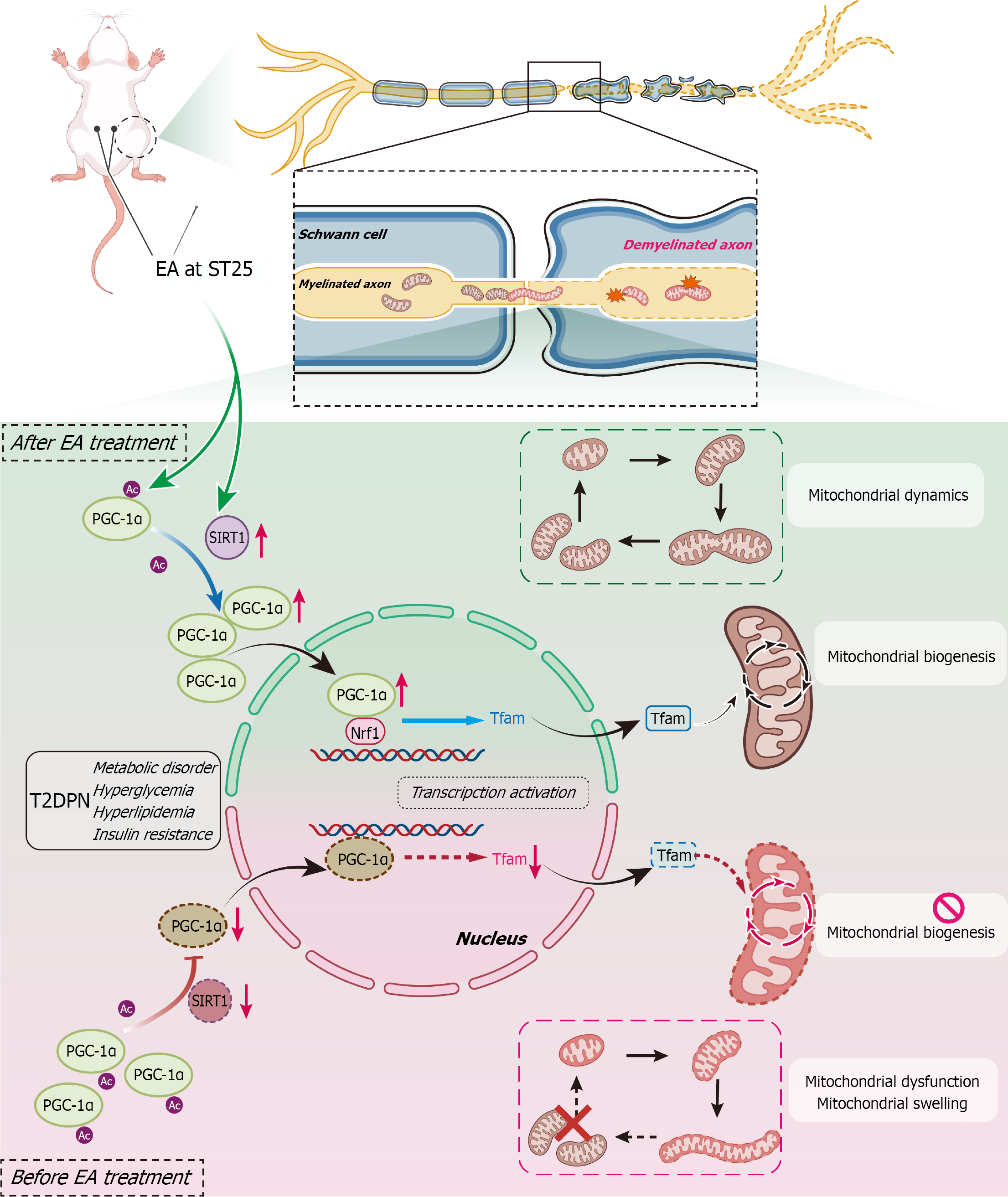
Figure 8 Electroacupuncture regulates axonal mitochondrial distribution via silent information regulator 1/peroxisome proliferator-activated receptor-γ coactivator-1α-mediated mitochondrial biogenesis to improve type 2 diabetic peripheral neuropathy.
Under type 2 diabetes mellitus conditions characterized by hyperglycemia, hyperlipidemia, and insulin resistance, peripheral nerve axons undergo mitochondrial dysfunction and structural damage, thereby contributing to demyelination. Electroacupuncture at ST25 alleviates peripheral neuropathy by activating the silent information regulator 1/peroxisome proliferator-activated receptor-γ coactivator-1α pathway, which promotes mitochondrial biogenesis and improves mitochondrial distribution in peripheral nerve axons and nodes of Ranvier. EA: Electroacupuncture; SIRT1: Silent information regulator 1; PGC-1α: Peroxisome proliferator-activated receptor-γ coactivator-1α; T2DPN: Type 2 diabetic peripheral neuropathy; Nrf1: Nuclear respiratory factor 1; TFAM: Mitochondrial transcription factor A; Ac: Acetyl.
- Citation: Wang X, Yuan CX, Liu Y, Li WF, Lu MJ, Xu TC, Yu Z, Xu B. Electroacupuncture alleviates diabetic peripheral neuropathy: Regulates mitochondrial biogenesis and redistribution in peripheral nerve fibers. World J Diabetes 2026; 17(9): 120935
- URL: https://www.wjgnet.com/1948-9358/full/v17/i9/120935.htm
- DOI: https://dx.doi.org/10.4239/wjd.120935