
















Copyright: ©Author(s) 2026.
World J Diabetes. Sep 15, 2026; 17(9): 120935
Published online Sep 15, 2026. doi: 10.4239/wjd.120935
Published online Sep 15, 2026. doi: 10.4239/wjd.120935
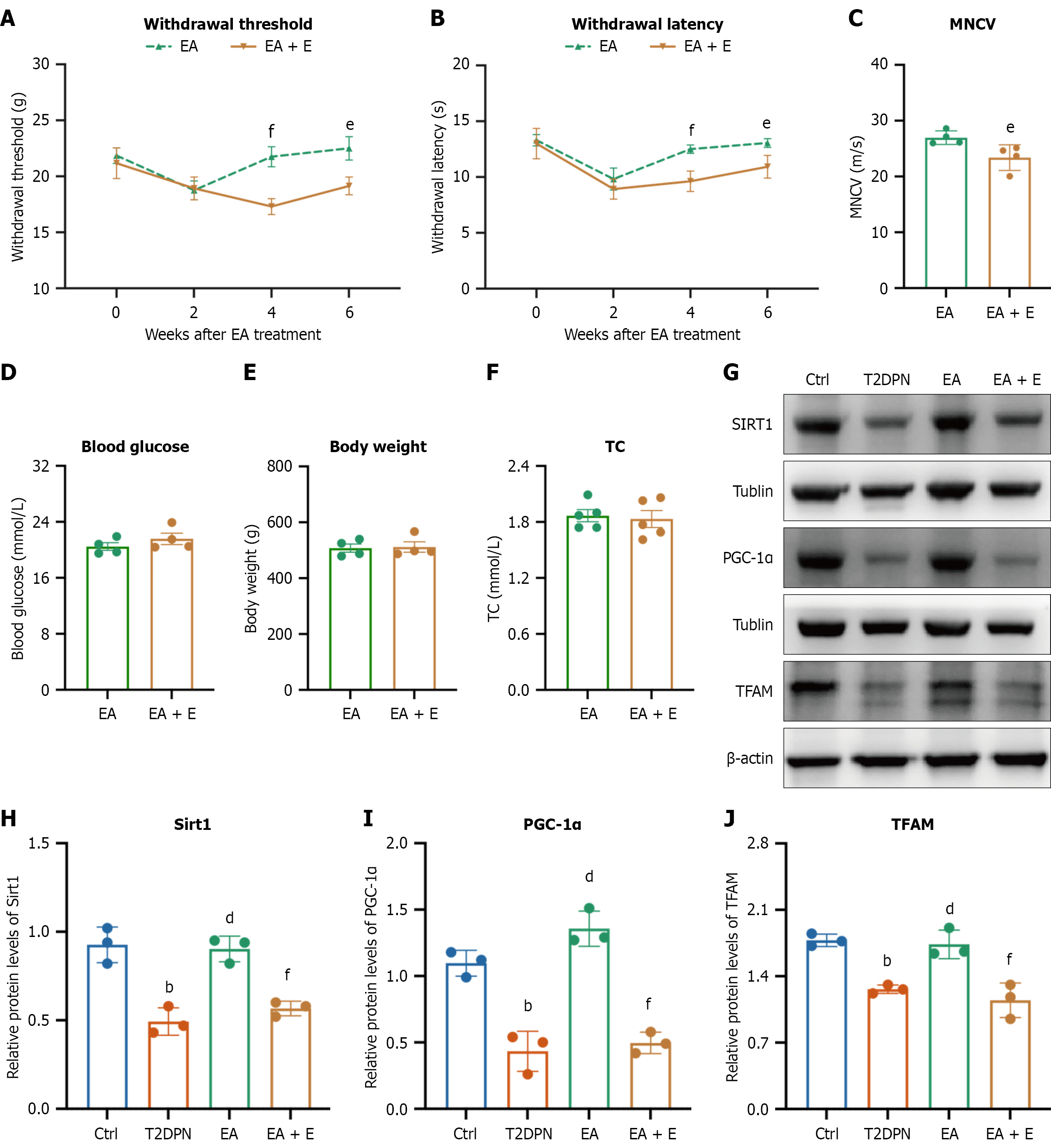
Figure 6 Selisistat injection attenuated the regulatory effects of electroacupuncture on nerve function and inhibited mitochondrial biogenesis in the sciatic nerve.
A-C: Behavioral and neurological function was assessed by withdrawal threshold (A), withdrawal latency (B), and motor nerve conduction velocity (C) after electroacupuncture treatment and selisistat (EX-527) injection; D-F: Basic metabolic indices, including blood glucose (D), body weight (E), and total cholesterol (TC) (F), in different groups after electroacupuncture treatment and EX-527 injection; G: Representative Western blot images of silent information regulator 1 (SIRT1), peroxisome proliferator-activated receptor-γ coactivator-1α (PGC-1α), and mitochondrial transcription factor A (TFAM) in the sciatic nerve; H-J: Quantitative analysis of the relative protein levels of SIRT1 (H), PGC-1α (I), and TFAM (J) in the sciatic nerve. Data are presented as mean ± SEM (n = 3-5). ᵇP < 0.01, type 2 diabetic peripheral neuropathy group vs control group; ᵈP < 0.01, electroacupuncture group vs type 2 diabetic peripheral neuropathy group; ᵉP < 0.05, electroacupuncture plus selisistat group vs electroacupuncture group; ᶠP < 0.01, electroacupuncture plus selisistat group vs electroacupuncture group. EA: Electroacupuncture; EA + E: Electroacupuncture plus selisistat; MNCV: Motor nerve conduction velocity; T2DPN: Type 2 diabetic peripheral neuropathy; Ctrl: Control; TC: Total cholesterol; SIRT1: Silent information regulator 1; PGC-1α: Peroxisome proliferator-activated receptor-γ coactivator-1α; TFAM: Mitochondrial transcription factor A.
- Citation: Wang X, Yuan CX, Liu Y, Li WF, Lu MJ, Xu TC, Yu Z, Xu B. Electroacupuncture alleviates diabetic peripheral neuropathy: Regulates mitochondrial biogenesis and redistribution in peripheral nerve fibers. World J Diabetes 2026; 17(9): 120935
- URL: https://www.wjgnet.com/1948-9358/full/v17/i9/120935.htm
- DOI: https://dx.doi.org/10.4239/wjd.120935