
















Copyright: ©Author(s) 2026.
World J Diabetes. Aug 15, 2026; 17(8): 121505
Published online Aug 15, 2026. doi: 10.4239/wjd.121505
Published online Aug 15, 2026. doi: 10.4239/wjd.121505
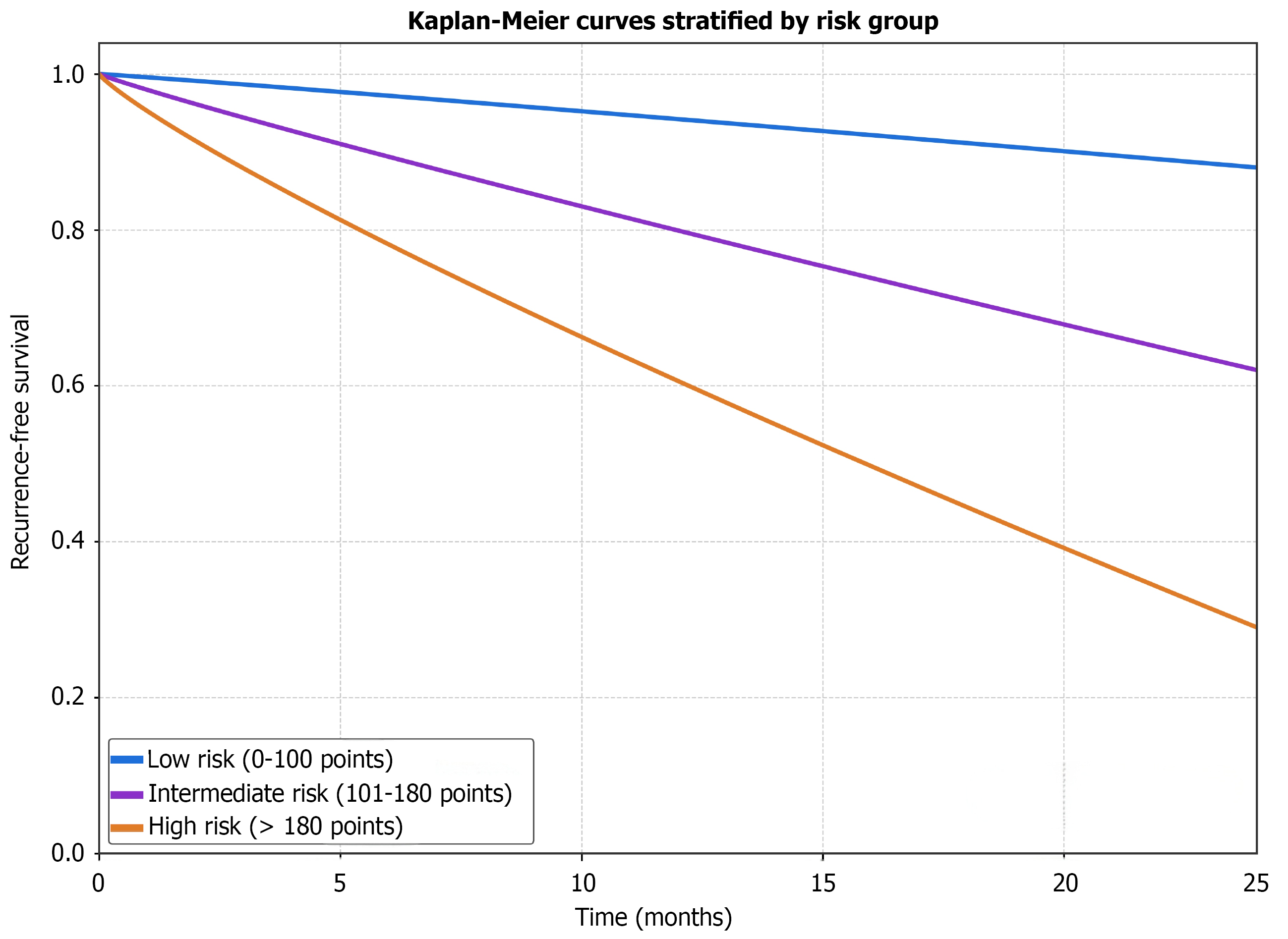
Figure 2 Kaplan-Meier curves showing recurrence-free survival stratified by risk group (low, intermediate, high).
Patients with healed diabetic foot ulcers were stratified by total nomogram points into low-risk (0-100 points; n = 89), intermediate-risk (101-180 points; n = 135), and high-risk (> 180 points; n = 88) groups. Recurrence-free survival showed clear stepwise separation across risk categories, with progressively worse outcomes in higher-risk patients. The curves diverged within the first 6 months after wound healing and remained separated through follow-up. Differences among groups were significant by log-rank test (P < 0.001). Median recurrence-free survival was not reached in the low-risk group, compared with 18.5 months in the intermediate-risk group and 9.8 months in the high-risk group.
- Citation: Dai BW, Qi F, Xu GY, Sun W, Tao YN, Ze K. Risk stratification nomogram for diabetic foot ulcer recurrence after healing in type 2 diabetes. World J Diabetes 2026; 17(8): 121505
- URL: https://www.wjgnet.com/1948-9358/full/v17/i8/121505.htm
- DOI: https://dx.doi.org/10.4239/wjd.121505