
















Copyright: ©Author(s) 2026.
World J Diabetes. Jul 15, 2026; 17(7): 119760
Published online Jul 15, 2026. doi: 10.4239/wjd.119760
Published online Jul 15, 2026. doi: 10.4239/wjd.119760
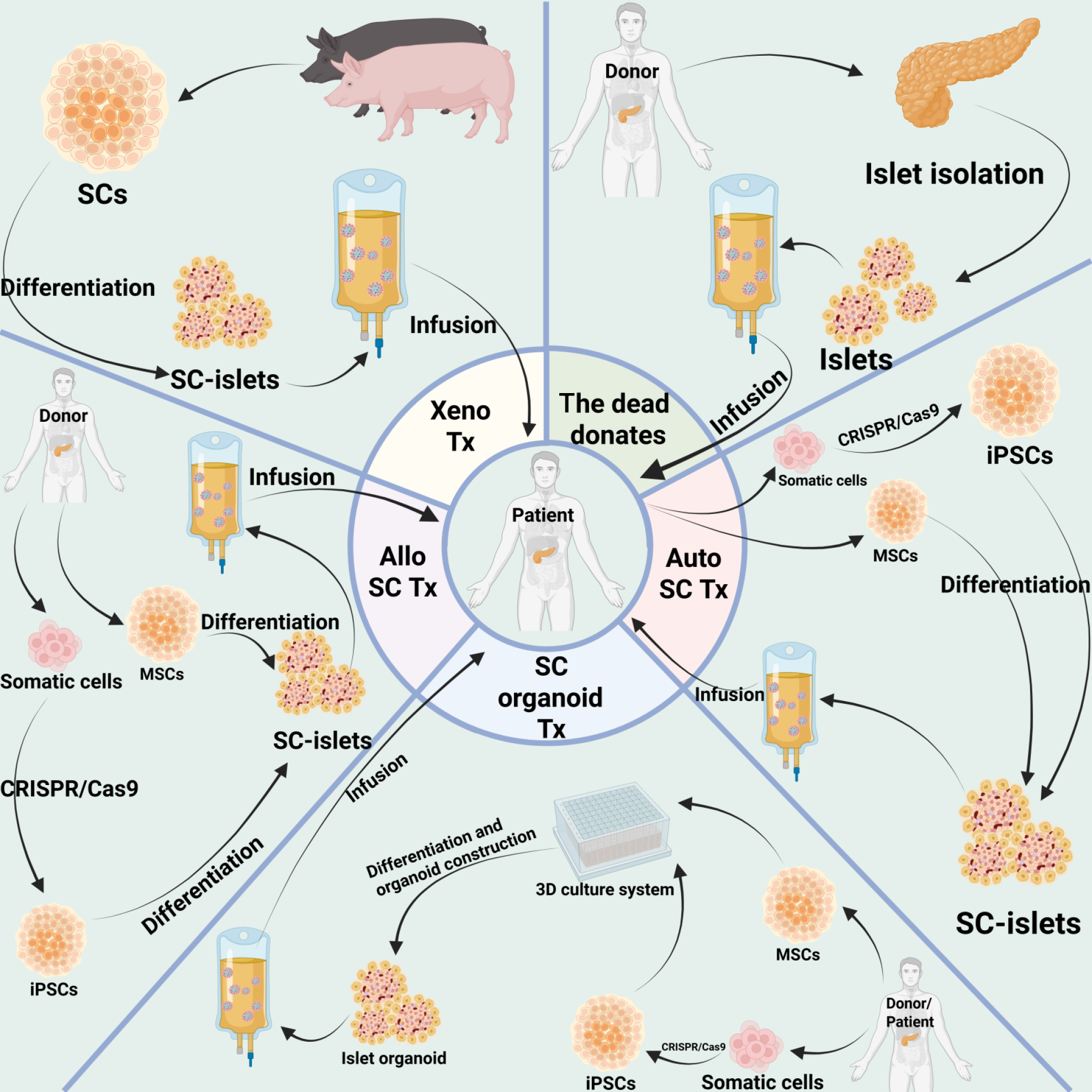
Figure 1 Schematic diagram of current stem cell-derived islet transplantation strategies.
Xenotransplantation: Animal-derived islets (e.g., porcine) are isolated and directly infused into the patient. This strategy addresses donor organ shortage but faces significant challenges related to xenoimmunity, including hyperacute rejection and zoonotic infection risks, as well as ethical and regulatory hurdles. Allogeneic transplantation: Donor-derived islets from human cadavers are isolated and infused into the patient. While clinically established, this approach is severely limited by donor scarcity and requires lifelong systemic immunosuppression to prevent allograft rejection. Allogeneic stem cell transplantation: Human pluripotent stem cells [PSC; embryonic stem cells or induced PSCs (iPSCs)] are directed to differentiate into insulin-producing islet cells in vitro. Advanced protocols incorporate gene-editing techniques (e.g., CRISPR/Cas9) to reduce immunogenicity by disrupting human leukocyte antigen molecules or overexpressing immune checkpoint proteins (e.g., programmed death-ligand 1, CD47). The resulting “off-the-shelf” cell products enable standardized large-scale manufacturing but still typically require some level of immunosuppression, depending on the engineering strategy. Autologous stem cell transplantation: The patient’s own somatic cells (e.g., fibroblasts, peripheral blood mononuclear cells, or adipose-derived mesenchymal stem cells) are reprogrammed into iPSCs, which are then differentiated into islet cells and reinfused into the same patient. This personalized approach eliminates the need for immunosuppression and avoids allogeneic rejection, but is constrained by lengthy manufacturing timelines, high costs, and limited scalability. Created in BioRender (Supplementary material). SC: Stem cells; MSC: Mesenchymal stem cell; iPSC: Induced pluripotent stem cells; Tx: Transplantation; Allo: Allogeneic; Auto: Autologous; Xeno: Xenogeneic; 3D: Three-dimensional.
- Citation: He DW, Zhang FR, Zhang HX, Xiao SY, Bi XY, Wang YM, Wang RL, Lu YX, Yin H, Li T. Stem cells-derived islet transplantation toward clinical translation: Divergent strategies and convergent objectives. World J Diabetes 2026; 17(7): 119760
- URL: https://www.wjgnet.com/1948-9358/full/v17/i7/119760.htm
- DOI: https://dx.doi.org/10.4239/wjd.119760