
















Copyright: ©Author(s) 2026.
World J Diabetes. Jul 15, 2026; 17(7): 119741
Published online Jul 15, 2026. doi: 10.4239/wjd.119741
Published online Jul 15, 2026. doi: 10.4239/wjd.119741
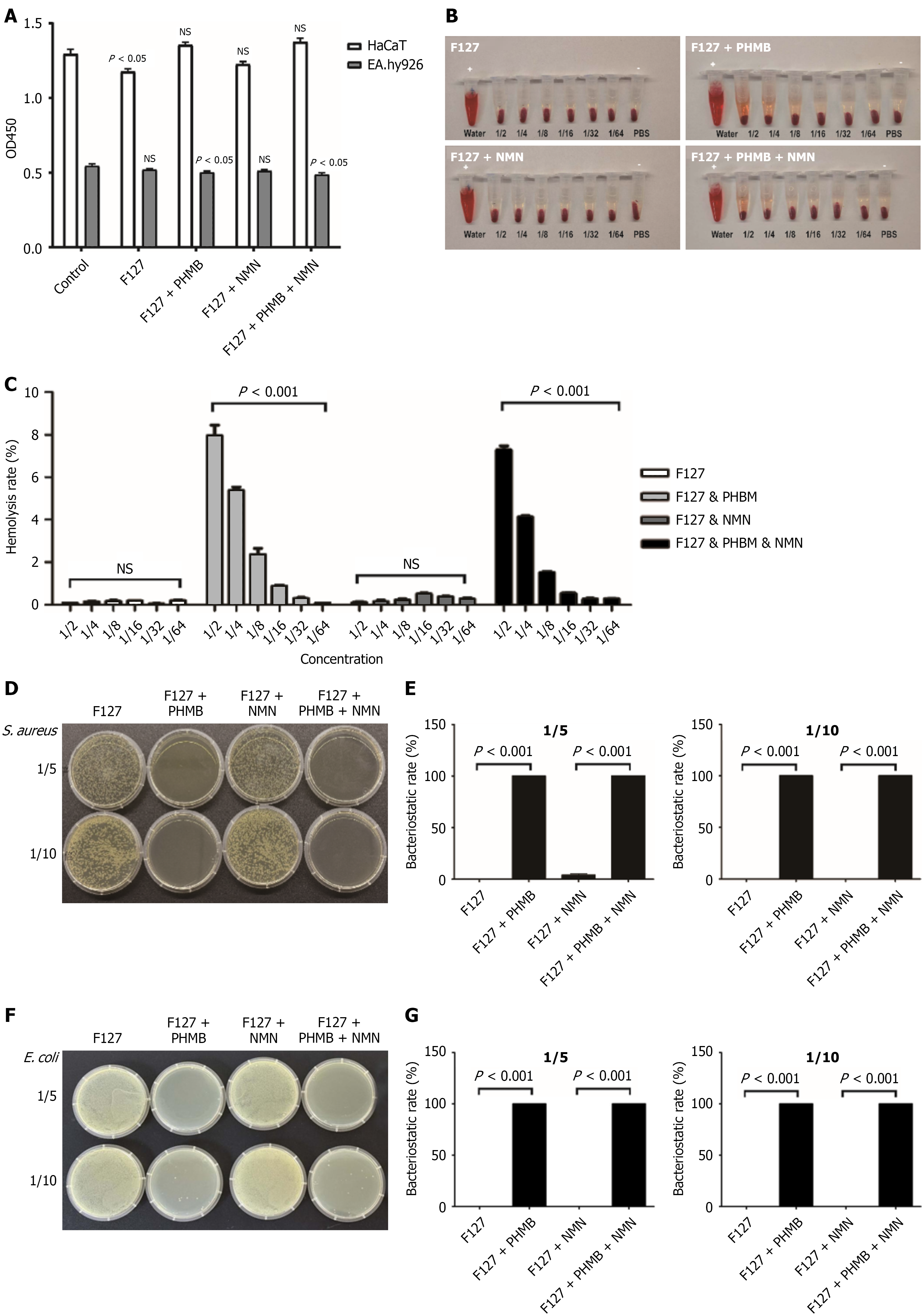
Figure 1 PF/polyhexamethylene biguanide-nicotinamide mononucleotide hydrogel exhibits favorable biocompatibility and antibacterial activity.
A: The viability of HaCaT cells and EA.hy926 cells was detected by the CCK-8 assay; B and C: Representative images and quantitative analysis of the hemolysis assay for each group of hydrogel extracts under different dilution conditions; D and E: Representative images and corresponding quantification of Staphylococcus aureus colony formation treated with hydrogel extracts from each group; F and G: Representative images and corresponding quantification of Escherichia coli colony formation treated with hydrogel extracts from each group. S. aureus: Staphylococcus aureus; E. coil: Escherichia coli; NMN: Nicotinamide mononucleotide; NS: Not significant; PBS: Phosphate buffered saline; PHMB: Polyhexamethylene biguanide.
- Citation: Peng F, Li YY, Tang Y, Sun SX, Zhu YQ, Zhang XY, Zhu HZ. Nicotinamide mononucleotide-loaded thermosensitive hydrogel promotes diabetic wound healing via antibacterial and antioxidant synergy in a mouse model. World J Diabetes 2026; 17(7): 119741
- URL: https://www.wjgnet.com/1948-9358/full/v17/i7/119741.htm
- DOI: https://dx.doi.org/10.4239/wjd.119741