
















Copyright: ©Author(s) 2026.
World J Diabetes. Jul 15, 2026; 17(7): 119604
Published online Jul 15, 2026. doi: 10.4239/wjd.119604
Published online Jul 15, 2026. doi: 10.4239/wjd.119604
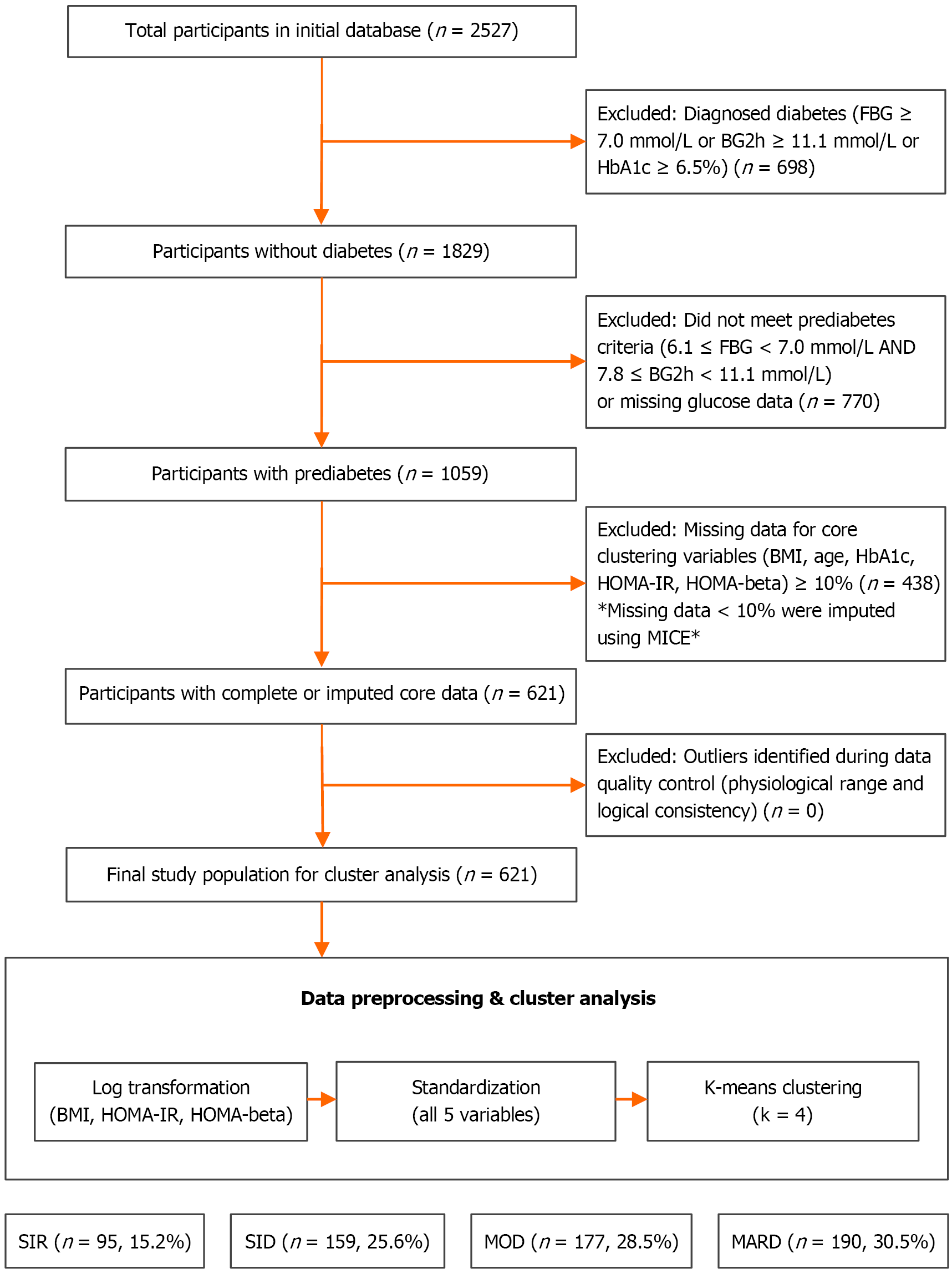
Figure 1 Study flowchart of participant selection, data preprocessing and cluster derivation.
A total of 2527 participants were screened, 1059 met the prediabetes definition, and 621 remained for clustering after exclusion for diabetes, non-prediabetes or missing glucose data, and missing core clustering variables. The clustering workflow included log transformation of body mass index, homeostatic model assessment of insulin resistance, and homeostatic model assessment of β-cell function, standardization of all five core variables, and K-means clustering (k = 4), which identified four subtypes. FBG: Fasting blood glucose; BG2h: 2-hour blood glucose; HbA1c: Glycated hemoglobin A1c; BMI: Body mass index; HOMA-IR: Homeostatic model assessment of insulin resistance; HOMA-β: Homeostatic model assessment of β-cell function; MICE: Multiple imputation by chained equations; SIR: Severe insulin resistant; SID: Severe insulin deficiency; MOD: Mild obesity-related dysmetabolism; MARD: Mild age-related dysmetabolism.
- Citation: Zhang SH, Zhang JP, Song LL, Wu LL, Li ZQ, He YF, Deng RF, Ma WL, Zhang C, Zhang B, Yu LP. Metabolic feature-based clustering for subtype identification and longitudinal outcome predictions in the Chinese prediabetic population. World J Diabetes 2026; 17(7): 119604
- URL: https://www.wjgnet.com/1948-9358/full/v17/i7/119604.htm
- DOI: https://dx.doi.org/10.4239/wjd.119604