
















Copyright: ©Author(s) 2026.
World J Diabetes. Jun 15, 2026; 17(6): 119178
Published online Jun 15, 2026. doi: 10.4239/wjd.119178
Published online Jun 15, 2026. doi: 10.4239/wjd.119178
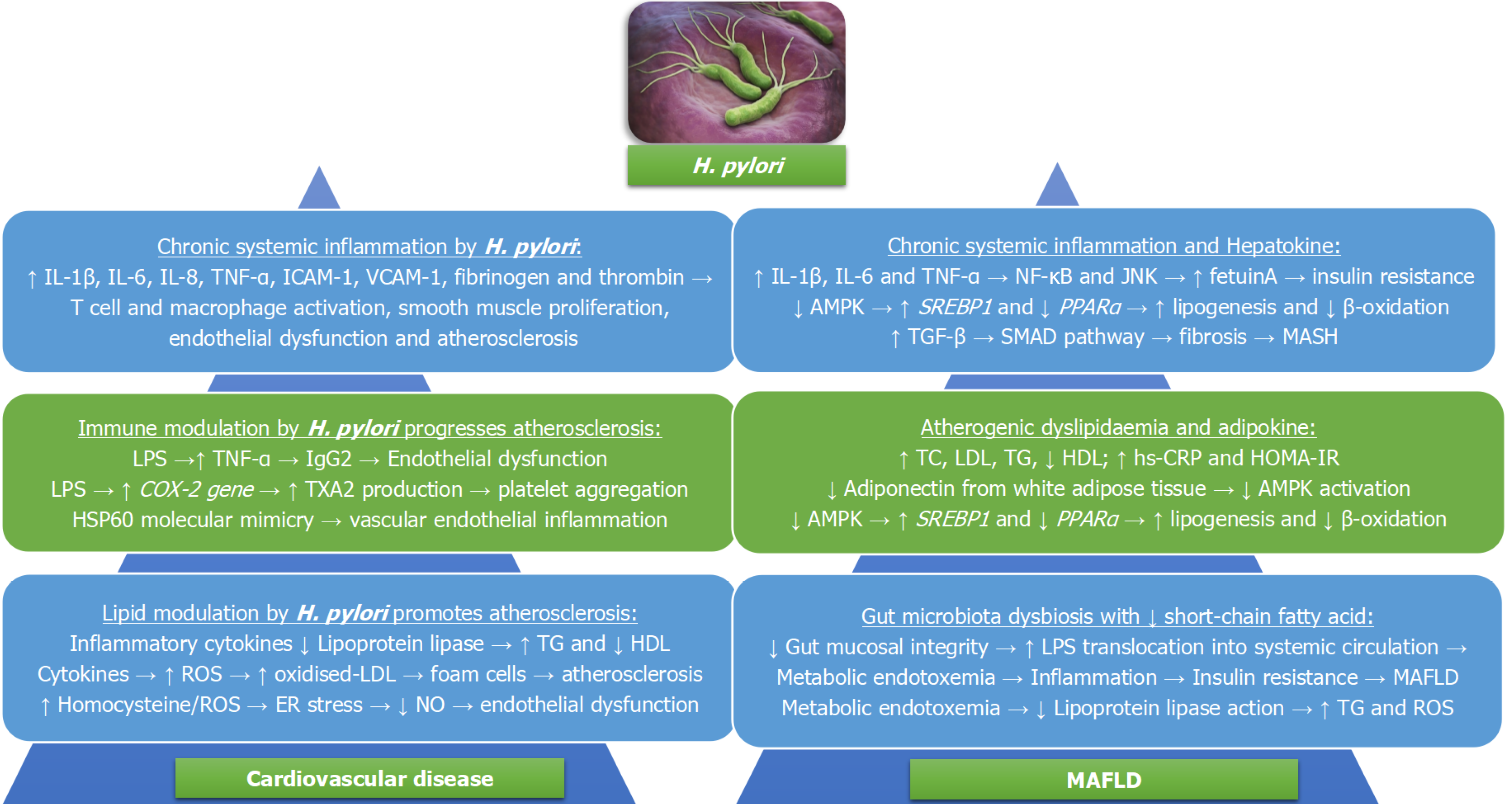
Figure 1 Putative mechanisms involved in developing cardiovascular disease and metabolic dysfunction-associated fatty liver disease in patients with Helicobacter pylori infection.
H. pylori: Helicobacter pylori; IL: Interleukin; TNF-α: Tumor necrosis factor alpha; ICAM: Intercellular adhesion molecule; VCAM-1: Vascular cell adhesion molecule-1; NF-κB: Nuclear factor kappa B; JNK: C-Jun N-terminal kinase; TGF-β: Transforming growth factor beta; AMPK: Adenosine monophosphate phosphate-activated protein kinase; SREBP1: Sterol regulatory element-binding protein 1; PPARα: Peroxisome proliferator-activated receptor alpha; MASH: Metabolic dysfunction-associated steatohepatitis; LPS: Lipopolysacharide; IgA: Immunoglobulin A; IgG2: Immunoglobulin G2; TXA2: Thromboxane A2; PGE2: Prostaglandin E2; TC: Total cholesterol; LDL: Low density lipoprotein; TG: Triglyceride; HDL: High density lipoprotein; hs-CRP: Highly sensitive C-reactive protein; HOMA-IR: Homeostatic model assessment for estimating insulin resistance; ROS: Reactive oxygen species; LPL: Lipoprotein lipase; ER: Endoplasmic reticulum; MAFLD: Metabolic-dysfunction associate fatty liver disease.
- Citation: Medenica S, Fernandez CJ, Pappachan JM. Helicobacter pylori and diabetic complications: Stronger evidence for the interlink. World J Diabetes 2026; 17(6): 119178
- URL: https://www.wjgnet.com/1948-9358/full/v17/i6/119178.htm
- DOI: https://dx.doi.org/10.4239/wjd.119178