
















Copyright: ©Author(s) 2026.
World J Diabetes. Jun 15, 2026; 17(6): 118650
Published online Jun 15, 2026. doi: 10.4239/wjd.118650
Published online Jun 15, 2026. doi: 10.4239/wjd.118650
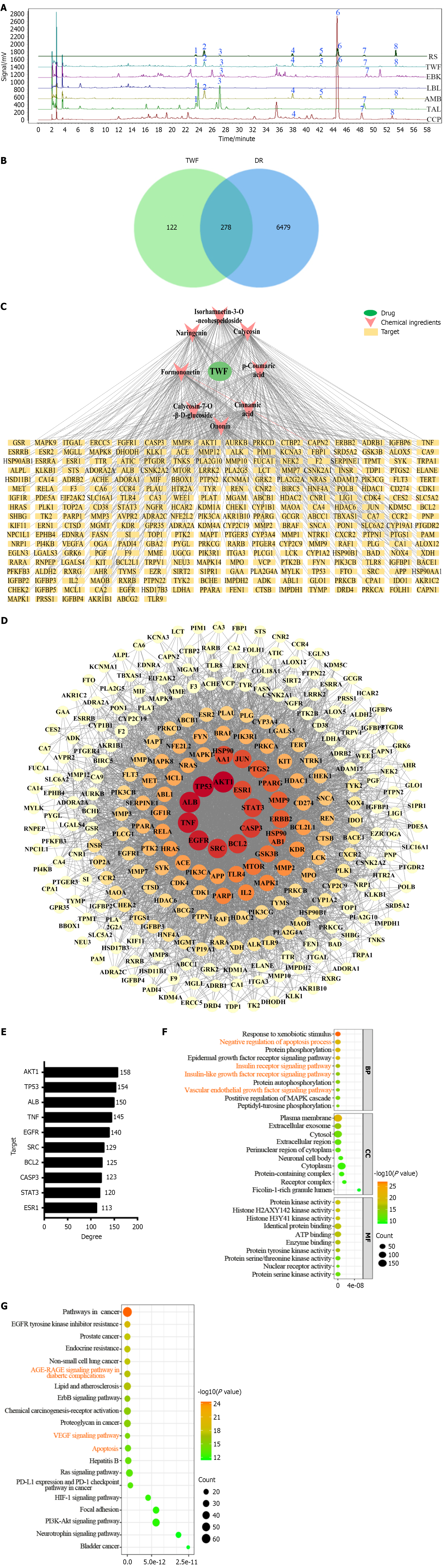
Figure 1 Chemical ingredients of Tangwang formula were detected by high-pressure liquid chromatography.
A: High-pressure liquid chromatography chromatograms of Tangwang formula; B: Venn diagram of drug targets from 8 compounds in Tangwang formula and disease targets from diabetic retinopathy; C: Network diagram of drug-composition-target; D: Protein-protein interaction network diagram of 278 cross targets; E: Degree values of top 10 core targets; F: Top 30 Gene Ontology enrichment analysis of 278 cross targets; G: Top 20 Kyoto Encyclopedia of Genes and Genomes enrichment analysis of 278 cross targets. AGE-RAGE: Advanced glycation end product-receptor advanced glycation end products; AMB: Bunge (Astragali Radix); ATP: Adenosine triphosphate; BP: Biological process; CC: Cellular component; CCP: Cinnamomum cassia Presl (Cinnamomi Ramulus); DR: Diabetic retinopathy; EBK: Eriocaulon buergerianum Koern. (Eriocauli Flos); EGFR: Epidermal growth factor receptor; HIF-1: Hypoxia-inducible factor-1; LBL: Lycium barbarum L. (Lycii Fructus); MAPK: Mitogen-activated protein kinases; MF: Molecular function; RS: Reference substance; TAL: Typha angustifolia L. (Typhae Pollen); TWF: Tangwang formula; VEGF: Vascular endothelial growth factor; 1: P-Coumaric acid; 2: Calycosin-7-O-β-D-glucoside; 3: Isorhamnetin-3-O-neohespeidoside; 4: Ononin; 5: Calycosin; 6: Cinnamic acid; 7: Naringenin; 8: Formononetin.
- Citation: Zhang H, Xing JX, Yin YF, Li J, Jing CX, Liu SY, Yin JZ, Gao X, Liang ZG, Yuan TY, Su H, Li YQ, Wang ZY, Dong HS, Zhao DQ, Ying DS, Zhou ZW, Huang QX. Tangwang formula ameliorates diabetic retinopathy by inhibiting cell apoptosis and regulating the intestinal microbiota and metabolic profiles. World J Diabetes 2026; 17(6): 118650
- URL: https://www.wjgnet.com/1948-9358/full/v17/i6/118650.htm
- DOI: https://dx.doi.org/10.4239/wjd.118650