
















Copyright: ©Author(s) 2026.
World J Diabetes. Apr 15, 2026; 17(4): 116208
Published online Apr 15, 2026. doi: 10.4239/wjd.v17.i4.116208
Published online Apr 15, 2026. doi: 10.4239/wjd.v17.i4.116208
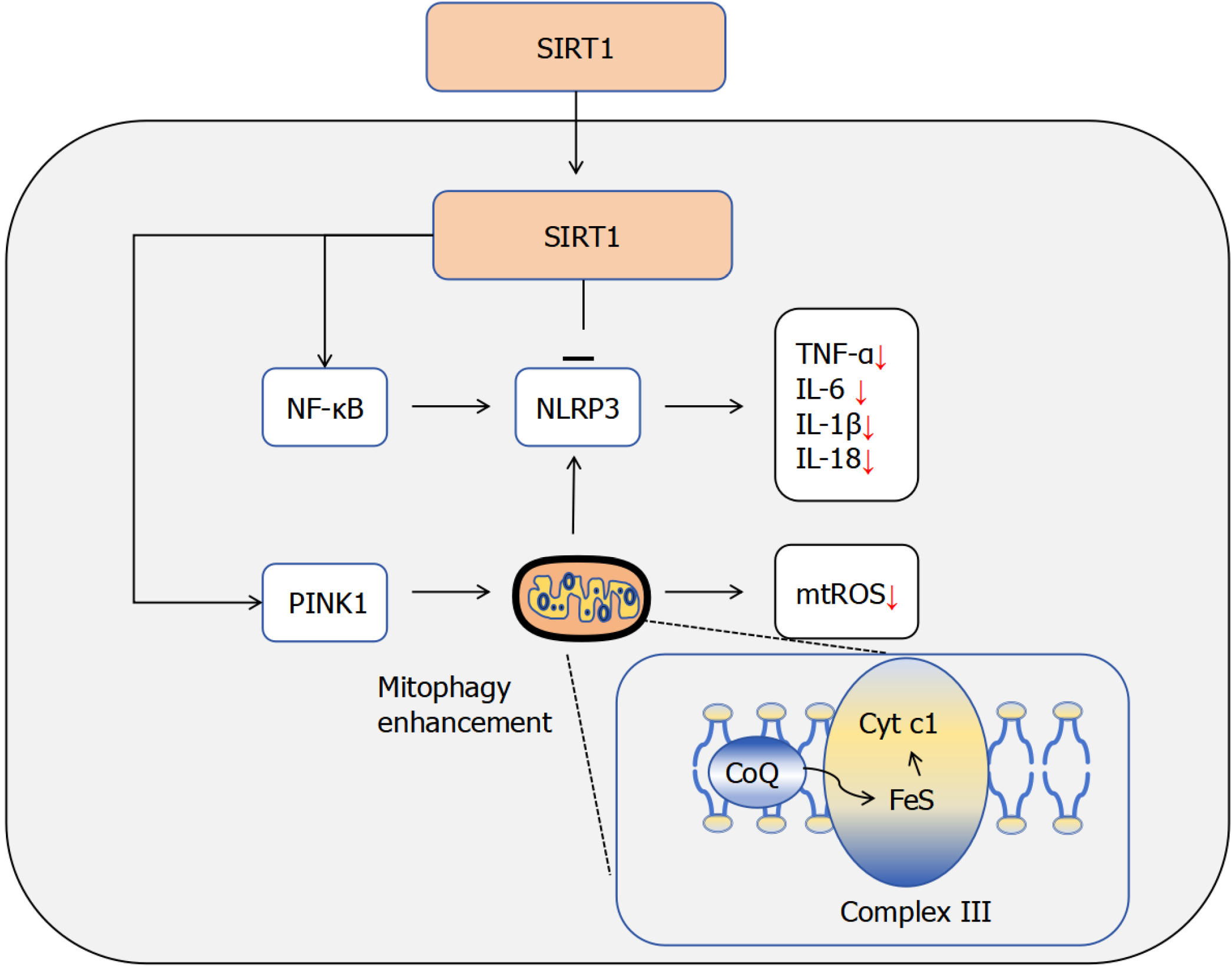
Figure 2 Mechanistic schematic of the sirtuin 1 signaling pathway in diabetic retinopathy.
This diagram illustrates the protective mechanisms of sirtuin 1 (SIRT1) in diabetic retinopathy. SIRT1 activation orchestrates three major protective pathways. First, it suppresses the nuclear factor-κB-NLR family pyrin domain-containing 3 inflammatory axis, thereby reducing the production of pro-inflammatory cytokines such as tumor necrosis factor-α, interleukin-6, and interleukin-1β. Second, it activates the transcription factor nuclear factor erythroid 2-related factor 2, enhancing the cellular antioxidant defense system to counteract oxidative stress. Third, SIRT1 promotes mitophagy via the PTEN-induced putative kinase 1 pathway, facilitating the removal of damaged mitochondria and consequently decreasing mitochondrial reactive oxygen species generation. Through these integrated actions, SIRT1 preserves mitochondrial integrity, alleviates inflammation, and maintains retinal homeostasis under hyperglycemic stress. SIRT1: Sirtuin 1; NF-κB: Nuclear factor-κB; NLRP3: NLR family pyrin domain-containing 3; TNF-α: Tumor necrosis factor-α; IL-1β: Interleukin-1β; IL-6: Interleukin-6; IL-18: Interleukin-18; PINK1: PTEN-induced putative kinase 1; mtROS: Mitochondrial reactive oxygen species; Cyt c1: Cytochrome c1; CoQ: Coenzyme Q.
- Citation: Pan CC, Xie QQ, Lu PY, Shi Z, Li HY, Ma YJ, Ding TY, Zeng MQ, Luo C, Zhuge FY. Targeting sirtuins in diabetic retinopathy: Differential roles in inflammation and mitochondrial dysfunction. World J Diabetes 2026; 17(4): 116208
- URL: https://www.wjgnet.com/1948-9358/full/v17/i4/116208.htm
- DOI: https://dx.doi.org/10.4239/wjd.v17.i4.116208